
Bessent Meets Russian Finance Chief at G20, Defying European Isolation Push
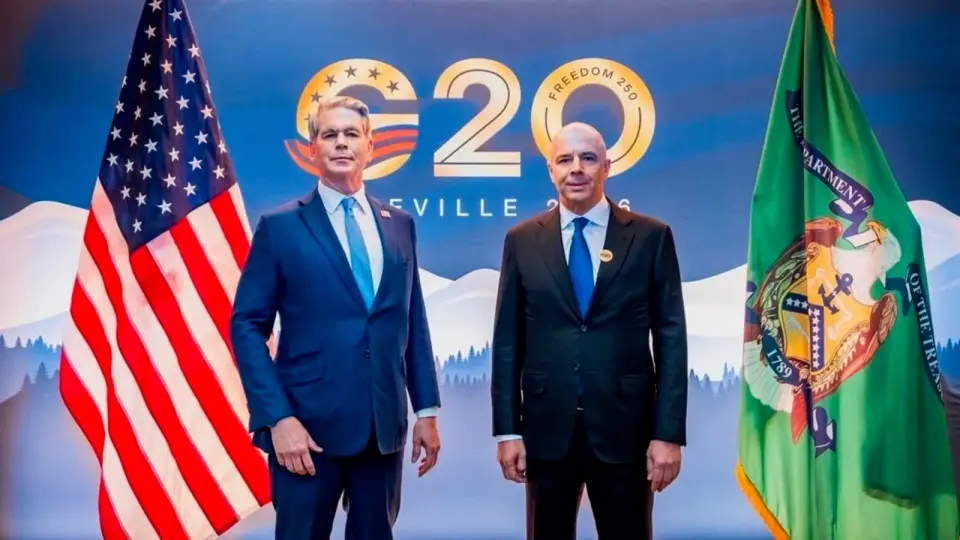
US Treasury Secretary Scott Bessent met with Russian Finance Minister Anton Siluanov at the G20 gathering in Asheville, North Carolina, marking Moscow's first in-person return to the forum since 2022. While Bessent stated that no economic relief is possible until the Ukraine war ends, European leaders condemned the invitation as a normalization of relations. The meeting highlighted a sharp diplomatic rift between Washington’s engagement strategy and Europe’s continued isolation of Russia.
Key points
- Bessent told Siluanov that no sanctions relief or new agreements are possible while the war in Ukraine continues.
- Siluanov’s attendance was his first in-person G20 appearance since Russia’s 2022 invasion, sparking outrage among European officials.
- European ministers refused to pose with Siluanov for the traditional group photo, which was ultimately taken without him.
- The US Treasury described the talks as productive and focused on Trump’s peace plan, while Russia framed them as financial cooperation discussions.
- German Finance Minister Lars Klingbeil called the US decision 'troubling' and emphasized Europe’s plan to expand sanctions against Moscow.
Background
This diplomatic friction follows months of escalating tensions, including Ukraine’s strikes on Russian oil refineries in August 2026 and Putin’s vows of retaliation. Simultaneously, Bessent has been managing a record $40tn US national debt and implementing sanctions against Iran, a strategy critics have labeled an 'economic D-Day.' The current G20 summit occurs amid global debt levels nearing $353 trillion and energy shocks from the US-Israel war on Iran.
How outlets are covering it
Outlets diverge on the nature of the US-Russia talks. CNBC and Axios report that the meeting centered on Trump’s peace plan for Ukraine, with Bessent explicitly blocking economic relief. Conversely, Russia’s finance ministry described the discussions as covering financial cooperation within the G20 framework. The Financial Times and Al Jazeera emphasize the European backlash, noting that officials like Germany’s Klingbeil and Poland’s Domanski viewed the invitation as a dangerous signal of normalization. While the White House defended the talks as necessary for ending the 'bloodshed' in Ukraine, European leaders argued that maintaining dialogue channels does not justify normalizing Moscow’s status at the summit.
Why it matters
The meeting underscores a growing transatlantic split regarding how to handle Russia. While the US seeks to leverage economic engagement to force a peace deal, Europe fears that such gestures undermine the sanctions regime designed to pressure Moscow. This divergence could complicate coordinated Western responses to the ongoing conflict and broader global economic instability.
What to watch
European governments are preparing an expanded sanctions package to further squeeze the Russian economy. Meanwhile, the US administration continues to push for a diplomatic resolution to the Ukraine war, though previous 28-point plans have been criticized by Kyiv and European allies for favoring Moscow’s demands.
- Bessent reportedly tells Russia it won't get economic relief until it ends Ukraine war CNBC
- Europeans shun Russian finance minister at US-hosted G20 meeting Financial Times
- US brings back Russia’s Siluanov to G20 finance talks, angering Europe Al Jazeera
- Europe Protests as U.S. Invites Russian Minister to G20 Finance Meeting The New York Times
- US irks Germany, Europe with Russian G20 invite, press bans dw.com
Want the full story? Read the original reporting
Read on CNBC