
US 'Economic D-Day' Faces Skepticism as Iran Weighs Escalation Risks
Treasury Secretary Scott Bessent has launched a new wave of secondary sanctions against Iran, branding the move an 'economic D-Day' to pressure the regime without military action. While Washington aims to isolate Tehran’s financial networks, Iranian officials dismiss the measures as predictable, noting that the country has long bypassed restrictions via land borders. The strategy’s success hinges on whether China and other partners will comply with US threats, a cooperation that remains uncertain. Meanwhile, Iran’s deepening economic crisis, marked by high inflation and a weakening rial, forces leaders to choose between immediate concessions or risking further isolation.
Key points
- Treasury Secretary Scott Bessent announced expanded sanctions targeting digital assets, technology, gold, aviation, and shipping, warning that nations trading with Iran face isolation.
- Iran’s Economy Minister Ali Madanizadeh dismissed the announcement as 'the same old talk,' stating Tehran had anticipated the measures and was prepared for every scenario.
- The US blockade has already reduced Iran’s ability to export oil by sea, but land borders with seven countries allow Tehran to bypass some restrictions, particularly for non-oil trade.
- China’s foreign ministry firmly opposed the new sanctions, calling them illegal, which complicates Washington’s goal of isolating Iran’s key trading partners.
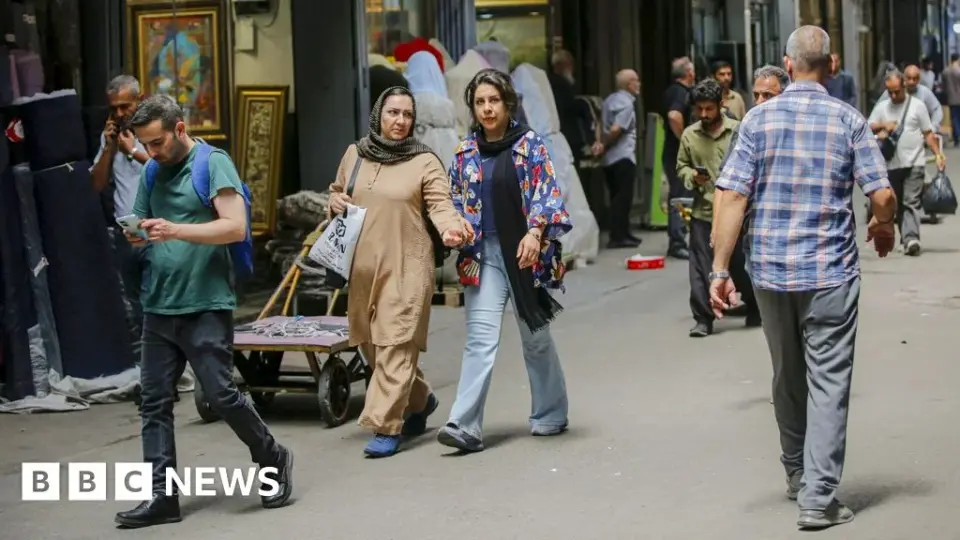
- Iranian citizens report severe economic hardship, with one woman noting her monthly income has dropped to approximately $100, forcing cuts to basic necessities and cultural activities.
- Analysts warn that if sanctions fail to force concessions, they may strengthen hardliners in Iran who oppose deals, while also increasing the risk of military escalation in the Gulf region.
Background
This development follows a period of intense economic pressure on Iran, including a prior US sanctions push in August 2026 and ongoing concerns about the regime’s stability due to inflation and reconstruction costs. Previous internal power struggles within Iran, involving factions over the Strait of Hormuz and negotiations, have shaped Tehran’s response to external pressure. The current sanctions aim to exploit these vulnerabilities without triggering a full-scale military conflict, a strategy that has faced skepticism due to past limited follow-through on threats.
How outlets are covering it
The BBC highlights the immediate economic impact on Iranian citizens and the uncertainty of whether secondary sanctions will change Tehran’s calculations, noting that the US has not yet named key offenders like China. The Atlantic criticizes the administration for offering vivid threats without follow-through, arguing that the reluctance to impose secondary sanctions on China and Russia exposes the narrowness of Washington’s options. The New York Times emphasizes the risk that economic pressure could provoke military escalation, as Iranian leaders may feel they have little to lose by retaliating in the oil-rich Gulf. These perspectives contrast the US view of sanctions as a decisive tool with the Iranian and international view of them as predictable and potentially counterproductive.
Why it matters
The outcome of these sanctions will determine whether the US can force Iran to the negotiating table or if it will push Tehran toward further isolation and potential military escalation. The effectiveness of secondary sanctions depends on the compliance of global partners, particularly China, whose opposition could undermine the strategy. For Iran, the choice between concession and resistance carries significant risks, as a weaker economy may limit its leverage, while escalation could lead to regional instability. The situation also impacts global oil markets, with disruptions in the Strait of Hormuz potentially affecting prices and US inflation ahead of midterm elections.
What to watch
The next critical step is whether China and other trading partners will pull back from Iran due to US threats, which could alter Tehran’s calculations. If they do not, hardliners in Iran may argue that Washington has failed to change the balance of power, strengthening resistance. Additionally, the US midterm elections in November 2026 will be a key date for Iran, as any political problems for Trump could weaken the administration’s resolve. Iran’s economic trajectory, including oil export levels and rial stability, will also influence its willingness to negotiate or escalate.
- Trump hopes sanctions will topple Iran's regime - its leaders are betting otherwise BBC
- The Warnings That Came Before a War Now Reaching the Six-Month Mark WSJ
- Even More Maximum Pressure on Iran The Atlantic
- What are Iran's options to escalate further in face of US economic threats? Reuters
- Iran May Have Little to Lose as U.S. Tries to Squeeze Its Economy The New York Times
Want the full story? Read the original reporting
Read on BBC