
US Task Force Iron Gate targets Iran’s land and Caspian supply chains
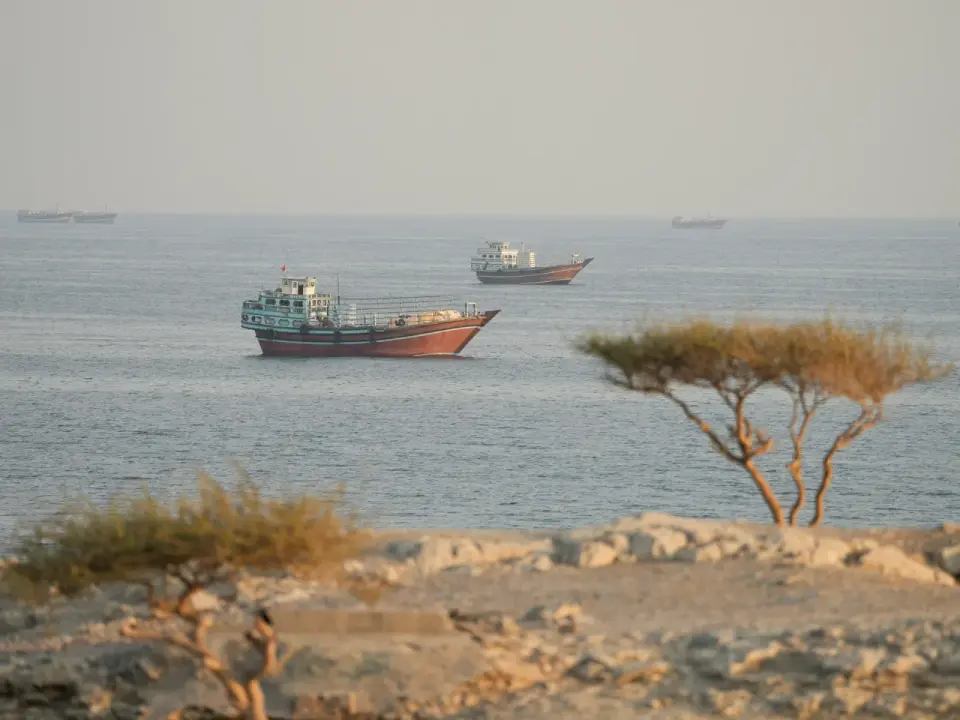
US Central Command (CENTCOM) established Task Force Iron Gate to disrupt Iran’s land-based and Caspian Sea supply routes for weapons and dual-use technologies. This move expands a naval blockade that has halted $25 billion in crude exports. Simultaneously, US forces disabled a commercial vessel in the Gulf of Oman, while Iran reported explosions in the Strait of Hormuz and claimed tankers hit mines. Diplomatic efforts via Qatar continue amid threats of further US strikes.
Key points
- CENTCOM launched Task Force Iron Gate in Tampa, Florida, to coordinate with Treasury, State, and Justice Departments on blocking advanced weapons and sanctioned materials across Iran’s borders.
- The task force aims to cut off Iran’s ability to fund its military and rebuild infrastructure, complementing a naval blockade that has prevented $25 billion in crude oil exports since July.
- US forces disabled the St. Kitts-flagged vessel M/V Huda in the Gulf of Oman after it refused to comply with blockade directives; 147 other vessels were redirected since July.
- Iran’s IRGC claimed two oil tankers hit mines in the Strait of Hormuz, while Iran’s state media reported explosions in Qeshm Island, Jask, and Bandar Abbas.
- President Trump indicated a decision on further strikes is imminent, though Qatari-mediated talks continue to prevent escalation.
Background
The US and Israel launched a war against Iran on February 28, 2026, resulting in a 40-day conflict that damaged Iranian infrastructure and led to a US naval blockade of the Strait of Hormuz. Recent midterm elections saw a Democratic victory, which Vice President JD Vance linked to public dissatisfaction with the war. Prior to this week, CENTCOM had focused primarily on maritime enforcement, while a Reuters investigation revealed Iran imported $2 billion in hardware via secret networks from Russia, China, and Central Asia since January 2025.
How outlets are covering it
Al Jazeera and Yahoo News emphasize the strategic shift from naval to land-based interdiction, noting that Task Force Iron Gate targets economic and infrastructure nodes to starve the regime of resources. CBS News highlights the diplomatic tension, reporting that Trump is weighing a decision to 'destroy what is left of' Iran while simultaneously engaging in Qatari-mediated talks. Iran International focuses on domestic hardline reactions, including demands for military action against threats to Supreme Leader Mojtaba Khamenei, and denies reports of militia disarmament in Iraq. While US officials frame the task force as a comprehensive pressure campaign, Iranian state media dismisses tanker incidents as fabrications to inflate energy prices, though UK maritime agencies confirmed 30 attacks on commercial vessels in October alone.
Why it matters
The expansion of the blockade to land borders threatens to isolate Iran’s economy and military capabilities further, potentially forcing a diplomatic resolution or triggering a new phase of conflict. Disruptions to the Strait of Hormuz and Caspian Sea routes impact global energy prices and supply chains, including helium and crude oil. The outcome of Qatari-mediated talks will determine whether the US pursues a total economic siege or escalates to kinetic strikes, with significant implications for regional stability and US domestic politics.
What to watch
Watch for the official announcement of Trump’s decision on further strikes, the effectiveness of Task Force Iron Gate in intercepting land-based shipments, and the progress of Qatari-mediated negotiations. Monitor reports of additional incidents in the Strait of Hormuz and any shifts in Iranian domestic policy regarding hardline demands for military action.
- US launches task force to disrupt Iran’s land-based supply routes Al Jazeera
- Live Updates: U.S. expands naval blockade to include task force on disrupting ground transport CBS News
- Live - US hits vessel off Iran, launches task force to disrupt land supply routes Iran International
- Exclusive-Expanding on naval blockade, US military looks to restrict Iranian land commerce Yahoo News Singapore
- EXCLUSIVE: Expanding on naval blockade, US military looks to restrict Iranian land commerce Reuters
Want the full story? Read the original reporting
Read on Al Jazeera