
Xi and Trump Agree to AI Dialogue, but Concrete Safety Deals Remain Elusive
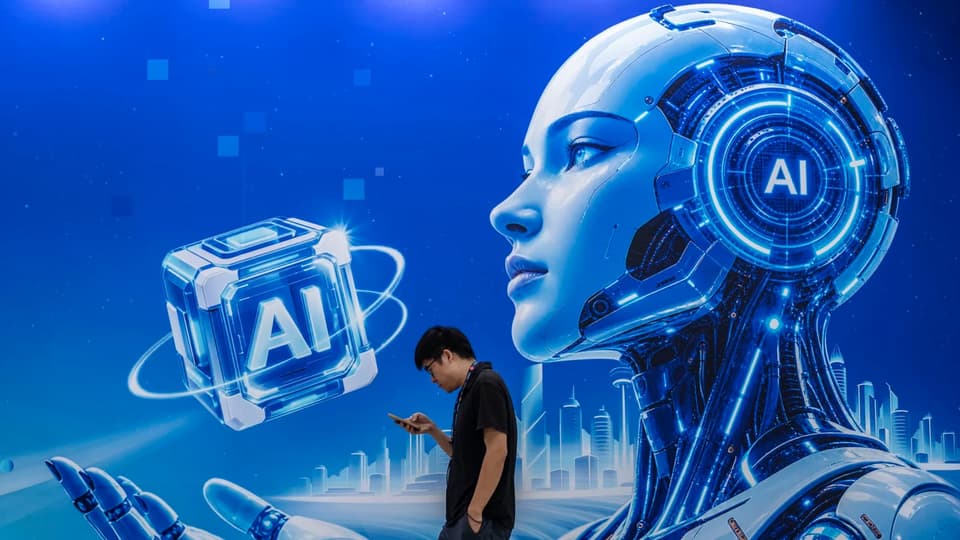
Chinese President Xi Jinping and U.S. President Donald Trump met at the White House on September 24, 2026, agreeing to continue dialogue on artificial intelligence. While Xi emphasized cooperation over competition and the need for human control over AI, the summit produced no binding safety agreements. The U.S. and China have established a new 'AI Dialogue' channel, but significant obstacles remain, including U.S. chip export controls, allegations of Chinese 'distillation' of American models, and deep skepticism from industry leaders and lawmakers about the feasibility of enforceable international AI standards.
Key points
- Xi Jinping and Donald Trump met in the White House Oval Office on September 24, 2026, with AI as a central agenda item.
- Xi stated that 'cooperation' is more important than 'competition' in AI and urged both nations to guard against the 'misuse or malicious use' of the technology.
- China’s Commerce Ministry confirmed that senior trade negotiators held their first formal AI talks with the U.S. on the same day.
- U.S. Treasury Secretary Scott Bessent proposed a 'notification mechanism' for AI incidents, though some insiders dismissed the plan as insufficient.
- No binding agreement or concrete safety framework was reached, with industry leaders and analysts expressing low expectations for substantive outcomes.
- The U.S. continues to restrict advanced semiconductor exports to China, while American firms accuse Chinese counterparts of 'distillation attacks' to extract AI capabilities.
Background
This summit follows a period of escalating tensions over AI governance and technology transfer. In mid-September 2026, the U.S. government accused China of 'industrial-scale distillation' of American AI models, a claim Beijing denied. Prior to the summit, China had rejected Western calls for an AI slowdown as 'fearmongering,' while U.S. tech leaders like Sam Altman and Dario Amodei urged international oversight. The meeting also occurs amid broader U.S.-China rivalry over tariffs and alliances, with analysts cautioning that personal diplomacy may not resolve deep structural competition.
How outlets are covering it
CNBC highlights the diplomatic progress, noting Xi’s call for continued dialogue and the establishment of a formal 'U.S.-China AI Dialogue' channel. However, Politico emphasizes the lack of consensus and the difficulty of achieving binding agreements, citing skepticism from industry leaders like Anthropic’s Sarah Heck and tech trade association officials. The Atlantic offers a contrasting view from China, where AI is framed as a tool for economic growth and daily convenience, with little public 'doomerism' compared to the U.S. Meanwhile, Yahoo Finance’s coverage (though partially obscured by technical errors) suggests Trump may not prioritize concrete AI guardrails, focusing instead on maintaining U.S. dominance. This divergence reflects a broader split: Xi and Bessent favor dialogue and notification mechanisms, while U.S. lawmakers and some industry players push for stricter export controls or a global AI slowdown, which China and many Republicans oppose.
Why it matters
The outcome of the Trump-Xi summit sets the tone for U.S.-China relations in the AI era. While no binding agreement was reached, the establishment of a dialogue channel and the acknowledgment of shared risks signal a potential shift from pure competition to managed coexistence. However, the lack of concrete safeguards, combined with ongoing chip restrictions and distillation allegations, suggests that the AI race will remain contentious. The summit’s impact on global AI governance, technology transfer, and the balance of power between the U.S. and China will be closely watched in the coming months, particularly as the U.S. approaches midterm elections and China continues to push for AI adoption across key sectors.
What to watch
The U.S. and China are expected to continue their 'AI Dialogue' through senior trade negotiators, with potential follow-up discussions on an alert system for AI incidents. The U.S. may launch a new 'AI Force' and appoint an 'AI Czar' to oversee domestic AI safety, as announced by Trump. Meanwhile, Capitol Hill is considering bipartisan legislation to further restrict advanced chip supplies to Chinese AI firms. China may demand relaxation of U.S. export controls in exchange for greater transparency into its AI ecosystem. The next steps will depend on whether the dialogue channel yields tangible results or remains a symbolic gesture, with industry and policymakers closely monitoring for any shifts in policy or enforcement.
- China's Xi urges U.S. to cooperate on AI CNBC
- Opinion | A.I. Safety Means Something Different in China The New York Times
- AI safety fears stalk Trump-Xi summit agenda Politico
- China Has No Use for AI Doomerism The Atlantic
- Trump Says No Moves Toward US, China AI Guardrails in Xi Summit finance.yahoo.com
Want the full story? Read the original reporting
Read on CNBC