
Xi’s Washington Visit Secures Diplomatic Parity, but Trade and AI Gains Remain Fragile
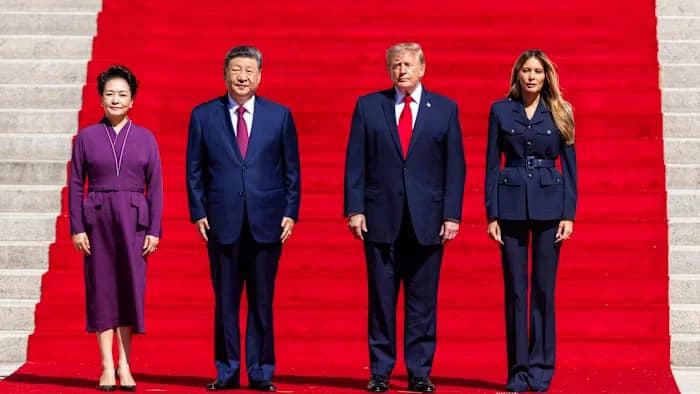
Xi Jinping’s state visit to Washington concluded with a focus on symbolic equality rather than substantive breakthroughs. While Beijing celebrated the 'face' gained from Trump’s personal hospitality, analysts note that concrete outcomes were limited to a two-month trade truce extension and tentative AI dialogue frameworks. The summit highlighted a fragile détente, with both nations issuing separate statements and leaving critical issues like Taiwan and rare earth supply chains unresolved.
Key points
- China’s state media framed the visit as a victory for national prestige, emphasizing Xi’s status as a peer to the US president.
- The two nations agreed to a two-month extension of their trade truce and a lower tariff regime covering $60 billion in non-sensitive goods.
- A new AI dialogue mechanism was established, though the US and China used different terminology ('Super Intelligence' vs. 'AI') in their respective readouts.
- The summit produced separate, rather than joint, statements, signaling deep underlying mistrust despite the cordial atmosphere.
- Beijing leveraged the visit to pressure Washington on Taiwan, urging the US to oppose 'Taiwan independence' and warning of potential conflict.
Background
This visit followed a series of earlier diplomatic exchanges in 2026, including Trump’s May trip to Beijing and ongoing negotiations regarding AI safety standards. Previous coverage highlighted concerns that personal diplomacy might mask unresolved strategic rivalries, particularly in technology and trade. The current summit builds on a fragile truce signed in October 2025, which had already paused the most intense phase of the trade war.
How outlets are covering it
The Financial Times emphasizes the symbolic victory for Beijing, noting that Xi’s 'face' and peer status were the primary gains, even if substantive policy changes were minimal. In contrast, CNBC and Business Insider focus on the lack of tangible outcomes, with analysts like Daniel Kritenbrink and Scott Kennedy warning that the détente is unsustainable without concrete progress on strategic challenges. While the FT highlights China’s leverage in rare earths and its ability to project strength, CNBC points out that the separate statements and limited trade deals suggest a 'battle for escalation dominance.' Business Insider notes the high-profile attendance of tech leaders like Jensen Huang and Elon Musk, underscoring the commercial stakes, but also highlights the absence of consensus on AI safety standards. There is a divergence between the Chinese narrative of 'harmonious coexistence' and the Western view of a fragile, transactional relationship.
Why it matters
The outcome of this summit sets the tone for US-China relations in the second half of 2026. The lack of a joint statement and the limited scope of trade agreements suggest that the current truce is precarious. If tangible outcomes do not materialize, the relationship could revert to open confrontation, impacting global supply chains, AI development, and geopolitical alliances, particularly regarding Japan and Taiwan. The symbolic elevation of Xi’s status may also embolden Beijing to pursue more assertive policies in the Indo-Pacific.
What to watch
The two leaders plan to meet again at the APEC summit in Shenzhen in November and the G20 summit in Miami in December. Implementation of the $60 billion low-tariff regime and the AI dialogue framework will be closely monitored in the coming months. Beijing is expected to continue leveraging its rare earth dominance and trade leverage to extract further concessions, while Washington will likely scrutinize the durability of the truce and the progress on AI safety incidents.
- ‘Xi got face’: China relishes equal treatment from Trump Financial Times
- Trump-Xi summit analysis: 'Tangible outcomes' needed for U.S.-China truce to hold cnbc.com
- America and China’s leaders indulge in pageantry as crises mount The Economist
- The who's who in tech showed up for Trump's dinner with Xi — with one glaring exception Business Insider
- Breakingviews - COMMENTARY: Trump-Xi summit finds new ways to disappoint reuters.com
Want the full story? Read the original reporting
Read on Financial Times