
Ethiopian twins separated after 24-hour St. Louis surgery
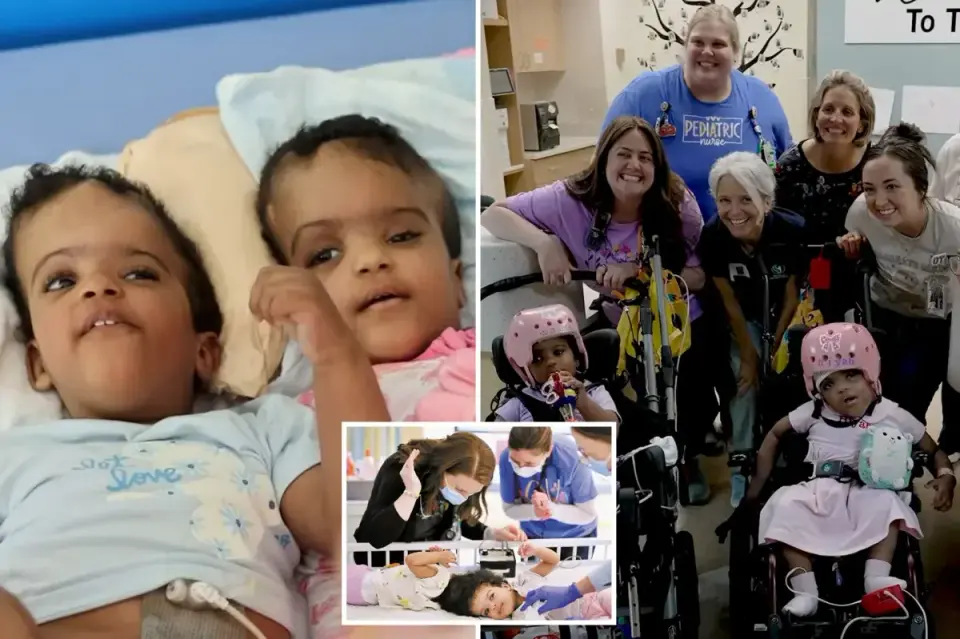
Two-year-old Ethiopian twins Hiyab and Wuhbto, born conjoined at the head, were successfully separated in a 24-hour surgery at SSM Health Cardinal Glennon Children’s Hospital in St. Louis. The procedure, which took place in February 2026, involved a multidisciplinary team and is described as one of the rarest pediatric operations in the US. The girls are now undergoing rehabilitation in Missouri, with Wuhbto having completed a skull repair and Hiyab scheduled for a similar procedure this fall.
Key points
- The separation surgery occurred on February 24-25, 2026, lasting over 24 hours from preparation to recovery.
- The twins, who were joined at the crown of their skulls, traveled from Ethiopia to St. Louis in March 2025 with the aid of Ronald McDonald House Charities and Ethiopian Airlines.
- Wuhbto has completed a cranioplasty to repair her skull, while Hiyab is scheduled for the same procedure later in 2026.
- The girls are currently receiving rehabilitation at Ranken Jordan Pediatric Bridge Hospital in Maryland Heights, Missouri, learning to sit, stand, and socialize.
- Craniopagus twins are extremely rare, occurring in less than 6% of conjoined twin cases and approximately once in every 2.5 million live births.
Background
This case follows a broader trend of complex pediatric separations, including a recent incident in Brazil where conjoined twins died after a final separation surgery. The current case highlights the success of international medical partnerships, as the twins were cared for by a network including World Pediatrics and Lola Children’s Home in Ethiopia. Previous coverage from our archive in September 2026 confirmed the initial success of the separation and the ongoing rehabilitation efforts in Missouri.
How outlets are covering it
SSM Health and ABC News emphasize the collaborative nature of the surgery, highlighting the involvement of 60 clinical team members and multiple partner organizations. CBS News provides a more personal perspective, noting that the twins could not see each other's faces for two years and that their parents remained in Ethiopia due to visa issues. Dr. Joanna Kemp, the lead neurosurgeon, described the moment of separation as a 'pause' for the team, while Dr. Nick Holekamp from Ranken Jordan focused on the girls' progress in daily living activities. All sources agree on the rarity and complexity of the procedure, but differ in their emphasis on the emotional vs. technical aspects of the surgery.
Why it matters
The successful separation of Hiyab and Wuhbto represents a significant milestone in pediatric neurosurgery, demonstrating the potential of international medical collaboration to treat rare conditions. It offers hope for other families facing similar challenges and highlights the importance of specialized care networks in providing life-changing interventions for children in developing regions.
What to watch
Hiyab is scheduled to undergo a cranioplasty later in 2026 to complete her skull repair. The twins will continue their rehabilitation at Ranken Jordan Pediatric Bridge Hospital, with the goal of eventually returning to their family in Ethiopia. Long-term development outcomes remain uncertain, but the girls are making progress in learning to sit, stand, and socialize.
- Conjoined twins attached at the head successfully separated after procedure requiring ‘sublime precision’ New York Post
- Extraordinary Collaboration Leads to Successful Separation of Craniopagus Twins at SSM Health Cardinal Glennon Children's Hospital SSM Health
- Twins conjoined at the head are separated in 25-hour surgery at St. Louis hospital CBS News
- Twin sisters conjoined at the head underwent successful separation surgery: Hospital ABC News - Breaking News, Latest News and Videos
- How St. Louis doctors separated conjoined twins. And how they're doing now STLtoday.com
Want the full story? Read the original reporting
Read on New York Post