
25 Years After 9/11: The Final Frames of Bill Biggart and the Legacy of the Twin Towers
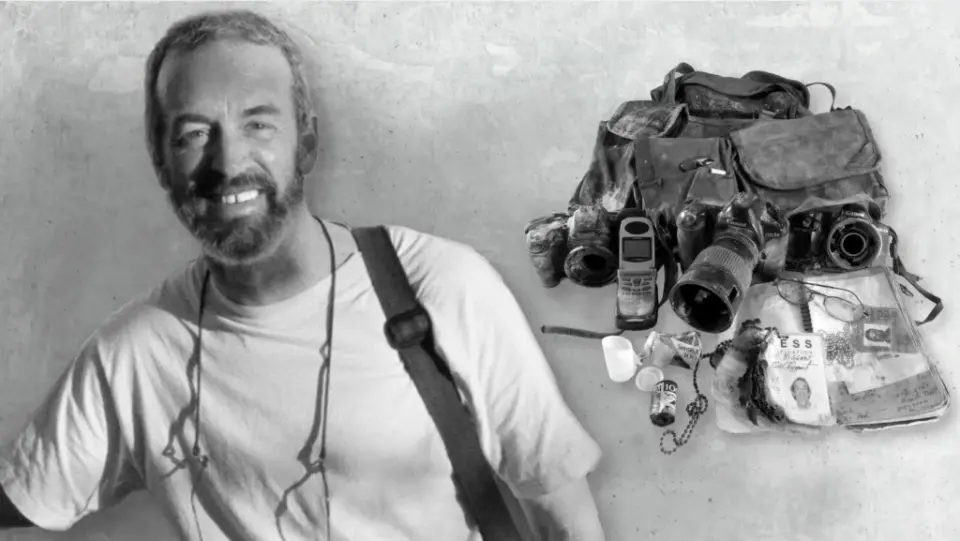
As the 25th anniversary of the September 11 attacks approaches, attention is turning to the visual record of the day. Photojournalist Bill Biggart died when the North Tower collapsed, leaving behind nearly 300 images that capture the final moments before the disaster. Meanwhile, the Smithsonian highlights how photography has documented the towers' history, from their pre-attack prominence to the aftermath.
Key points
- Bill Biggart, a 54-year-old photojournalist, was killed when the North Tower collapsed on September 11, 2001.
- Biggart's cameras contained nearly 300 images, including digital shots from a Canon EOS D30, documenting the scene between the collapse of the South and North towers.
- His wife, Wendy Doremus, recalled him running toward the danger despite her pleas, and he was last heard on the phone saying he was safe with firefighters.
- The Smithsonian Museum of American History is featuring three photographs that trace the history of the Twin Towers: a 1983 image by Joel Meyerowitz, a 2001 image by Christophe Agou, and a 2002 image of steel debris by Robert Rathe.
- Christophe Agou, a French photographer, walked two and a half miles to the attack site and captured approximately 216 images, including the collapse of Tower 7.
Background
The 25th anniversary of the September 11 attacks is prompting a re-examination of the visual records from that day. Bill Biggart was one of 2,977 people who died in the attacks, excluding the hijackers. His career included documenting the Troubles in Northern Ireland, the fall of the Berlin Wall, and the Wounded Knee standoff in 1973. The Freedom Forum's Newseum, which operated until 2019, featured an exhibit on Biggart's work. The Smithsonian's Photographic History Collection includes images that span the decades before and after the attacks, illustrating the cultural and physical impact of the Twin Towers.
How outlets are covering it
Freedom Forum emphasizes the personal sacrifice of photojournalists, highlighting Bill Biggart's decision to run toward danger and the forensic value of his final images. They frame his work as the 'highest calling of a free press.' In contrast, the Smithsonian focuses on the broader narrative of the Twin Towers through a curated sequence of photographs, moving from the pre-attack era to the immediate aftermath and the long-term physical remnants. While Freedom Forum centers on the individual journalist's experience, the Smithsonian uses photography to illustrate the scale of the destruction and the changing perception of the towers over time. Both sources agree on the significance of visual documentation but differ in their focus: one on the human cost, the other on the historical and material legacy.
Why it matters
The 25th anniversary of 9/11 serves as a reminder of the human cost of the attacks and the role of photojournalists in documenting history. Bill Biggart's final images provide a unique, time-coded account of the moments before the North Tower collapsed, offering a visceral perspective on the chaos and bravery of that day. The Smithsonian's selection of photographs underscores how images can shape our understanding of historical events, connecting the pre-attack prominence of the Twin Towers to the aftermath and the ongoing process of remembering and learning from the tragedy. These visual records continue to inform public memory and highlight the importance of press freedom and the risks faced by those who document breaking news.
What to watch
As the 25th anniversary approaches, expect more exhibitions and publications focusing on the visual records of 9/11. The Freedom Forum and the Smithsonian are likely to continue highlighting the work of photojournalists and the historical significance of their images. There may be further discussions on the preservation of damaged film and digital images, as well as the ethical and legal aspects of press freedom in the context of national security and public safety.
- Remembering Bill Biggart, the Photojournalist Who Ran Toward Danger on 9/11 Freedom Forum
- Defining images from the 9/11 attacks Reuters
- 25 Years After 9/11, Photos From That Day Remain Unforgettable | Photos | U.S. News U.S. News & World Report
- He’s Seen Images of 9/11 From Just About Every Angle. Except This One. The New York Times
- The Twin Towers in Three Photographs Smithsonian Magazine
Want the full story? Read the original reporting
Read on Freedom Forum