
Xi’s White House Summit: Personal Warmth Meets Strategic Stalemate
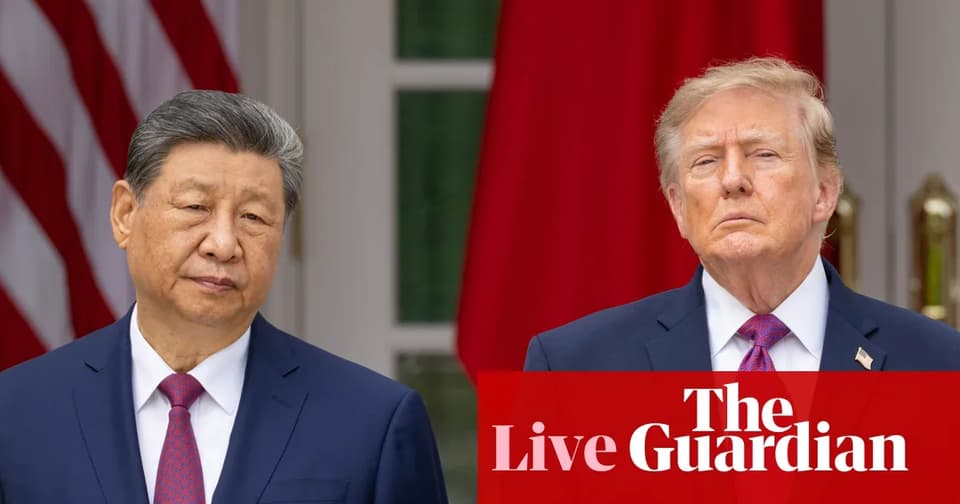
Chinese President Xi Jinping arrived in Washington for a high-profile state visit, meeting President Donald Trump in the Oval Office to discuss trade, AI, and security. While Trump emphasized their personal rapport, Xi focused on geopolitical stability and fair treatment of Chinese firms. The summit concluded with a state dinner, but analysts expect no major breakthroughs due to deep-seated mistrust.
Key points
- Trump and Xi held bilateral talks at the White House, with Trump calling the meeting 'great' and highlighting their 'truly great friendship.'
- Xi Jinping urged the US to oppose 'Taiwan independence' and handle the issue with prudence, while also supporting a June US-Iran deal to end the war and reopen the Strait of Hormuz.
- Both leaders discussed artificial intelligence, with Xi stressing that AI development must remain under human control and serve human wellbeing.
- A state dinner was held featuring a menu blending American and Chinese culinary traditions, with tech CEOs like Jensen Huang and Sam Altman in attendance.
- Xi did not stay at the traditional Blair House guest residence, opting instead for the Waldorf Astoria hotel in Washington.
Background
This visit follows a May summit in Beijing where the two leaders agreed to pursue 'constructive strategic stability.' Recent polls show a slight warming in US public opinion toward China, though underlying tensions over tariffs, AI, and alliances remain high. China had previously outlined four 'red lines' for the visit, focusing on sovereignty and human rights.
How outlets are covering it
The Guardian and The Atlantic highlight the diplomatic optics, noting Trump's deferential red-carpet welcome at Joint Base Andrews, which The Atlantic described as a rare act of deference. CBS News, however, emphasizes the underlying friction, quoting Chinese analysts who argue that 'pressure doesn't work' on Beijing and that the relationship is 'far from stable' due to recent US blacklisting of Chinese companies. While The Guardian notes Trump's focus on personal friendship, CBS points out that Xi’s remarks were more focused on geopolitical concerns and mutual trust, suggesting a disconnect between the two leaders' priorities.
Why it matters
The outcome of these talks could influence global trade policies, AI regulation standards, and the security dynamics in the Indo-Pacific, particularly regarding Taiwan and the ongoing conflict in the Middle East. The lack of a major breakthrough suggests that US-China relations will remain characterized by intense competition and cautious diplomacy.
What to watch
The two nations are expected to continue dialogue on AI safety and trade, but concrete policy changes are unlikely in the short term. The US may face internal pressure to approve the suspended $14 billion arms sale to Taiwan, while China will likely continue to push for fairer market access for its tech and EV sectors.
- Trump-Xi live updates: leaders of US and China to talk AI and trade in major Washington meeting The Guardian
- Trump to Host Xi at the White House: Live Summit Meeting Updates The New York Times
- Chinese analysts say Trump should "understand pressure doesn't work," as he and Xi tackle thorny issues CBS News
- The Deferential President The Atlantic
- Trump greets Xi with lavish fanfare, but expectations for the summit remain low cnn.com
Want the full story? Read the original reporting
Read on The Guardian