
Carney Rejects Lutnick’s Blame as U.S.-Canada Tariff War Escalates
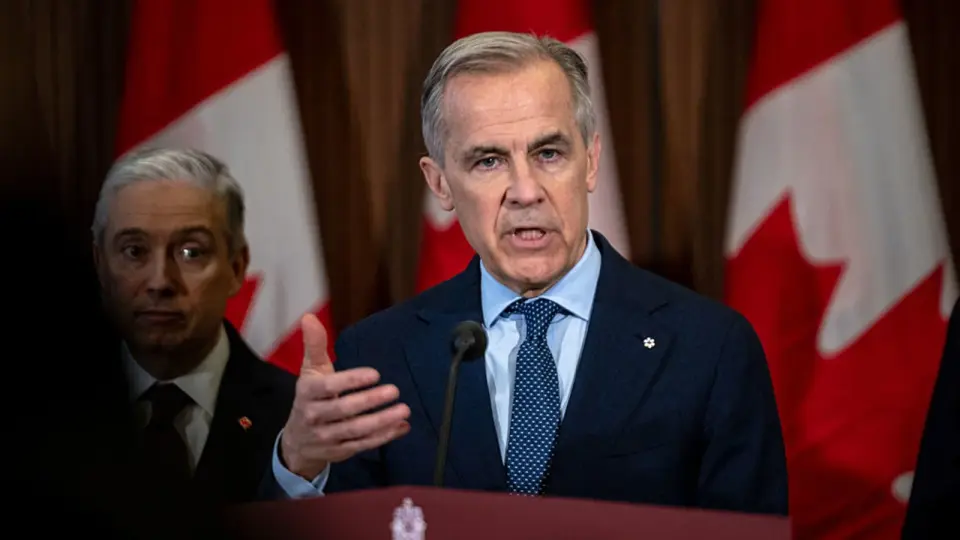
Canadian Prime Minister Mark Carney rejected claims by U.S. Commerce Secretary Howard Lutnick that Ottawa sabotaged trade negotiations for political gain. Carney stated that Washington shifted its red lines at the last minute, particularly regarding French-language protections and truck tariffs, but affirmed Canada remains ready to negotiate. The dispute has triggered a cycle of retaliatory tariffs, with Canada set to impose duties on nearly $28 billion of U.S. goods starting September 8, while Trump warned of economic collapse for Canadian politicians.
Key points
- Carney criticized Lutnick for commenting on Canadian politics, stating that unelected U.S. officials are not experts on domestic affairs.
- Lutnick claimed Canada blew up a nearly complete deal for political reasons, while Carney accused the U.S. of changing its demands on trucks and language rights at the eleventh hour.
- Canada is set to impose retaliatory tariffs on approximately $28 billion of U.S. goods starting September 8, matching the 50% U.S. tariffs on $20 billion of Canadian imports.
- U.S. Trade Representative Jamieson Greer denied that language requirements were the primary sticking point, arguing instead that Canada’s stance on heavy-duty trucks torpedoed the talks.
- Trump posted on Truth Social that making him the enemy will eventually harm Canadian politicians as the economy struggles, while Carney urged U.S. officials to stop 'throwing shade' and negotiate seriously.
Background
This conflict follows the collapse of U.S.-Canada trade negotiations in August, which missed a deadline for new tariffs. Previous coverage noted that Trump had imposed 50% tariffs on Canadian goods in July and demanded Canadian firms relocate headquarters to the U.S. in August. Carney had previously rallied support for a dollar-for-dollar retaliation strategy, framing the dispute as a test of Canadian sovereignty.
How outlets are covering it
CNBC and CTV News highlight Carney’s direct rebuttal of Lutnick, emphasizing that the U.S. changed its position on truck tariffs and language issues. The Guardian provides a broader view, noting that U.S. Trade Representative Jamieson Greer downplayed the impact of the trade war on the U.S. and blamed Canada for the breakdown, suggesting a lack of genuine desire for a deal from Ottawa. While all sources agree on the current impasse, they differ on the primary cause: Carney points to shifting U.S. red lines, while U.S. officials cite Canadian intransigence on specific trade terms.
Why it matters
The breakdown in talks has led to a full-scale tariff war between the world’s two largest trading partners. The impending implementation of retaliatory duties will likely increase costs for consumers and businesses in both countries, potentially disrupting supply chains for essential goods and services. The political rhetoric from both sides suggests a prolonged period of economic friction, with no immediate path to resolution visible.
What to watch
Canada’s retaliatory tariffs are scheduled to take effect on September 8. Carney has indicated that negotiations can resume if the U.S. stops engaging in public attacks and adopts a serious approach. However, Trump’s recent comments suggest he remains unwilling to concede, warning of severe consequences for Canadian leaders if the economic pressure continues.
- Carney claps back at Lutnick, says Canada will resume trade talks 'when the Americans are ready' CNBC
- Carney Tells Trump Officials to ‘Stop Throwing Shade’ Over Canada-U.S. Trade Talks The New York Times
- PM Carney says U.S. officials have changed red lines in trade deal since talks collapsed CTV News
- Canada's Carney says US needs to start being serious before trade talks can resume Reuters
- Mark Carney tells US to ‘start being serious’ amid escalating trade war The Guardian
Want the full story? Read the original reporting
Read on CNBC