
Supreme Court Divides on Colorado Preschool Funding and Religious Exemptions
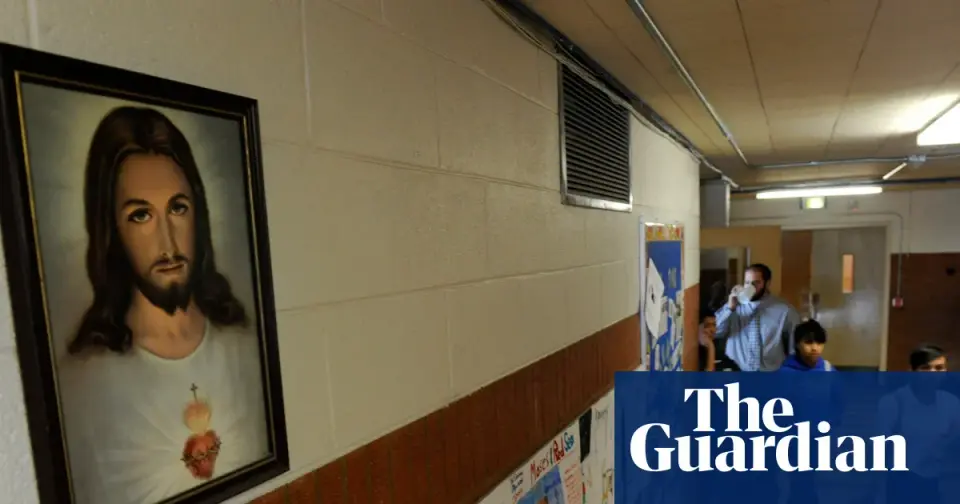
The US Supreme Court heard arguments on November 3 in St. Mary Catholic Parish v. Roy, a case determining if Colorado’s universal preschool program violates the First Amendment by requiring religious schools to accept children of LGBTQ parents. The Court is split, with conservative justices sympathetic to the schools’ religious freedom claims and liberal justices skeptical of the discrimination argument. A ruling could significantly reshape the balance between religious exemptions and nondiscrimination laws in public funding.
Key points
- The case involves two Catholic preschools in Colorado, St. Bernadette in Lakewood and St. Mary in Littleton, which were excluded from a 2023 state-funded preschool program because they refuse to admit children of LGBTQ parents.
- Colorado’s program provides 15 hours per week of state-funded preschool and requires participating schools to agree to nondiscrimination policies covering sexual orientation and gender identity.
- The plaintiffs, including the Denver Archdiocese, argue that conditioning funding on these policies constitutes religious discrimination under the First Amendment.
- Conservative justices, including Neil Gorsuch, appeared sympathetic to the schools, while liberal justices, including Ketanji Brown Jackson and Elena Kagan, questioned the discrimination claim and noted that some Catholic schools already participate in the program.
- The case could overturn or reinterpret Employment Division v. Smith, a 1990 precedent that limits religious exemptions from neutral laws of general applicability.
Background
This case follows a decade of Supreme Court decisions, including Trinity Lutheran v. Comer (2017), Espinoza v. Montana Department of Revenue (2020), and Carson v. Makin (2022), which established that states cannot categorically deny public funding to religious institutions. The current dispute tests whether these precedents apply when nondiscrimination requirements conflict with religious doctrine. Lower courts had upheld Colorado’s program, citing Employment Division v. Smith, but the Supreme Court’s conservative majority has shown willingness to expand free exercise protections in similar cases.
How outlets are covering it
The Guardian and National Catholic Reporter both highlight the core conflict between religious freedom and nondiscrimination laws but emphasize different aspects. The Guardian focuses on the Court’s divided reaction, noting conservative justices’ sympathy and liberal justices’ skepticism. The National Catholic Reporter provides more detail on the legal precedents, such as the Trinity Lutheran trilogy, and includes expert opinions from Frank Ravitch and Leslie Griffin, who argue that a ruling for the schools could allow religious institutions to discriminate based on race or gender while receiving public funds. The National Catholic Reporter also notes the involvement of the US Conference of Catholic Bishops and the Trump administration’s support for the plaintiffs, which the Guardian does not mention.
Why it matters
The outcome of St. Mary Catholic Parish v. Roy could redefine the scope of religious exemptions in public funding programs across the US. If the Court rules in favor of the Catholic schools, it may allow faith-based institutions to exclude LGBTQ families from publicly funded services, potentially setting a precedent for other forms of discrimination. Conversely, a ruling for Colorado would reinforce the principle that nondiscrimination laws apply to all recipients of public funds, regardless of religious affiliation. The case also tests the limits of Employment Division v. Smith, which has been cited in lower courts but rarely by the Supreme Court in recent decades.
What to watch
The Supreme Court is expected to issue a ruling by next summer. The decision will likely hinge on whether the Court interprets Colorado’s nondiscrimination policy as a neutral law of general applicability or as a targeted restriction on religious exercise. If the Court overturns Employment Division v. Smith, it could open the door for broader religious exemptions in public funding, potentially affecting other faith-based institutions and social support programs.
- US supreme court to hear arguments in Catholic preschools’ LGBTQ+ exclusion case The Guardian
- Supreme Court prepared to rule that publicly funded religious schools can reject children of same-sex couples CNN
- Justices Seem Likely to Side With Colorado Catholic Schools Seeking Public Money The New York Times
- Supreme Court seems likely to side with Catholic preschools in fight over Colorado program CBS News
- Supreme Court takes up religious liberty, LGBTQ rights in Catholic preschool case National Catholic Reporter
Want the full story? Read the original reporting
Read on The Guardian