Tag

Law And Policy

All articles tagged with #law and policy

UK officials weigh age-of-consent reform after Brand accuser Mia Latter waives anonymity
law-and-policy12 days ago

UK officials weigh age-of-consent reform after Brand accuser Mia Latter waives anonymity

Mia Latter, formerly known as 'Alice,' has waived anonymity to allege Russell Brand raped her when she was 16. She is campaigning for a 'staggered' age of consent to criminalize sexual relationships between adults and minors under 18. UK government officials, including de facto deputy PM Louise Haigh, have said the proposal deserves consideration, while the Metropolitan Police continue investigating her specific allegations, which were excluded from Brand’s recent trial.

Supreme Court arguments reveal deep split over H-2A visa enforcement powers
law-and-policy16 days ago

Supreme Court arguments reveal deep split over H-2A visa enforcement powers

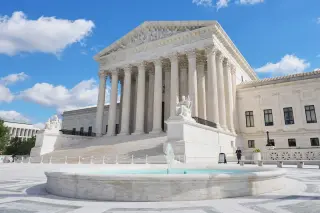
The Supreme Court heard nearly two hours of arguments on November 10 regarding whether the Department of Labor can impose civil penalties on employers violating H-2A visa conditions through internal administrative tribunals. The case, Department of Labor v. Sun Valley Orchards, challenges the constitutionality of agency adjudication for labor disputes. While the government argued that immigration-related matters fall under the 'public rights' exception allowing non-Article III adjudication, several justices questioned whether this extends to workplace conditions. The Solicitor General warned that a loss could trigger a 'nuclear option' requiring Congress to overhaul federal enforcement mechanisms across multiple agencies.

UK Crime and Policing Act bans possession of specific adult content categories
law-and-policy20 days ago

UK Crime and Policing Act bans possession of specific adult content categories

As of November 6, 2026, the UK has criminalized the possession and publication of specific adult content categories, including depictions of strangulation, simulated incest, and sexual activity involving individuals appearing under 16. The measures, part of the Crime and Policing Act, carry prison sentences of up to five years for publication and two to three years for possession. While the government frames the ban as a measure to prevent violence against women and children, critics and industry experts warn that the legislation’s broad definitions could inadvertently criminalize consensual kink activities and significantly impact global adult content creators and platforms.

Supreme Court Divides on Colorado Preschool Funding and Religious Exemptions
law-and-policy24 days ago

Supreme Court Divides on Colorado Preschool Funding and Religious Exemptions

The US Supreme Court heard arguments on November 3 in St. Mary Catholic Parish v. Roy, a case determining if Colorado’s universal preschool program violates the First Amendment by requiring religious schools to accept children of LGBTQ parents. The Court is split, with conservative justices sympathetic to the schools’ religious freedom claims and liberal justices skeptical of the discrimination argument. A ruling could significantly reshape the balance between religious exemptions and nondiscrimination laws in public funding.

New Jersey Deputy AG Fired After AI CSAM Arrest
law-and-policy1 month ago

New Jersey Deputy AG Fired After AI CSAM Arrest

Brian Richard Fitzgerald, a 51-year-old New Jersey deputy attorney general, was arrested and fired after being charged with creating and distributing AI-generated child sexual abuse material (CSAM). Investigators traced a Discord account to his Pennsylvania home, where they recovered AI prompts and chat logs admitting to the crimes. The case highlights the DOJ’s stance that AI-generated CSAM is legally equivalent to real CSAM.

Supreme Court Weighs Fate of Climate Liability Lawsuits in Boulder vs. Oil Giants
law-and-policy1 month ago

Supreme Court Weighs Fate of Climate Liability Lawsuits in Boulder vs. Oil Giants

The US Supreme Court heard arguments on October 5 in Suncor Energy v. Boulder County, a pivotal case determining whether federal law preempts state-level climate damages lawsuits against ExxonMobil and Suncor. Boulder seeks billions in compensation for climate-related harms, alleging the companies concealed knowledge of fossil fuel impacts. While the court’s direction remains unclear, experts suggest the justices struggled to find a clear legal basis for the industry’s preemption arguments. A ruling is expected next summer, with potential implications for dozens of similar cases nationwide.

Supreme Court Opens Term with Pivotal Climate Liability Hearing
law-and-policy1 month ago

Supreme Court Opens Term with Pivotal Climate Liability Hearing

The U.S. Supreme Court begins its new term on October 5 by hearing arguments in Suncor Energy v. Boulder County, a landmark case determining whether federal law preempts state-level climate damages lawsuits against fossil fuel companies. Boulder seeks billions in damages from ExxonMobil and Suncor for alleged climate-related harms, alleging decades of deception. Justice Samuel Alito has recused himself due to stock holdings, creating a risk of a 4-4 split that would uphold the lower court’s decision without setting a national precedent. The outcome could impact dozens of similar lawsuits across the U.S., including a major suit by California.

New U.S. and California Laws Trigger Fresh Lawsuits Over Nazi-Looted Art in Pasadena and Auschwitz
law-and-policy2 months ago

New U.S. and California Laws Trigger Fresh Lawsuits Over Nazi-Looted Art in Pasadena and Auschwitz

Two new lawsuits filed in California demand the return of artworks seized by the Nazis, citing recent state and federal legislation that strengthens claims for Holocaust survivors and their heirs. One suit targets the Norton Simon Museum in Pasadena for the return of 16th-century paintings by Lucas Cranach the Elder, while the other seeks watercolors from the Auschwitz Memorial that were forced upon a prisoner by Josef Mengele. Both museums assert they hold legal title to the works, but plaintiffs argue new laws eliminate previous statutory defenses, allowing cases to proceed on their merits.

Fifth Circuit rejects Jackson water lawsuit, ruling clean water not a constitutional right
law-and-policy2 months ago

Fifth Circuit rejects Jackson water lawsuit, ruling clean water not a constitutional right

The US Fifth Circuit Court of Appeals ruled that the federal constitution does not guarantee a right to clean drinking water or accurate government information, upholding the dismissal of a 2022 lawsuit by Jackson, Mississippi residents. The court stated that while the city’s water mismanagement was serious, it did not violate the 14th Amendment’s protection of bodily integrity. Residents must seek remedies through tort claims or political action rather than constitutional litigation.

Supreme Court poised to resolve federal-state clash over prediction market sports bets
law-and-policy2 months ago

Supreme Court poised to resolve federal-state clash over prediction market sports bets

New Jersey has petitioned the U.S. Supreme Court to resolve a conflict between federal and state authority over prediction markets. The case follows a split in federal appellate courts: the Third Circuit ruled that the Commodity Futures Trading Commission (CFTC) has exclusive jurisdiction over sports event contracts, while the Ninth Circuit ruled that such contracts are gambling subject to state laws. This legal divide creates inconsistent regulations for platforms like Kalshi across different jurisdictions.

California Court Rules Private License Plate Surveillance Does Not Constitute Legal Harm
law-and-policy3 months ago

California Court Rules Private License Plate Surveillance Does Not Constitute Legal Harm

A California appeals court rejected a class action lawsuit against Digital Recognition Network, ruling that the mere collection of license plate data does not constitute 'actual harm' under state law. The decision upholds a lower court dismissal of a 2021 suit by Guillermo Mata, who argued that the company’s 9 billion-image database violated privacy rights. While civil rights groups argue that surveillance itself is harmful, the court requires proof of specific misuse or unauthorized access to grant standing.

Texas Enforces Delta-8 Ban, Elevating Possession to Felony Offense
law-and-policy3 months ago

Texas Enforces Delta-8 Ban, Elevating Possession to Felony Offense

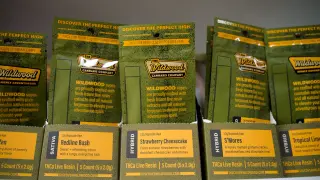
Effective July 31, 2026, Texas banned the sale and possession of synthetic hemp-derived THC products, including delta-8 and THCA flower, following a Supreme Court ruling. Possession is now a state jail felony carrying up to two years in jail and a $10,000 fine. Delta-9 products with less than 0.3% THC remain legal, but enforcement varies by jurisdiction.

Texas Enforces Ban on Synthetic THC, Leaving Only Delta-9 Legal
law-and-policy3 months ago

Texas Enforces Ban on Synthetic THC, Leaving Only Delta-9 Legal

Effective July 31, 2026, Texas bans the sale and possession of synthetically derived THC products, including delta-8, delta-10, and THCP. This move follows a May 2026 Texas Supreme Court ruling that allowed the Department of State Health Services to reclassify these substances as Schedule I drugs. Possession of these items is now a state jail felony, carrying up to two years in prison and fines up to $10,000. Only delta-9 THC products with less than 0.3% THC by dry weight remain legal. The ban impacts approximately 14,000 licensed retail locations statewide, with industry experts estimating that 60% to 90% of current THC inventory will be removed from shelves.