
US Troops Exit Iraq, Leaving Security Vacuum Amid Iranian Proxy Influence
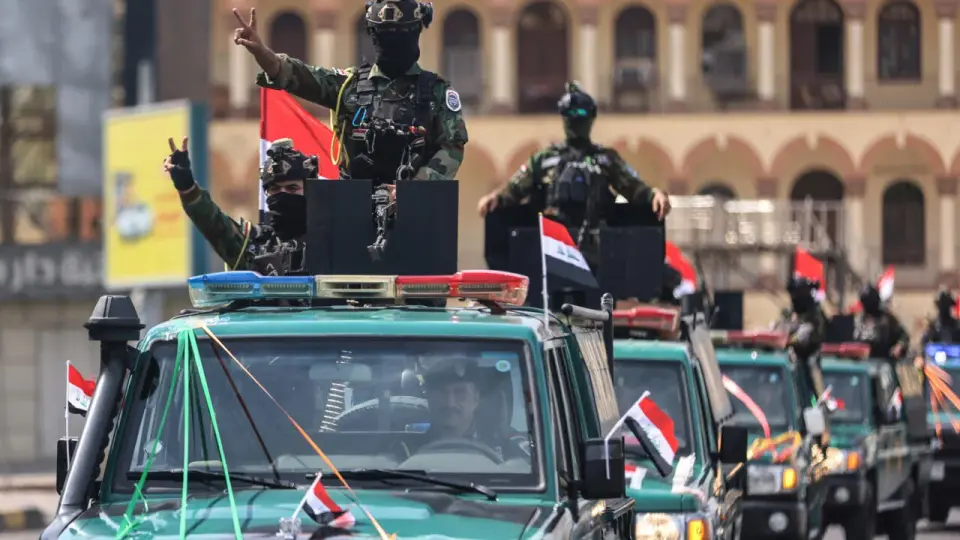
US forces have completed their withdrawal from Iraq, ending a two-decade presence that began with the 2003 invasion. While the move was agreed under President Joe Biden in 2024 and executed by the Trump administration, it creates a security vacuum. Analysts warn this departure may embolden Iran-backed militias and allow Islamic State remnants to regroup, shifting regional power dynamics toward Tehran.
Key points
- US troops relocated from Erbil Air Base to Jordan, where the counter-Islamic State mission continues with a focus on Syria.
- The withdrawal concludes a Biden-era agreement to zero out US personnel in Iraq by 2026, though the US retains the ability to launch strikes from Jordan if threats arise.
- Iran celebrates the exit as a victory for its 'axis of resistance,' while Iraqi officials fear the rise of Iranian proxies and Islamic State sleeper cells.
- Disarmament of Iranian-backed militias, such as Asa’ib Ahl al-Haq, has been extended to June 2027, with reports suggesting only partial compliance and the emergence of new splinter groups.
- The US withdrawal follows a conflict that killed 4,599 US service members and up to 210,000 Iraqi civilians, costing over $2.8 trillion.
Background
This withdrawal marks the end of a long-standing US presence that began with the 2003 invasion and included a return in 2014 to fight Islamic State. Recent months saw heightened tensions, including US strikes on Iran and disputes over the Strait of Hormuz. Iraq has also faced internal security challenges, including probes into militia attacks on Saudi infrastructure and border closures with Iran. The current exit follows a period of uneasy ceasefire between the US and Iran, with Washington shifting focus to other regional threats.
How outlets are covering it
France 24 emphasizes the security vacuum and the risk of Islamic State resurgence, noting that US intelligence and surveillance were critical to countering the group. The Washington Post highlights the shift in power to Iran, detailing how Tehran’s proxies, including the Popular Mobilization Forces, may expand their influence. While both outlets agree on the strategic loss for the US, the Post provides more detail on the logistical transition to Jordan and the specific failures of the disarmament process, such as the incomplete surrender of weapons by Asa’ib Ahl al-Haq. France 24 focuses more on the historical context of the 2003 invasion and the human cost, whereas the Post analyzes the geopolitical realignment, including new alliances between Saudi Arabia and Israel that may counterbalance Iranian influence.
Why it matters
The US withdrawal from Iraq signals a significant shift in Middle Eastern power dynamics, potentially allowing Iran to consolidate control through its proxy networks. This could destabilize the region, increase the risk of Islamic State resurgence, and complicate US-Iran relations. For Iraq, the absence of US support may strain its security forces, which have relied on American intelligence and training for years. The move also reflects the broader US strategy of reducing its footprint in the region while maintaining the ability to project power from Jordan.
What to watch
The US will continue its counter-Islamic State mission from Jordan, focusing on Syria but retaining the capability to strike into Iraq if necessary. Iraq must now assume full responsibility for its security, including the disarmament of Iranian-backed militias by June 2027. The effectiveness of this transition will depend on the strength of Iraqi security institutions and their ability to counter both Islamic State remnants and Iranian proxies. Regional alliances, particularly between Saudi Arabia and Israel, may also play a role in balancing Iranian influence.
- US forces leave Iraq, raising fears of Iran-backed militias amid power vacuum France 24
- US forces exit Iraq, emboldening Iran's proxies and Islamic State reuters.com
- As the last US troops exit Iraq, Kurdish fears rise and militias celebrate The Hill
- U.S. withdraws forces in Iraq as balance of power shifts to Iran The Washington Post
- Iraq: US troops withdraw after 12 years as Baghdad delays disarming Iran-backed militias to June 2027 DW.com
Want the full story? Read the original reporting
Read on France 24