
FAA Lifts Nationwide Ground Stop After Five-Hour Telecommunications Outage
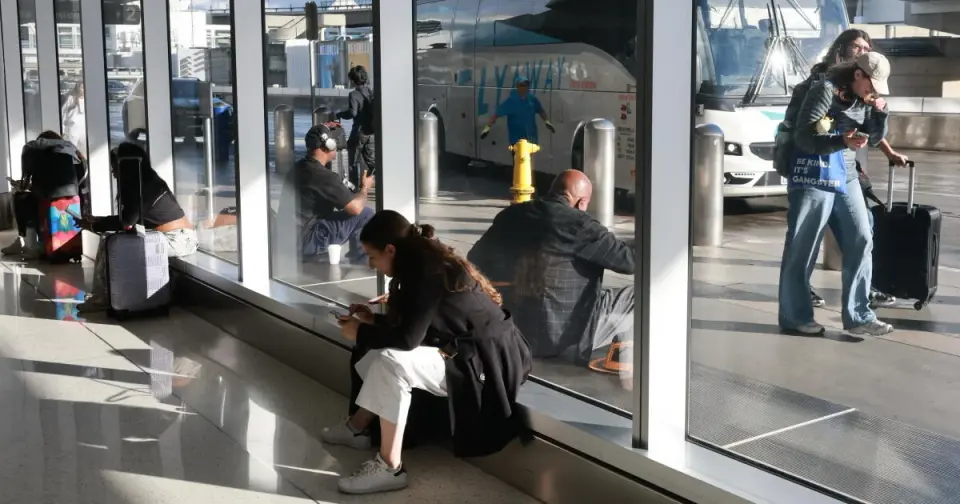
The Federal Aviation Administration lifted a nationwide ground stop at 8:15 p.m. ET on November 13, 2026, after halting all departing flights for approximately five hours due to a telecommunications outage affecting Air Route Traffic Control Centers. While the airspace reopened, officials warned that normal operations would take days to restore due to significant backlogs. Transportation Secretary Sean Duffy attributed the disruption to aging infrastructure and requested $50 billion in emergency funding for system upgrades. The incident, the second nationwide ground stop since 9/11, caused thousands of delays and cancellations, stranding travelers across major hubs like LAX and Chicago O'Hare. Officials confirmed the event was not a cyberattack or national security threat, though it followed a separate global Microsoft outage the previous day.
Key points
- The FAA issued a nationwide ground stop at approximately 1:00 p.m. ET on November 13, 2026, citing 'extraordinary circumstances and for reasons of safety.'
- The ground stop was lifted at 8:15 p.m. ET, but officials warned that full operational capacity would not be restored immediately due to flight backlogs.
- Transportation Secretary Sean Duffy stated the outage stemmed from a telecommunications issue and 'incredibly old' air traffic control technology that became overloaded.
- Duffy requested $50 billion in emergency funding from Congress to overhaul the aging air traffic control system, warning that similar outages could occur without modernization.
- Homeland Security Secretary Markwayne Mullin confirmed the incident was not a national security threat or cyberattack, though he noted no timeframe for resolution was initially established.
- The event marked the second nationwide ground stop since the September 11, 2001 attacks, with the previous occurrence happening in January 2023 due to a pilot notification system failure.
Background
This incident follows a series of recent disruptions in U.S. aviation and telecommunications infrastructure. In January 2023, a nationwide ground stop was issued after a contractor unintentionally deleted files related to the Notice to Air Missions (NOTAM) system, causing thousands of delays. The previous nationwide ground stop occurred after the September 11, 2001 attacks. Additionally, a massive global Microsoft outage affected millions of users on November 12, 2026, but officials confirmed the FAA ground stop was unrelated to that event. The current outage highlights ongoing concerns about the age and reliability of U.S. air traffic control systems, with no new Air Route Traffic Control Centers built since the 1960s.
How outlets are covering it
The Los Angeles Times emphasized the human impact of the ground stop, detailing the chaos and emotional turmoil experienced by stranded passengers at LAX, including those unable to reach family or secure alternative transportation. CNN focused on the official response, highlighting statements from Transportation Secretary Sean Duffy and Homeland Security Secretary Markwayne Mullin, who assured the public that the incident was not a security threat and that flights were being managed safely. Fox Business concentrated on the infrastructure and political dimensions, noting Duffy's demand for $50 billion in emergency funding to modernize the air traffic control system and the Senate Commerce Committee's call to prioritize upgrading outdated facilities. All sources agreed on the cause being a telecommunications outage and the lifting of the ground stop at 8:15 p.m. ET, but differed in emphasis: The Times on passenger experiences, CNN on official reassurances, and Fox Business on the need for systemic reform and funding.
Why it matters
The nationwide ground stop underscores the vulnerabilities of the U.S. air traffic control system, which relies on aging infrastructure. The incident disrupted thousands of flights, stranded millions of passengers, and highlighted the need for significant investment in modernizing aviation technology. The request for $50 billion in emergency funding signals a potential shift in federal priorities for infrastructure upgrades, while the lack of immediate resolution raises concerns about the reliability of air travel during peak holiday periods. The event also demonstrates the cascading effects of technical failures on global travel and the importance of robust contingency plans in aviation management.
What to watch
Airlines are expected to spend several days restoring normal operations as they reposition aircraft and crews. Passengers may continue to experience delays and cancellations in the coming days, particularly during the upcoming Thanksgiving travel season. Congress is expected to debate the $50 billion emergency funding request from Transportation Secretary Sean Duffy to modernize the air traffic control system. The FAA and Department of Transportation will continue to investigate the exact cause of the telecommunications outage to prevent future incidents. Airlines are monitoring flight statuses and providing updates to customers, while international flights are gradually resuming operations on a case-by-case basis.
- LAX, other airports filled with stranded passengers during nationwide ground stop: 'I might spend the rest of my life here' Los Angeles Times
- Live updates: Thousands of travelers stranded as some flights resume after hours-long ground stop CNN
- Thousands of flights canceled as airlines work to dig out from nationwide ground stop AP News
- Nationwide FAA ground stop lifted but cancellations, significant delays to continue: Transportation secretary Fox Business
- FAA ground stop throws sports world into travel chaos ahead of weekend games ESPN
Want the full story? Read the original reporting
Read on Los Angeles Times