
Autumn Migration Peaks: Hundreds of Millions of Birds Cross U.S. Skies
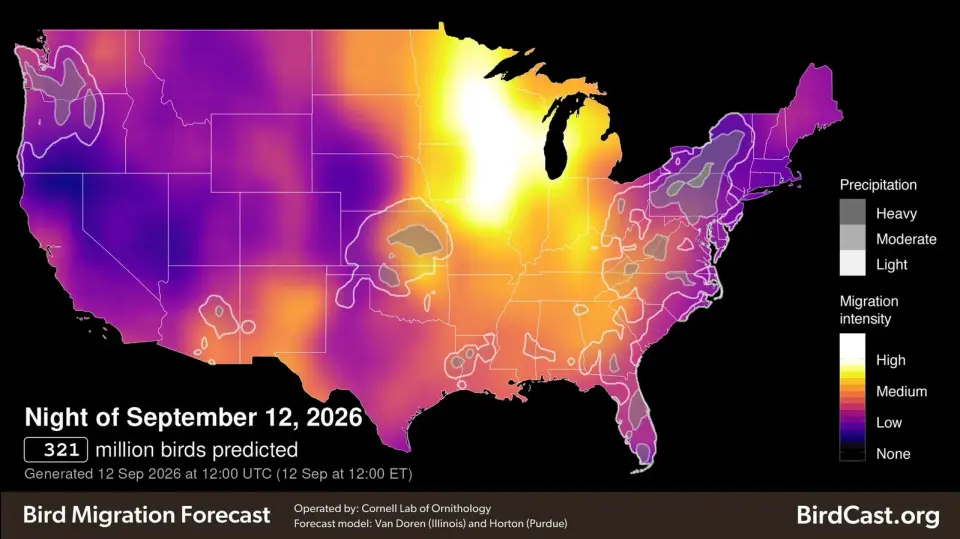
A massive autumn bird migration is underway across North America, with estimates suggesting hundreds of millions of birds are flying south. BirdCast data indicates peak activity in the Upper Midwest and Great Lakes regions, prompting officials to urge residents to reduce artificial lighting to prevent fatal collisions.
Key points
- BirdCast forecasts approximately 321 million birds migrating across the continental U.S. on September 12, 2026.
- Over 80% of North American migratory species travel at night, utilizing cooler temperatures and favorable winds.
- Peak migration traffic in Illinois reached 68 million birds around 2:20 a.m. on Tuesday, according to BirdCast.
- Officials in Chicago and Minnesota advise turning off exterior lights between 11 p.m. and 6 a.m. to protect birds.
- The migration is largely invisible from the ground, with birds typically taking off 30 to 45 minutes after sunset.
Background
This event follows a summer marked by isolated wildlife incidents, such as an American Airlines flight turning back in August 2026 after a bird strike. While that incident involved a single aircraft, the current migration involves a massive, coordinated movement of species across the continent, highlighting the scale of seasonal wildlife activity.
How outlets are covering it
MPR News and FOX 9 Minneapolis-St. Paul emphasize the sheer volume of birds in the Upper Midwest, citing BirdCast estimates of over 300 million birds nationwide. NBC 5 Chicago highlights the 'high alert' status in the Great Lakes region, noting that peak numbers occurred earlier in the week but remain significant. The Bangor Daily News offers a local perspective for Maine, focusing on specific species like snow buntings and starlings, and noting that while many birds migrate at night, some flocks are visible during the day. All sources agree on the importance of reducing artificial light to prevent disorientation and collisions.
Why it matters
Understanding the scale and timing of bird migration helps residents take simple, effective actions to protect wildlife. Reducing light pollution can significantly lower the risk of fatal collisions for millions of birds navigating through urban and suburban areas during their critical journey to winter habitats.
What to watch
The high migration alert is expected to continue through the weekend, with BirdCast forecasting slightly lower numbers than the peak seen earlier in the week. Residents are encouraged to maintain light-reduction practices through Monday morning to ensure the safety of the remaining migrating birds.
- Millions of birds taking flight Saturday night over Minnesota MPR News
- ‘High' bird migration alert continues as millions fly over Chicago area NBC 5 Chicago
- This outdoor spectacle will soon fill Maine’s skies and fields Bangor Daily News
- As Millions of Birds Migrate, Residents Are Asked to Turn Off the Lights The New York Times
- Minnesota bird migration: Millions flying south for seasonal migration FOX 9 Minneapolis-St. Paul
Want the full story? Read the original reporting
Read on MPR News