
A Mountain Town Wins Global Beauty Award for Turquoise Lakes and Rocky Views
A mountain town has been named the world's most beautiful summer destination, recognized for its turquoise lakes and rocky mountain views.

All articles tagged with #nature
A mountain town has been named the world's most beautiful summer destination, recognized for its turquoise lakes and rocky mountain views.
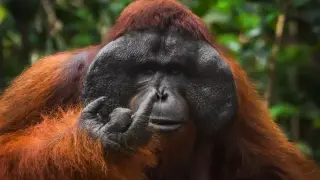
The 2026 Nikon Comedy Wildlife Photography Awards finalists have been revealed, featuring 47 images and nine videos selected from a record 10,000 submissions across 112 countries. The shortlist includes humorous scenes such as a giraffe appearing to wear a tree, a bear doing yoga, and a mantis posing on a leaf. Winners will be announced on December 8 in London, with the top prize being a safari in Kenya's Maasai Mara.
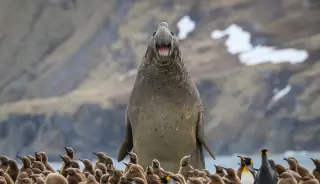
The 2026 Nikon Comedy Wildlife Awards have announced their finalists, marking a record-breaking year with over 10,000 submissions from 112 countries. The competition, which uses humor to foster empathy for wildlife, features 91 images displayed in London. Winners will be revealed on 8 December.
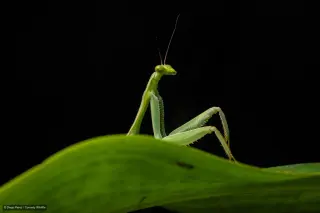
The 2026 Nikon Comedy Wildlife Awards have released their shortlist of 43 finalists, chosen from a record 10,000 entries submitted by photographers from 112 countries. The selection includes humorous images such as a caiman wearing a wig, brown bears appearing to laugh, and a leopard performing a handstand. Winners will be announced on December 8, with the top prize being a safari in Kenya's Maasai Mara. The competition aims to use humor to foster empathy for wildlife conservation.
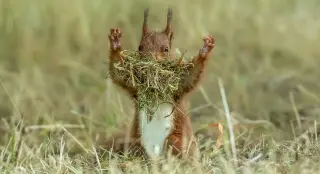
The 2026 Nikon Comedy Wildlife Photography Awards have released their finalists, selected from a record 10,000 submissions across 112 countries. The shortlist features 40 individual images, including a 'sexy' mantis in Peru, a squirrel attacking an owl in California, and a caiman with a 'wig.' Winners will be announced on December 8, with the top prize being a safari in Kenya's Masai Mara. The competition uses humor to foster empathy for wildlife conservation.

BBC Scotland published a gallery of amateur photographs submitted by readers between September 25 and October 2, 2026. The collection features diverse scenes from across the country, including wildlife, landscapes, and historical sites, showcasing local perspectives on Scottish life and nature.
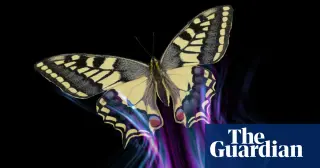
New research published in Nature reveals that butterflies evade predators not through camouflage, but by creating motion illusions. Researchers from the University of Exeter and Essex found that wing patterns, combined with flight dynamics, scramble a predator's perception of speed and direction, similar to a barber pole effect. This 'motion dazzle' causes birds to miss their targets or strike non-vital areas. The study suggests this mechanism is widespread in nature and may explain why brightly colored butterflies survive despite being visible.
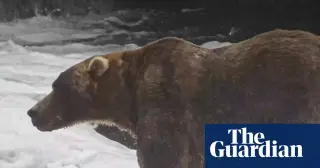
Brown bear 89, nicknamed 'Backpack,' won the 12th annual Fat Bear Week competition at Alaska’s Katmai National Park, defeating female bear 910 by approximately 5,000 votes. The contest, which celebrates bears gaining weight before hibernation, drew over 2.3 million global votes. Backpack, a 20-year-old male and son of 2019 champion Holly, is estimated to weigh 1,200 pounds. The event highlights the bears' resilience and preparation for winter, with all participants considered winners for their survival readiness.
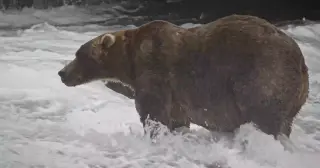
Brown bear 89, known as Backpack, won the 2026 Fat Bear Week competition at Katmai National Park in Alaska, defeating female bear 910 by approximately 5,000 votes. The event, which celebrates bears gaining weight before hibernation, saw record participation with over 2.3 million votes cast globally. Backpack, a 20-year-old male who previously suffered a severe leg injury, is the son of 2019 champion Holly. The competition, run by Katmai National Park and explore.org, highlights the bears' resilience and preparation for winter, with all participants considered winners for their survival readiness.
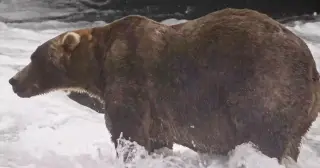
Brown bear 89, nicknamed 'Backpack,' won the 12th annual Fat Bear Week competition at Alaska’s Katmai National Park. He defeated female bear 910 by a narrow margin of approximately 5,000 votes in a final round that drew over 200,000 ballots. The event, which celebrates bears gaining weight before winter hibernation, saw record participation with more than 2.3 million total votes cast globally.
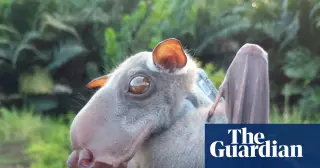
A massive international study published in Nature concludes that bats originated in Europe approximately 65 million years ago, overturning previous theories that placed their origins in Africa, Asia, or North America. By analyzing 103 bat genomes and 44 fossils, researchers determined that key traits like flight and echolocation evolved early in bat history. The findings provide a new framework for understanding bat disease resistance and longevity, which could inform human medical research, while highlighting the urgent need to conserve these ecologically vital mammals.

A new study published in Nature identifies gravitational torque from Earth's inner core as the primary driver of multidecadal changes in the length of a day. Researchers Huifeng Zhang and Mathieu Dumberry found that this gravitational influence competes with electromagnetic and topographic forces at the core-mantle boundary, which act as resisting mechanisms. These deep interior interactions have altered the day's length by several milliseconds between 1964 and 2019, providing new constraints on the physical properties of Earth's deep layers, including the viscosity of the inner core and the conductivity of the lowermost mantle.

A new study in Nature identifies gravitational torque between Earth's inner core and mantle as the primary driver of multidecadal changes in the length of a day. Researchers Huifeng Zhang and Mathieu Dumberry found that this gravitational influence competes with electromagnetic and topographic coupling, which act as buffers. These deep interior interactions have altered the day's length by several milliseconds between the early 1970s and 2021, providing new constraints on the physical properties of Earth's deep layers.
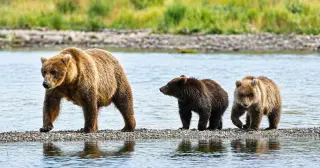
Fat Bear Week 2026 has launched with a historic twist: for the first time, entire bear families compete as single units in the bracket-style tournament. The event, running from September 22 to 29, features 16 contenders, including five mother-cub groups and 11 solo adults. The competition has drawn massive global attention, with the first day of voting causing technical delays due to unprecedented traffic. While the event serves as a fundraiser for the Katmai Conservancy, the season has also been marked by tragic wildlife incidents, including a rare case of infanticide captured on live cameras.
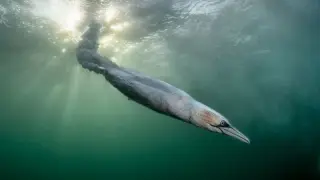
Henley Spiers won the 2026 Bird Photographer of the Year with 'Sunball Rocket,' a shot of a northern gannet diving through the ocean. The competition received over 24,000 entries and awarded prizes across eight categories, emphasizing authentic wildlife imagery in an era of AI-generated content.