
Artemis II Crew Honored as Trump Launches U.S. Space Academy
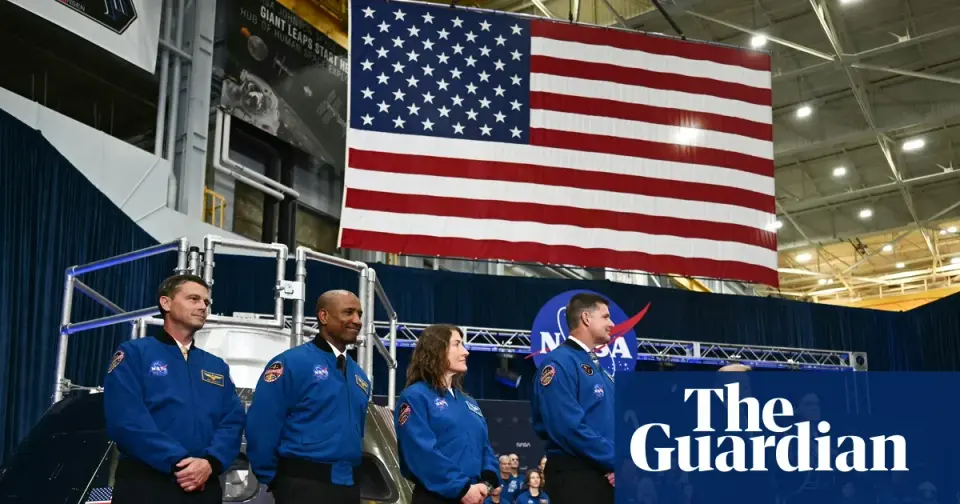
On August 28, 2026, President Donald Trump awarded the Congressional Space Medal of Honor to the four Artemis II astronauts at NASA’s Johnson Space Center in Houston. The crew, comprising Reid Wiseman, Victor Glover, Christina Koch, and Canadian astronaut Jeremy Hansen, was recognized for their April lunar flyby, which set a new distance record for humanity. During the ceremony, Trump signed an executive order to establish a U.S. Space Academy to train personnel for the Space Force, NASA, and the commercial space sector. The event highlighted the transition from lunar flyby to future surface landings, with Trump promising a return to the moon before his second term ends.
Key points
- Trump awarded the Congressional Space Medal of Honor to the Artemis II crew, making them the 34th group to receive the award since its 1969 inception.
- The Artemis II mission in April 2026 set a new record for the farthest distance humans have traveled from Earth, reaching 4,067 miles (6,545 km) from the lunar surface.
- Trump signed an executive order to create a U.S. Space Academy, intended to serve the Space Force, NASA, and the civilian spaceflight industry, though its location remains undecided.
- The ceremony included a live call from the International Space Station, where Trump spoke with the current crew and promised an Oval Office visit upon their return.
- NASA Administrator Jared Isaacman and Deputy Administrator Matthew Anderson emphasized the strategic competition with China for lunar resources, particularly near the south pole.
Background
The Congressional Space Medal of Honor was established in 1969, with Neil Armstrong as the first recipient. Previous recipients include Alan Shepard, John Glenn, and the crews of the Challenger and Columbia disasters. The most recent recipients before Artemis II were Doug Hurley and Bob Behnken, honored in 2023 for their 2020 SpaceX launch. The Artemis II mission followed the Artemis I uncrewed test and precedes Artemis III, a docking rehearsal planned for 2027, and Artemis IV, a lunar landing targeted for 2028.
How outlets are covering it
The Guardian and NASA focused on the historic nature of the Artemis II crew’s achievement and the prestige of the medal, noting that only 30 astronauts had previously received the honor. CBS News and The Washington Post emphasized the political dimension, particularly Trump’s announcement of the U.S. Space Academy and his claims about reviving the U.S. space program. CBS noted Trump’s controversial remarks about the state of NASA under previous administrations, while The Washington Post highlighted the lobbying efforts by Senator Ted Cruz for a Texas location. All sources agreed on the factual details of the medal award and the academy announcement, but differed in emphasis: The Guardian and NASA highlighted the scientific and historical milestones, while CBS and The Washington Post focused on the political implications and Trump’s rhetoric.
Why it matters
The award of the Congressional Space Medal of Honor to the Artemis II crew marks a significant milestone in the U.S. space program, recognizing the first crewed lunar flyby in over 50 years. The announcement of the U.S. Space Academy signals a new era of federal investment in space education and training, potentially reshaping the landscape for both military and civilian space operations. The event also underscores the intensifying competition with China for lunar resources, particularly near the south pole, and sets the stage for future Artemis missions, including a lunar landing by 2028.
What to watch
The U.S. Space Academy’s location will be decided 'shortly,' with Senator Ted Cruz lobbying for Texas. Artemis III, a docking rehearsal in Earth orbit, is planned for 2027, followed by Artemis IV, a lunar landing near the south pole, potentially as early as 2028. Trump has promised a return to the moon before his second term ends, with Mars exploration described as a near-term goal. The International Space Station crew is expected to return to Earth next month, with an Oval Office visit promised by Trump.
- Artemis II astronauts receive nation's highest space honor for their successful moonshot The Guardian
- Trump signs executive order to create a U.S. Space Academy CBS News
- NASA’s Artemis II Crew Receives Congressional Space Medal of Honor NASA (.gov)
- Trump announces creation of U.S. Space Academy The Washington Post
- Trump Creates a Space Academy and Honors the Artemis Astronauts The New York Times
Want the full story? Read the original reporting
Read on The Guardian