NASA has released new engineering footage from the Artemis II launch, showcasing the Space Launch System's power. The mission, which successfully tested the Orion spacecraft's life support and heat shield, has concluded, with crew members transitioning to emeritus status as NASA prepares for Artemis III in 2027.
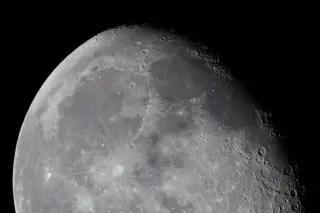
The annual International Observe the Moon Night invites moon lovers worldwide to view the Moon and learn about lunar science, with NASA-backed events and 22 happenings in the D.C. region. The piece also highlights recent lunar research: computer simulations suggest the Moon could have formed within five hours after the Theia impact, and a newly identified crater named McGetchin was detected on the Moon’s eastern edge from NASA’s LRO data, possibly visible as a flash under favorable conditions.
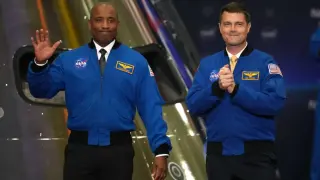
NASA’s Victor Glover has moved from active astronaut duty to emeritus status and begun a full-time, flexible executive adviser role at Cal Poly starting Sept. 1, aiming to guide leadership in engineering, AI and related fields while staying connected to NASA. The Artemis II mission around the Moon remains a milestone, and Glover anticipates contributing to Artemis program planning (Artemis III in 2027 and Artemis IV in 2028) from a new base on the West Coast as his family relocates.
Retired NASA astronaut Victor Glover arrives on Cal Poly SLO’s campus for orientation and begins a full-time strategic-advisor role guiding campus leadership on initiatives in engineering, aerospace, maritime, AI, cybersecurity, and national defense, while maintaining emeritus NASA status and expanding Cal Poly’s STEM partnerships.
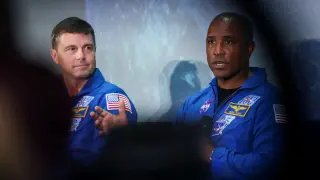
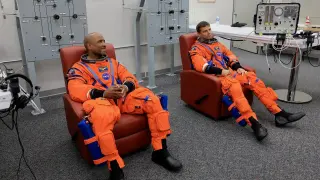
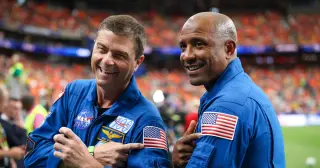
NASA says Artemis II commanders Reid Wiseman and Victor Glover will transition to emeritus status at Johnson Space Center, serving as consultants while pursuing other opportunities; Glover has accepted a leadership post at Cal Poly while Wiseman has not publicly announced his next move. The 10-day lunar flyby, which marked a historic return to the Moon, paves the way for Artemis III in 2027 and a potential crewed lunar landing in 2028.
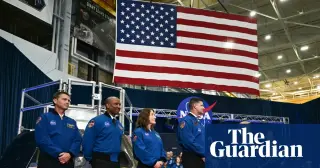
Three Artemis II crew members are transitioning to new roles: Reid Wiseman and Victor Glover will shift to emeritus status in September, serving NASA as consultants and helping plan Artemis III for 2027; Canadian mission specialist Jeremy Hansen is moving from active duty to reserve status with the Royal Canadian Air Force while continuing to contribute to Canada’s space efforts, and Christina Koch remains on active duty. Glover will join Cal Poly San Luis Obispo as an administrator and advisor, Wiseman has not announced post‑NASA plans, and Hansen will take on roles including honorary national president of Canada’s Air Cadet League and a forthcoming memoir. Artemis II, which flew around the Moon in April 2026, marked the first human mission beyond low Earth orbit since 1972.
NASA says Artemis II commander Reid Wiseman and pilot Victor Glover will leave active astronaut roles to become emeritus astronauts, dedicating time to mentor NASA staff and help guide future lunar missions. Glover has taken a leadership post at Cal Poly, while Wiseman’s plans remain undisclosed. The Artemis II crew, which also includes Christina Koch and Canada’s Jeremy Hansen, recently completed a lunar flyby that set a distance record for humanity.
Reid Wiseman and Victor Glover, Artemis II’s commander and pilot, are stepping away from active NASA astronaut duties to become emeritus astronauts, continuing to support lunar missions through mentoring and training. Christina Koch remains the mission’s sole active crew member, and Glover has taken a leadership post at Cal Poly while Wiseman’s future plans aren’t disclosed. The duo previously led Artemis II around the Moon, setting a distance record.
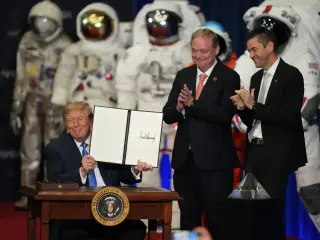
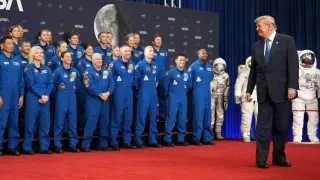
Trump arrived nearly 30 minutes late to NASA's Artemis II medal ceremony at Johnson Space Center and used the moment to promote a proposed US Space Academy, signing an executive order to study its creation, while awarding the Congressional Space Medal of Honor to Canadian astronaut Jeremy Hansen.
Artemis II’s Earth reentry tested Orion’s heat shield after Artemis I’s widespread char loss; the shield showed far fewer char-loss sites—about nine—than Artemis I’s 100-plus, and performed well despite a steeper reentry. This altered profile reduced downrange capability from 4,800 nautical miles to 1,775 miles. NASA plans a more permeable Avcoat for Artemis III to improve heat shielding and increase downrange reach. The Aerospace Safety Advisory Panel praised NASA’s leadership changes, calling the progress impressive and noting better alignment of strategy and execution following the Starliner mishap.
Artemis II commanders Reid Wiseman, Victor Glover, Christina Koch, and Canadian Jeremy Hansen were awarded the Congressional Space Medal of Honor by President Donald Trump at NASA's Johnson Space Center for their April lunar flyby aboard Orion, the first Moon mission of its kind in decades and a precursor to Artemis III/IV; the ceremony also touched on a proposed US space academy and timelines for future lunar exploration amid calls to return to the Moon before the next administration.
President Trump signed an executive order to establish the United States Space Academy, a new training institution intended to prepare a pipeline of officers for the Space Force, NASA, and the civilian space industry, with a presidential commission led by NASA administrator Jared Isaacman to oversee its creation. The move aligns with ongoing Artemis missions, though the program’s future faces questions after recent launch setbacks and strategic shifts in the Artemis program.
Trump signs an executive order creating the U.S. Space Academy to train Space Force personnel, NASA staff, and civilian spaceflight professionals, with a location to be announced soon, and awards the Artemis II crew the Congressional Space Medal of Honor; the move accompanies plans for a nuclear-powered interplanetary spacecraft and a broader push toward a lunar presence and eventual Mars exploration.
President Donald Trump signed an executive order to create the U.S. Space Academy, a space-focused military-style institution to train personnel for the Space Force, NASA, and the civilian space industry. He announced the plan during a visit to NASA’s Johnson Space Center, citing the rapid growth of the Space Force and the expanding space economy, and later awarded the Artemis II crew Congressional Space Medals as he indicated a campus location would be announced soon.
President Trump arrives in Houston for a closed-door RNC engagement and fundraiser before traveling to NASA’s Johnson Space Center to present the Congressional Space Medal of Honor to the Artemis II crew (Reid Wiseman, Victor Glover, Christina Koch, Jeremy Hansen) following their lunar-orbit mission. The White House schedule lists TBD arrival times and a 6 p.m. local RNC event, with Friday’s Artemis II ceremony at 10 a.m. local time; fundraiser tickets reportedly range from $10,000 to $500,000.