
Black voter turnout offsets redistricting losses in 2026 midterms
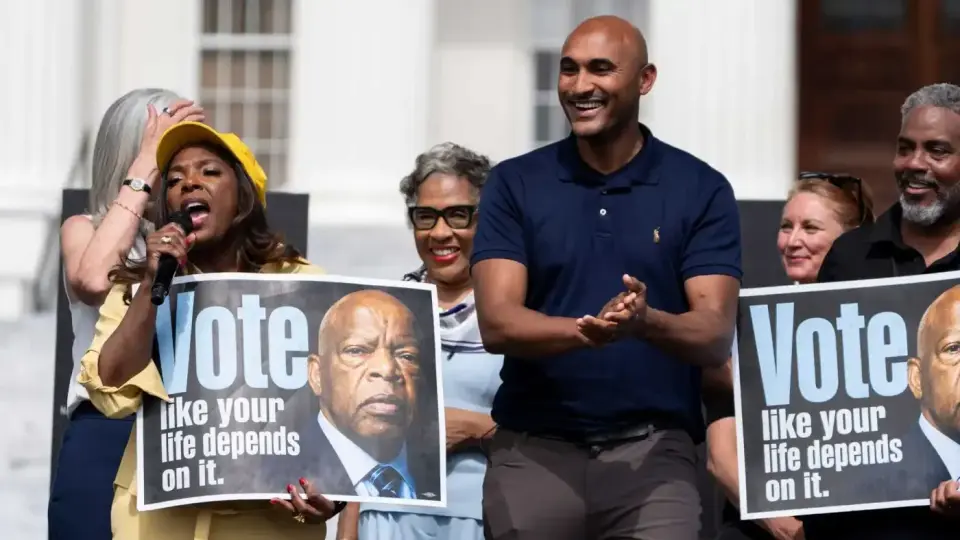
A surge in Black voter turnout during the 2026 midterms prevented a record drop in Black House representation, despite Supreme Court rulings that weakened the Voting Rights Act and allowed Republican-led redistricting in key states. While the incoming Congress will have 60 Black members, down from 63, high turnout in Alabama, North Carolina, and other Southern states helped Democrats retain or win seats that were previously at risk due to gerrymandering. Experts warn that future redistricting cycles, particularly after the 2030 census, could still threaten Black representation in Congress and local offices.
Key points
- The incoming U.S. House will have 60 Black members, a decline of three from the current 63, but this is far better than the record low of 59 after the 1876 election.
- Rep. Shomari Figures of Alabama won reelection despite his district being redrawn by Republican leaders to be more GOP-leaning, a move enabled by the Supreme Court's ruling in Louisiana v. Callais.
- High Black voter turnout in the South, described as a 'Black wave,' helped Democrats overcome redistricting hurdles in states like Alabama, North Carolina, and Texas.
- Democrats flipped districts in North Carolina and added new Black representatives in Colorado and Michigan, offsetting losses in other areas.
- The blue wave in Georgia broke the Republican trifecta, reducing the threat of further redistricting against Black Democratic representatives in the state.
- Experts warn that the Supreme Court's ruling in Louisiana v. Callais could lead to the dismantling of more opportunity districts for Black voters in future redistricting cycles, particularly after the 2030 census.
Background
This development follows the 2026 midterm blue wave, which saw Democrats reclaim control of both the House and Senate, flipping seats in traditionally Republican states like Georgia, Texas, and North Carolina. The wave also included historic wins in Pennsylvania and Nebraska, where Democrats secured key legislative and congressional seats despite Republican efforts to maintain control. The current situation highlights the tension between the Supreme Court's weakening of the Voting Rights Act and the political power of Black voters in the South.
Why it matters
The 2026 midterms demonstrate the resilience of Black voters in the face of redistricting efforts that aim to dilute their political power. While the blue wave has temporarily offset the decline in Black representation in Congress, experts warn that the Supreme Court's ruling in Louisiana v. Callais could have long-term consequences for Black voters in future redistricting cycles. The outcome of the midterms also highlights the importance of high voter turnout in maintaining political representation for minority communities.
What to watch
The next major redistricting cycle will occur after the 2030 census, which could lead to further changes in congressional and local district maps. Experts warn that the Supreme Court's ruling in Louisiana v. Callais could lead to the dismantling of more opportunity districts for Black voters, potentially resulting in a significant decline in Black representation in Congress and local offices. The political landscape will also be shaped by the outcomes of the 2028 presidential election, which could further influence the balance of power in Congress and state legislatures.
Want the full story? Read the original reporting
Read on NPR