
Colom schedules town hall in Itawamba County to bridge partisan divide
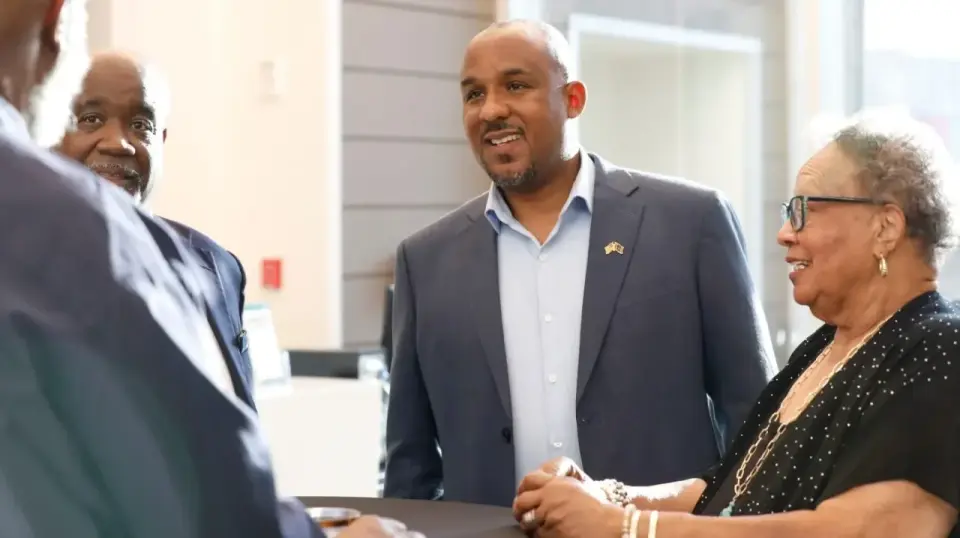
Sen.-elect Scott Colom (D-Miss.) will hold a town hall in Itawamba County next Tuesday, the county where he received his lowest vote share in the 2026 midterms. Colom, who defeated incumbent Cindy Hyde-Smith in a major upset, emphasized his commitment to representing all Mississippians regardless of how they voted. The event aims to engage voters in the state's most Republican-leaning area, where President Trump won by 80 points in 2024. Colom’s victory, described as historic for being the first Black senator elected by popular vote in Mississippi in nearly 150 years, was driven by high Black voter turnout and economic dissatisfaction with the incumbent administration.
Key points
- Colom announced the town hall in Itawamba County, northeast of Tupelo, where he received his lowest percentage of the vote.
- The event is framed as an opportunity for direct dialogue, aligning with Colom’s pledge to be a senator for all Mississippians.
- Itawamba County is a deep-red area; Trump won by 80 points there in 2024, and Hyde-Smith won by 66 points in the 2026 race.
- Colom’s victory was a massive upset, with the race taking days to call after Election Day.
- He is the first Black senator from Mississippi elected by popular vote since the Reconstruction era, following Blanche K. Bruce.
Background
Mississippi’s political landscape has historically been dominated by Republicans despite having the highest proportion of Black residents in the U.S. (37%). Previous attempts by Black Democrats, such as Mike Espy in 2018 and 2020, failed to unseat Hyde-Smith. The 2026 election marked a shift, with Colom’s campaign leveraging economic grievances and extensive grassroots organizing. The state’s voting infrastructure, including restrictions on early voting and voter roll purges, has been a point of contention, yet Colom achieved turnout levels comparable to presidential races.
How outlets are covering it
The Hill highlights Colom’s strategic outreach to Republican voters, noting his presence at a Trump rally and his claim that he shares common concerns with Trump supporters regarding gas prices and the Iran war. Trump himself praised Colom for campaigning in his line. NPR scholars Eddie Glaude and Kiese Laymon emphasize the cultural and historical significance of the win, describing it as a 'shock' to the political establishment and a result of 'intercultural' mobilization. They note that Colom’s viral 'pick another protein' ad resonated across racial lines by addressing cost-of-living issues. The Globe and Mail focuses on the material conditions driving the vote, citing affordability crises, healthcare cuts, and the role of Black women and youth in driving turnout. They note that while some Republicans crossed over, the victory was primarily due to high Democratic base turnout, with Colom winning 91% of Black voters and 76% of 18-29-year-olds according to exit polls.
Why it matters
Colom’s election signals a potential shift in the Deep South, where economic dissatisfaction and targeted organizing have overcome traditional partisan loyalties. His decision to hold a town hall in a heavily Republican county demonstrates an effort to build bipartisan support and legitimize his mandate in areas where he lost. The victory also highlights the impact of voter suppression efforts, which, according to some organizers, may have inadvertently increased motivation among Black voters. As the first Black senator from Mississippi in nearly 150 years, Colom’s tenure will be watched as a test of whether economic and social issues can sustain Democratic gains in the South.
What to watch
Colom will hold the town hall in Itawamba County next Tuesday. He is expected to continue engaging with voters across the state, particularly in areas where he lost, to fulfill his promise of representing all Mississippians. The focus will likely remain on economic issues, healthcare, and education, as these were central to his campaign. His ability to maintain support in deep-red areas will be a key indicator of his effectiveness as a senator.
- Colom announces town hall in reddest county of Mississippi The Hill
- Democratic Sen.-elect Colom responds to Trump’s praise The Hill
- Opinion | John Grisham: Scott Colom Makes Me Proud of Mississippi The New York Times
- 'Bigger than Barack Obama's election': Scholars reflect on Mississippi Senate race NPR
- Mississippi has a Black senator precisely because everything was stacked against him The Globe and Mail
Want the full story? Read the original reporting
Read on The Hill