
Midterm Forecast Split: Polls Signal Blue Wave, Experts Cite Local Resistance
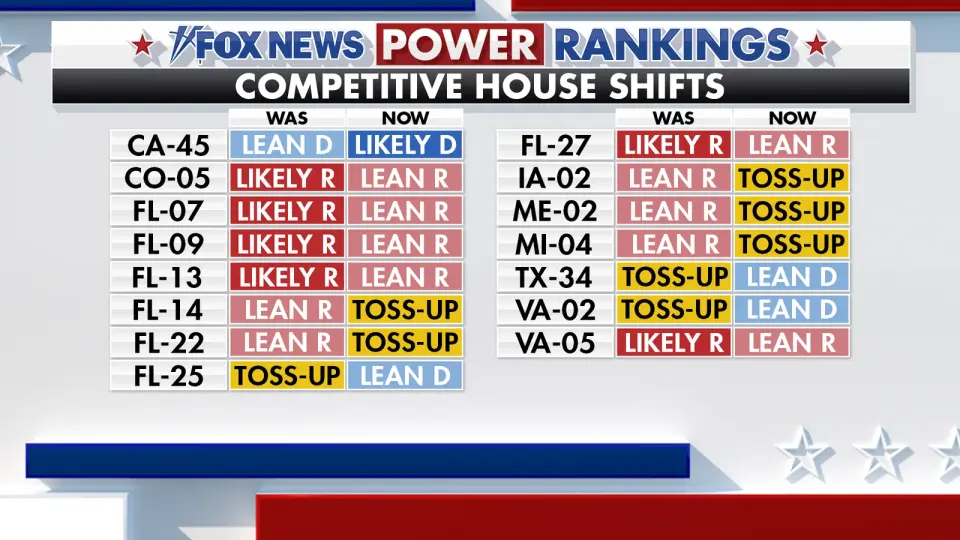
Democrats hold an 11-point lead among likely voters for the 2026 midterms, driven by high gas prices and low approval ratings for President Trump. While forecasters like Nate Silver predict a significant Democratic gain, traditional race analysts remain cautious, citing local campaign advantages for Republicans. Key risks for Democrats include the potential drag of progressive candidates and the impact of the Iran conflict on voter sentiment.
Key points
- New polls show Democrats leading Republicans by 11 points among likely voters, with 61% of respondents calling gas prices a 'major problem.'
- Gas prices have risen to $4.48, up 50% from the start of the Iran conflict, contributing to President Trump's highest disapproval rating of his term at 58.9%.
- Nate Silver’s FLIPR model projects Democrats winning the Senate with 65% probability and a median of 238 House seats, aligning with prediction markets.
- Traditional race analysts like the Cook Political Report rate the House as a toss-up, suggesting a more neutral national environment than polls indicate.
- Democrats face risks from progressive candidates endorsed by the Democratic Socialists of America, which polls show may deter some voters despite support for specific policies.
- In Kansas, the Senate race has shifted to a toss-up, while Texas and Alaska gubernatorial races have become more competitive due to data center issues and ranked-choice voting.
Background
This election cycle follows the 2024 presidential race where Republicans narrowly won. Historical data suggests the party in power typically loses seats in midterms, with the 2018 election seeing an 8.6-point popular vote swing. Current polling aligns with this historical pattern, though redistricting has reduced the number of competitive seats compared to previous decades.
How outlets are covering it
Fox News emphasizes the strength of the Democratic generic ballot lead but highlights potential pitfalls, such as the negative perception of the Democratic Socialists of America and the impact of the Iran war on gas prices. New York Magazine and Nate Silver argue that traditional race analysts are underestimating the national wave, noting that expert ratings often favor the incumbent party due to local campaign advantages. Silver points out that prediction markets and poll-based models align on a strong Democratic outcome, whereas race raters remain cautious. The divergence suggests that while national trends favor Democrats, local factors may limit the magnitude of their gains.
Why it matters
The outcome of the 2026 midterms will determine control of Congress and influence the legislative agenda for the next two years. A Democratic majority could lead to significant policy changes, particularly in healthcare and economic regulation, while a Republican hold would maintain the current administration's priorities. The race also reflects broader voter sentiment on economic issues, foreign policy, and the effectiveness of the current administration's strategies.
What to watch
With six weeks remaining until Election Day, key factors to watch include shifts in gas prices, the outcome of the Iran conflict, and the performance of progressive candidates in primary and general elections. Early voting is already underway in several states, which may provide early indicators of voter turnout and sentiment. Analysts will continue to monitor race ratings and polling data to adjust forecasts as the election approaches.
- Fox News Power Rankings: For the Democrats, where could it possibly go wrong? Fox News
- What Exactly Is a Wave Election? And Should Republicans Be on High Alert? The New York Times
- Wave or No Wave: Two Paths for the Midterms New York Magazine
- Expert ratings are ignoring signs of a blue wave Silver Bulletin
- Best-Case Midterm Scenarios for Democrats and Republicans yahoo.com
Want the full story? Read the original reporting
Read on Fox News