Republicans planned to delay the political fallout of health care cuts until after the 2026 midterms, but rising costs have already hurt voters. Democrats are leveraging this immediate pain to attack the GOP, though strategists warn that legislative power remains limited if Republicans keep the Senate and the White House.
President Trump has revised his $5,000 'dividend' promise, limiting it to adult citizens rather than all Americans, as he campaigns for Republican control of Congress in the 2026 midterms.
With six weeks left until Election Day, control of the U.S. Senate is a true toss-up. Democrats need a net gain of four seats to win the chamber, but current projections show a possible net gain of one to five seats. Three key races have recently shifted toward Democrats, balancing Republican financial advantages and creating a highly competitive landscape.
CNBC, citing new FEC filings, shows Republicans holding a substantial cash lead: about $233.4M in national-committee cash versus Democrats’ $130.4M, plus Trump-aligned MAGA Inc. with roughly $416M and at least $126M in reserved ad spending, pushing GOP planned ads to about $888M vs Democrats’ roughly $666M through Election Day. This financial edge gives Republicans more flexibility to bolster vulnerable races and target late-breaking contests in the final six weeks, even as Democrats hold strength in some battleground campaigns; Senate committees show a mixed picture with the DSCC at $37.6M and NRSC at $18.7M, while the DNC carries debt and the RNC leads overall in cash.
A new CNN poll shows Americans’ opposition to the Iran war has hardened, with about two-thirds saying the U.S. is not winning. Overall, 29% approve of Trump’s foreign affairs handling and 71% disapprove; only 26% approve of his Iran handling, down from 33% a month after the war began. Among Republicans, approval for Trump’s Iran handling has fallen from 73% in March to 60%. Democrats and independents are broadly negative on the war and Trump’s approach, while within the GOP there is some division (about 55% say the war has been worth its costs, and 53% say Trump is doing enough to end it). Additionally, roughly three-quarters say Trump lacks a clear plan for Iran and 78% say he isn’t doing enough to end the war, with about 70% predicting a long-term conflict and that it has harmed U.S. interests.
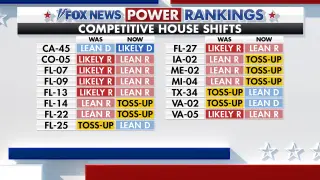
A Fox News poll shows Democrats leading the generic ballot among likely voters by 11 points (53-42), their widest lead of the year and a signal for a potential blue-wave midterm night as six weeks remain. The advantage translates into gains in the House and several battleground Senate races, with Hispanic voters shifting toward Democrats and issues such as gas prices and Iran policy shaping turnout. The piece also flags concerns about whether left-wing DSA candidates could drag down Dems and whether MAGA momentum could cap the Democrats’ ceiling in key states like Kansas, Alaska, Texas and Georgia.
A small group of Senate Republicans led by John Curtis, Josh Hawley, and John Kennedy is pressing for AI-safety action amid rising voter concern, pushing hearings, investigations of OpenAI, and proposals like kill switches, while party leaders remain divided and timing uncertain ahead of midterms and 2028 races.
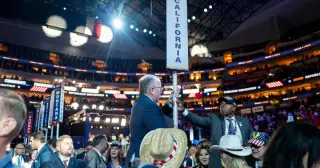
California Republicans in several competitive House districts are distancing themselves from Donald Trump and focusing on local issues to appeal to independents in a purple-leaning state shaped by redistricting, with some candidates skipping the president’s events and trimming Trump branding as they try to win swing voters while maintaining their base.
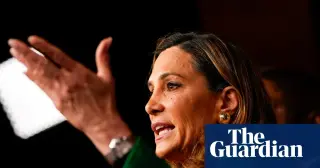
Florida Republican María Elvira Salazar publicly pushes back on Trump’s aggressive immigration enforcement, saying some White House advisers aren’t presenting the full picture and warning the approach could alienate Hispanic voters; she released a campaign ad criticizing the policy, while polls show Hispanics wavering from Trump ahead of the midterms, and GOP leaders acknowledge intra-party divisions—including Trump’s response and comments from Steve Scalise.
As midterms near and Trump’s approval remains under 40%, battleground Republicans are quietly distancing themselves from the president, softening references to Trump and retooling positions on issues like immigration, tariffs, and foreign policy to avoid dragging their campaigns. Wisconsin’s Tom Tiffany, Florida’s Maria Elvira Salazar, and several Iowa Republicans illustrate the trend, with others skipping party events to balance loyalty with voters’ preferences in a tougher political environment.
Rising mortgage costs, driven by inflation tied to Trump’s Iran conflict and tariffs, complicate Republicans’ bid to frame housing as affordable, even as they push a bipartisan ROAD to Housing plan to boost supply. With 30-year mortgage rates near 7% and the Fed signaling higher rates, relief from the new law will take months or years, forcing GOP to navigate blame between Biden and Trump while voters still identify housing as a top issue.
In a competitive Pennsylvania House race, incumbent Republican Brian Fitzpatrick has publicly positioned himself as independent from Donald Trump while pouring millions into attack ads against Democrat challenger Harvie; voters describe a mix of concerns about Trump’s influence and kitchen-table issues, and with no debate scheduled, it remains unclear whether distancing from Trump will be enough to secure reelection in a district where party loyalty and public service intersect.
Republican lawmakers display cautious support for Fed Chair Kevin Warsh’s independence after the Fed hikes rates, acknowledging the need to fight inflation while avoiding direct clashes with the new chair ahead of the midterms. The roundup also covers a stalled Senate push to pass the Ratepayer Protection Act addressing data-center electricity costs, renewed scrutiny of Flock Safety’s license-plate cameras and a related Senate hearing, a fundraiser for Mike Collins in Georgia, ongoing tensions with rebel House Democrats, and a new bipartisan AI policy working group signaling ongoing debates over AI safety, governance, and technology policy.
Amid warnings from OpenAI and Anthropic about AI risks, Republicans on Capitol Hill are split on how to regulate the technology: some push swift guardrails, kill-switch concepts, or standards via NIST, while others doubt tech executives’ motives or warn against overreach; President Trump also argues against regulation, highlighting a broader debate over balancing safety with innovation.
Top Texas Republicans largely backed Bo French despite a documented history of racist comments, with Gov. Greg Abbott endorsing him even as critics condemn the latest post; several party leaders criticized him but endorsements remain intact, and only Karl Rove and Sen. John Cornyn have said they will not vote for him, highlighting the GOP’s struggle to separate the candidate from the ticket.