
Early Vote Data and Final Campaign Pushes Define 2026 Midterm Outlook
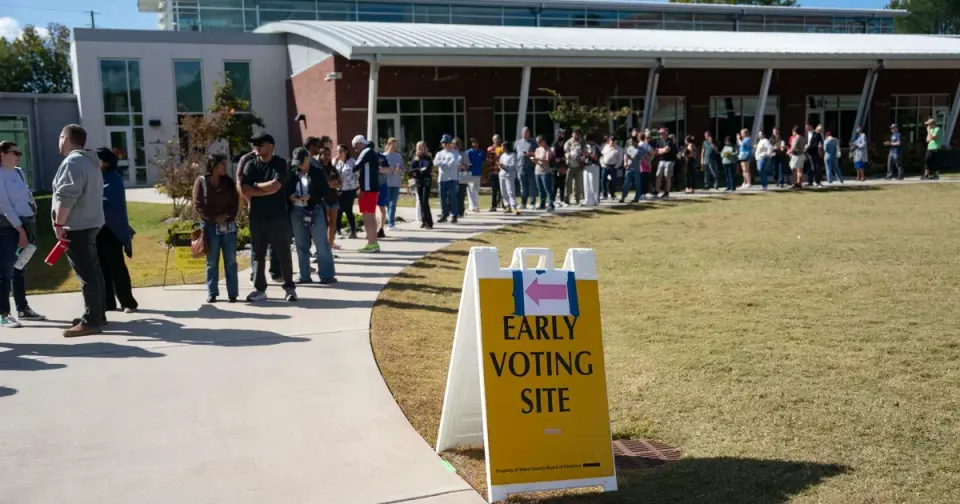
As the 2026 midterms approach, early voting data shows Democrats leading in turnout, while Republicans face internal divisions and a challenging electoral map. Key battlegrounds in Ohio, Texas, and Florida remain competitive, with candidates intensifying final appeals to voters amid rising concerns over the economy and foreign policy.
Key points
- Nearly 33 million Americans have voted early, with Democrats outpacing Republicans in party-registered early ballots.
- Ohio remains a critical battleground, with Trump campaigning for Sen. Jon Husted and Gov. Vivek Ramaswamy, though Ramaswamy faces backlash over a controversial ad.
- In Texas, Hispanic voter turnout is surging, potentially shifting the Senate race between Ken Paxton and James Talarico.
- Florida candidates are targeting crossover voters, with Rep. Byron Donalds appealing to traditional Democrats and Sen. Angie Nixon courting Puerto Rican voters.
- Senate Majority Leader John Thune faces a test of his strategy to preserve the Republican majority amid an unpopular war with Iran and high gas prices.
Background
The 2026 midterms are unfolding against a backdrop of economic strain and foreign policy disputes, including a war with Iran. Recent archive coverage highlights how health care costs have upended GOP strategy, while both parties have taken out significant loans to fund final advertising pushes. Democrats have secured a $15 million loan, while Republicans borrowed $20 million, reflecting the high stakes of retaining or gaining control of Congress.
How outlets are covering it
CBS News emphasizes the final campaign push, highlighting Trump’s rallies in Texas and Ohio, as well as internal GOP tensions over Ramaswamy’s ad. Time Magazine focuses on early voting trends, noting that while Democrats lead in early ballots, Republicans historically gain on Election Day, and highlights the surge in Hispanic voter turnout. The New York Times cautions that early voting data is limited in predicting outcomes, stressing that it does not reveal persuasion or Election Day turnout. National Review notes the wider partisan spread in early voting but remains cautious about predicting the final result, acknowledging the challenges Republicans face in maintaining their majority.
Why it matters
The 2026 midterms will determine control of Congress, with 47 House seats and 10 Senate races poised to decide the balance of power. The outcomes will shape the legislative agenda, including responses to economic issues, health care costs, and foreign policy, while also testing the viability of current party strategies in a highly competitive electoral environment.
What to watch
Election Day is scheduled for November 3, 2026. Final campaign efforts will continue in the coming days, with Trump and other party leaders making last-minute appearances in key battleground states. The outcome of the 2026 midterms will determine whether Democrats can achieve a 'blue wave' or if Republicans can maintain their narrow majorities in both chambers of Congress.
- Live Updates: 2026 midterm campaigns make final push before Election Day as early voters hit the polls CBS News
- What Early Voting Data Is Showing About the Midterm Elections Time Magazine
- Early Voting Offers Republicans Little Comfort National Review
- What Early Voting Can Reveal About the 2026 Midterm Elections So Far The New York Times
- Early voting outpacing last midterm, with Democratic participation leading the way WBFF
Want the full story? Read the original reporting
Read on CBS News