
Early Vote Surge Signals Democratic Momentum, But Analysts Warn of Election Day Uncertainty
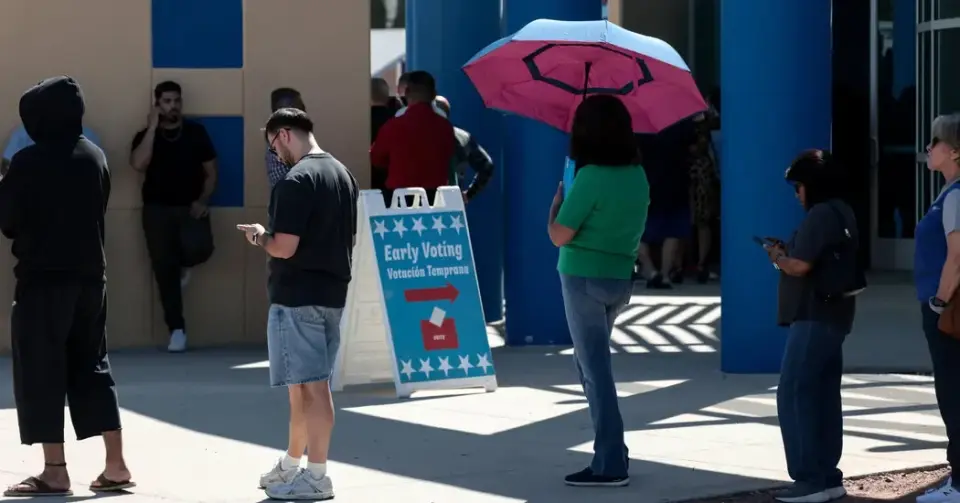
With 11 days until the 2026 midterm elections, early voting data shows a significant surge in turnout, particularly among Democrats, in key battleground states. While this suggests a strong performance for the opposition party, experts caution that early results do not guarantee final outcomes, as Republican voters often cast ballots later. The data highlights a 'red undertow' in some areas, where Republican participation is lagging due to economic frustration and the Iran conflict, while Democrats benefit from high enthusiasm and diverse voter engagement.
Key points
- Over 30 million Americans have cast early ballots, with Democrats accounting for 45% of these votes compared to 30% for Republicans, according to University of Florida data.
- Turnout in Texas, Kansas, and North Carolina is significantly higher than in 2022, with Texas early votes up 74% and Kansas more than doubling, per AP analysis.
- Republicans are facing a 'red undertow' in states like North Carolina and Iowa, where early participation is lagging behind 2022 levels, attributed to voter frustration over gas prices and the Iran war.
- Democrats need a net gain of four seats in each chamber to reclaim control of Congress, with the Senate race hinging on competitive states including Alaska, Iowa, and Michigan.
- Mail-in ballot requests have exceeded 57 million nationally, surpassing 2022 levels, despite recent executive orders attempting to restrict mail voting, which the Supreme Court struck down in September.
Background
This surge follows a period of intense tracking of early voting trends, where previous reports indicated a Democratic advantage in key Senate battlegrounds. Earlier coverage noted record-breaking early voting in Texas and surges in Georgia and North Carolina, while also highlighting legal challenges regarding voter ID and mail ballot restrictions. The current data builds on these trends, showing a broader national pattern of increased participation and a shift in voter enthusiasm.
How outlets are covering it
The New York Times emphasizes the limitations of early voting data, noting it reveals turnout but not persuasion or Election Day behavior. The Guardian and KOMO highlight the Democratic lead in early returns and the 'red undertow' among Republicans, linking it to economic and foreign policy frustrations. AP News provides specific state-by-state comparisons, showing surges in Texas and Kansas but declines in Iowa and Michigan, and notes the strategic spending shifts by Republicans, such as pulling back from North Carolina to focus on Kansas. All sources agree that while early data favors Democrats, the final outcome remains uncertain, with analysts like Mark Jones comparing the situation to a football game where a lead does not guarantee a win.
Why it matters
The early voting trends provide a critical snapshot of voter enthusiasm and potential shifts in power, particularly for the U.S. Senate, where Democrats are attempting to flip seats in traditionally Republican states. The data underscores the impact of economic issues and foreign policy on voter behavior, highlighting the risks for Republicans in the upcoming election. Understanding these dynamics is essential for predicting the balance of power in Congress and the broader political landscape in 2026.
What to watch
As Election Day approaches, attention will shift to the final week of early voting and Election Day turnout, particularly among Republican voters who have not yet cast ballots. The outcome of competitive Senate races in states like Kansas, Texas, and Ohio will be crucial in determining control of the chamber. Additionally, the return of mail-in ballots and any late-breaking developments in voter mobilization efforts will be closely monitored to assess the final impact of the early voting surge.
- What Early Voting Can Reveal About the 2026 Midterm Elections So Far The New York Times
- Map Shows States With Most Early Voters So Far Newsweek
- Surging turnout, with Democrats voting more: key takeaways from early voting data The Guardian
- Early voting outpacing last midterm, with Democratic participation leading the way KOMO
- Many states deciding control of the Senate are seeing a big boost in early voting, AP analysis shows AP News
Want the full story? Read the original reporting
Read on The New York Times