
Flávio Bolsonaro Arrives in Miami, Declares Self 'Leader' After Election Defeat
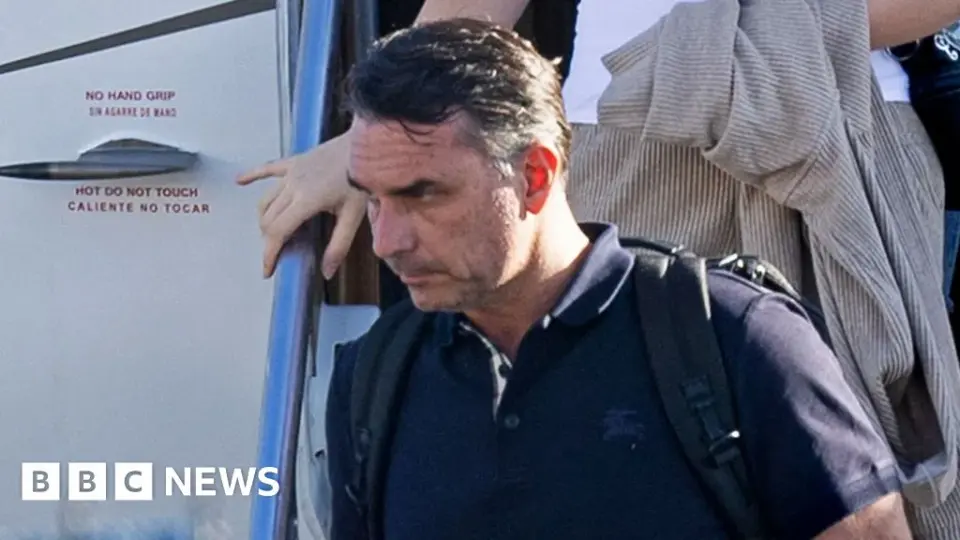
Flávio Bolsonaro arrived in Miami on October 28, 2026, after defying a Brazilian Supreme Court order to surrender his passports. Following his loss to Luiz Inácio Lula da Silva by 4.4 million votes in the presidential runoff, Bolsonaro declared himself the 'leader of Brazil' in a social media letter, alleging unfounded electoral fraud. The Trump administration granted visas for him and his family, while Lula condemned the departure as 'shameful.'
Key points
- Flávio Bolsonaro arrived in Miami on October 28, 2026, after traveling via Argentina and Ecuador following a 24-hour disappearance.
- He lost the presidential runoff to Luiz Inácio Lula da Silva by 4.4 million votes but refused to concede, alleging 'electoral fraud' without evidence.
- Bolsonaro defied a Supreme Court order to surrender his passports, which was issued as part of a money-laundering investigation he denies.
- The US State Department issued visas for Bolsonaro and his family, though the specific visa types were not disclosed.
- Lula described Bolsonaro's departure as a 'shameful act,' while Bolsonaro’s Liberal Party acknowledged the election result but criticized the move.
Background
This incident follows a 2026 Supreme Court order requiring Bolsonaro to surrender his passports within 24 hours of his election loss, stemming from a money-laundering probe. His younger brother, Eduardo Bolsonaro, has been in self-imposed US exile since March 2025, and Flávio’s departure mirrors his father Jair Bolsonaro’s 2022 exit after his own defeat. The move occurs amid rising tensions between Washington and Brasilia, with Trump previously suggesting the election was 'rigged' without evidence.
How outlets are covering it
BBC and AP News emphasize Bolsonaro’s refusal to concede and his claim of 'political persecution,' noting that his party acknowledged the result but faced internal divisions. AP highlights the potential power vacuum on Brazil’s right, while BBC notes that only 34,000 people voted during the extended hours Bolsonaro blamed for his loss. The New York Times and NPR focus on the logistical details of his flight via Argentina and Ecuador, and the US State Department’s visa issuance. Trump’s stance is described as non-committal by BBC and AP, with Trump calling the election 'embarrassing' but refusing to endorse Bolsonaro’s fraud claims. Lula’s condemnation is consistent across all sources, with NPR quoting him calling the departure 'shameful.'
Why it matters
Bolsonaro’s move to the US complicates US-Brazil relations, potentially creating a new layer of diplomatic friction as two Bolsonaro brothers now lobby in Washington. It also tests the stability of Brazil’s right-wing opposition, which retains significant congressional influence despite his departure. The episode may embolden far-right movements in Latin America, which have seen conservative gains in seven presidential elections in 18 months, though Lula’s victory limits Trump’s influence in the region.
What to watch
It remains unclear where Bolsonaro will stay or for how long, or how he plans to lead the opposition from the US. His party’s Liberal Party leader Rogério Marinho stated there is 'no evidence' of electoral fraud. Bolsonaro faces ongoing investigations in Brazil, including money laundering and tax evasion, and may face prosecution once his Senate immunity expires in January 2027. The US administration’s visa decisions and Trump’s non-committal stance suggest continued diplomatic tension between Washington and Brasilia.
- Flávio Bolsonaro calls himself 'leader of Brazil' after election loss BBC
- What to know about the impact of Flávio Bolsonaro’s arrival in the US AP News
- Flávio Bolsonaro Lands in Miami After Fleeing Brazil The New York Times
- Flávio Bolsonaro arrives in Florida after fleeing Brazil NPR
- Flavio Bolsonaro declares himself rightful president-elect of Brazil Reuters
Want the full story? Read the original reporting
Read on BBC