
Datacenter backlash fuels local political uprisings as developers pivot to California
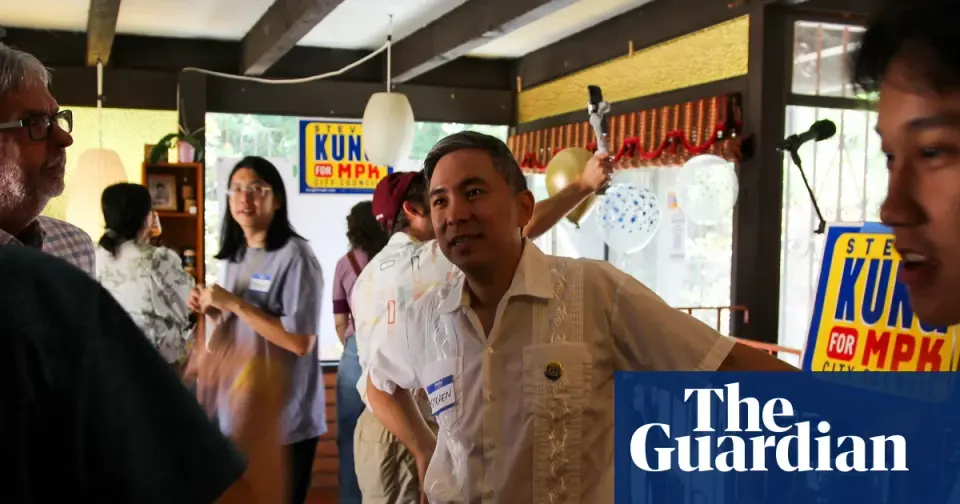
Community opposition to AI datacenters is transforming into a political movement, with dozens of first-time candidates running for local offices in 2026. While activists in places like Monterey Park and Marana have secured bans or council seats, developers are increasingly targeting California as a fallback market due to resistance in other states. This shift highlights a growing conflict between corporate infrastructure needs and local concerns over cost, environment, and democratic oversight.
Key points
- Steven Kung, who helped secure the first US datacenter ban in Monterey Park, is running for city council in November.
- The Working Families Party has recruited over 50 datacenter activists to run for office, with many in swing states like Michigan and Texas.
- Jackie McGuire won a town council seat in Marana, Arizona, after viral opposition to a $120bn project on 600 acres of farmland.
- JLL reports developers are returning to California, particularly Southern California, as resistance in Nevada, Utah, and Arizona blocks projects.
- Vernon, California, is implementing a queue system for new datacenter projects to manage power capacity and prevent land banking.
- Seven in 10 Americans oppose datacenter construction near their homes, according to a March 2026 Gallup poll.
Background
This development follows a broader trend of community resistance to large-scale infrastructure projects. Earlier coverage noted rising tensions over resource allocation and local control, such as disputes over water usage and energy costs. The current surge in political activism mirrors previous grassroots movements that successfully challenged corporate interests through local governance, reflecting a wider pattern of civic engagement in response to perceived threats to community stability and environmental health.
How outlets are covering it
The Guardian emphasizes the political mobilization aspect, highlighting how datacenter opposition has united diverse groups, from conservatives to democratic socialists, into a cohesive political force. It focuses on individual candidates like Kung and McGuire, framing the issue as a fight for local democracy against corporate overreach. Bisnow, in contrast, focuses on the market dynamics, noting that developers are pivoting to California due to resistance elsewhere. It highlights the economic incentives for cities to accept datacenters despite local pushback, pointing out that some communities view them as economic lifelines. The Ventura County Star provides a local, skeptical perspective, questioning the legitimacy of proposals like Global Stack’s fairgrounds plan, citing potential conflicts of interest and the true nature of 'edge computing' as datacenters. While the Guardian and Star focus on community resistance and democratic processes, Bisnow highlights the economic pressures and market shifts driving developer decisions.
Why it matters
The datacenter debate is no longer just a technical or environmental issue; it is a central political battleground in the 2026 midterms. The success of anti-datacenter candidates in local elections signals a shift in voter priorities, with affordability, environmental impact, and corporate accountability becoming key issues. This trend could influence national policy, as swing states with high datacenter density become focal points for congressional control. Additionally, the shift of development to California may exacerbate local tensions in a state already grappling with energy and land costs, potentially leading to new regulatory frameworks and community conflicts.
What to watch
Expect more first-time candidates to run for office in 2027, particularly in swing states. Developers will likely continue to target California and other 'emerging markets' where communities are more receptive to economic incentives. Local governments may implement stricter regulations, such as moratoriums or queue systems, to manage power and land resources. The outcome of the November 2026 elections in places like Monterey Park and Marana will serve as a test case for the viability of anti-datacenter political platforms. Additionally, watch for potential legal challenges to local bans and increased scrutiny of developer-state relationships, as seen in the Ventura County fairgrounds controversy.
- They fought against datacenters. Now they are running for local offices The Guardian
- ‘Full-on Backlash’ Against Data Centers Occurring as San José Courts Them KQED
- Controversial Fairgrounds Project: Officials to discuss emergency response infrastructure proposal on Sept. 15 VC Reporter
- Data Centers Reassess SoCal Amid Pushback Nationwide Bisnow
- Don't let data center on fairgrounds, stop believing Trump | Letters Ventura County Star
Want the full story? Read the original reporting
Read on The Guardian