Nvidia beat Q1 2026 revenue and EPS estimates with $81.62B revenue and $1.87 per share, led by 92% year‑over‑year growth in its datacenter business to a record $75.2B, underscoring the ongoing AI infrastructure buildout and competition from Amazon/Google. The company also cited China export uncertainties and ongoing Vera Rubin rollout, as it eyes expansion in Southeast Asia and broader AI adoption across industries.
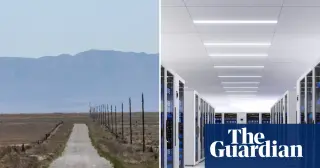
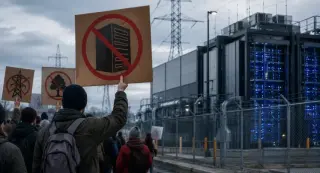
A rising wave of local resistance and power constraints threatens AI data-center expansion in the U.S., potentially slowing capacity growth for Nvidia, Microsoft, and Alphabet as towns block or delay projects and costs rise, even as AI remains a major growth theme and the big players maintain strong balance sheets.
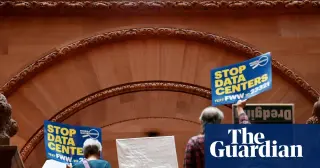
This op-ed argues that the anti-datacenter movement is a crucial, cross-partisan fight to curb AI infrastructure's power and defend democracy, not mere “nimby” activism. Local moratoriums and community organizing from North Carolina to New Jersey show how residents can push for safety, energy and water safeguards, jobs, and transparency, challenging backroom deals by big tech and investors. Proposals from Bernie Sanders and Alexandria Ocasio-Cortez, including state moratoriums and potential federal regulation, are highlighted as ways to leverage public pressure for meaningful AI governance. The authors counter liberal critiques that frame the movement as elitist, insisting that blocking datacenters creates political leverage to rein in tech giants and spur accountable, democratic control of AI. They warn that tech PR, dark money, and aggressive tactics will intensify, but view this resistance as an opportunity to build a broad, populist coalition that can shape a safer, more democratic AI future.
Gov. Janet Mills vetoed a bill that would have frozen new large datacenters (>20 MW) until 2027 to study the grid and electricity costs, saying she supports a temporary moratorium but requires an exemption for the Jay project; she will instead push an executive order to form a council to study impacts and has barred datacenters from certain business tax incentives. The Jay site is expected to bring hundreds of construction and permanent jobs and significant tax revenue, illustrating the clash between investment and energy costs in a rural state, while several states nationally weigh similar limits on AI datacenter growth.
TD Cowen says Intel could benefit from rising CPU demand tied to AI workloads as hyperscale data centers lean toward CPU orchestration, but maintains a Hold due to execution risks and a rich valuation. Intel’s in-house server roadmap and the Fab 34 buyback signal an improved demand picture, though near-term competitive headwinds remain. The stock trades at a premium versus peers like Nvidia, with the overall consensus target in the low-to-mid $50s and a Hold rating.
Marvell Technology beat estimates with EPS of $0.80 on $2.22 billion in revenue, led by AI-driven data-center demand (data center revenue $1.65B). The company posted a record fiscal 2026 revenue of $8.195 billion, up 42% year over year, and guided Q1 2026 to about $0.79 per share on roughly $2.40 billion in revenue. With hyperscalers like Amazon and Meta fueling AI workloads, management expects robust demand through 2026. The stock jumped ~10%, and analysts’ consensus remains Strong Buy with a target near $118, implying meaningful upside.
Google, Microsoft, Meta, Amazon and other AI-focused firms joined the White House's Ratepayer Protection Pledge, promising to fund new electricity generation or capacity upgrades for their datacenters and to secure favorable utility rate arrangements, in an effort to prevent data centers from driving up consumer electricity costs. Experts warn the pledge could be more symbolic than effective if new generation can't be brought online quickly, as policymakers weigh energy affordability ahead of the midterm elections.
OpenAI unveils a $110 billion funding round valuing it at about $840 billion, with major backing from Nvidia, SoftBank and Amazon, signaling a rapid push to scale frontier AI ahead of a likely mega-IPO; the deal expands datacenter capacity and reinforces cloud partnerships (AWS for Frontier, Azure for APIs) while Nvidia’s earlier commitment timing remains unclear, highlighting the AI infrastructure race amid energy and job-disruption concerns.
OpenAI CEO Sam Altman defended AI’s power usage by comparing it to the energy needed to raise a human, while urging a swift switch to nuclear and renewable power. The discussion comes amid rising concerns over datacenter electricity and water use, with IEA data showing growing datacenter energy demand and critics warning of climate and water security risks as datacenter expansion continues. Altman's remarks drew online backlash from skeptics who questioned the net societal benefits of the technology.
OpenAI CEO Sam Altman warned in New Delhi that artificial general intelligence could arrive sooner than many expect and that the world is not prepared. He says progress is accelerating, with OpenAI aiming to build an intern-level AI research tool by September 2026 and a fully automated AI researcher by March 2028. A quicker pace could boost demand for data centers, chips, and cloud tools from companies like Nvidia, Microsoft, and Alphabet, while also flagging potential job losses and calling for global oversight to prevent over-centralization of AI technology.
Illinois Gov. Pritzker proposes a two-year pause on new datacenter tax credits and asks PJM to require developers to cover capacity costs, arguing the move protects consumer affordability amid rising AI-driven demand.
Meta and NVIDIA announced a long-term strategic partnership to build scalable AI infrastructure across Meta’s data centers, accelerating AI training and inference with NVIDIA’s platforms, and jointly developing hardware and software to underpin Meta’s AI and metaverse initiatives.
Elon Musk has proposed placing data centers in space powered by solar energy, but experts doubt the feasibility due to immense costs, latency challenges, reliability concerns, orbital debris risks, and uncertain return on investment. The article notes significant skepticism about whether such a system could ever be practical or scalable.
Datacenters have become a rare cross‑partisan flashpoint in the US, provoking broad local opposition while federal and state lawmakers struggle to counter industry-backed subsidies; Michigan’s stalled repeal of tax credits contrasts with ongoing, low-job, high-cost projects and a web of influence from tech, fossil fuels, and unions, illustrating how money and inertia impede decisive policy.
Meta named Dina Powell McCormick its president and vice chair, leveraging her Goldman Sachs and government experience to help guide strategy and execution as the company accelerates AI infrastructure efforts and global partnerships, including government collaboration to expand Meta’s datacenter footprint.