
GAO Report Finds DOGE's $110 Billion Savings Claims Unreliable and Inflated
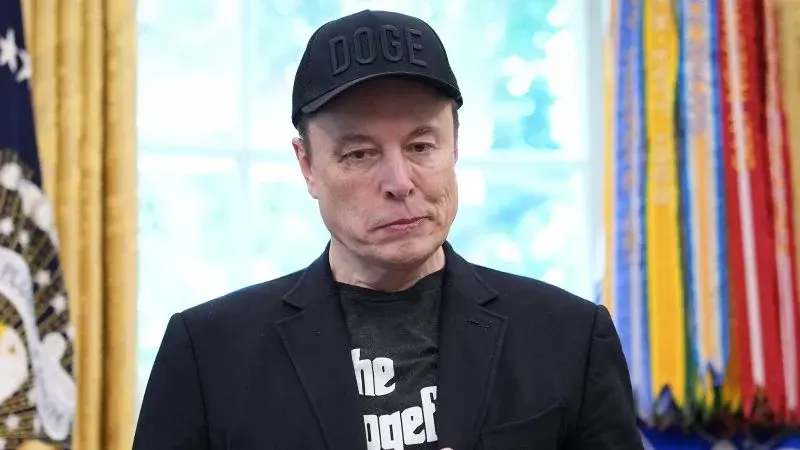
A Government Accountability Office (GAO) report released on August 6, 2026, found that the Department of Government Efficiency (DOGE) significantly overstated its savings. The watchdog determined that $110 billion in claimed savings from contracts, grants, and leases were incorrect or lacked evidence. Key findings include 108 leases that were already ending before DOGE existed and a $1.7 billion Department of Defense contract that was never terminated. The report, requested by Democratic senators, highlights a lack of transparency and methodology in DOGE's 'Wall of Receipts.'
Key points
- GAO found that 108 of 264 leases DOGE claimed to terminate were already in the process of ending before the agency was created.
- DOGE overstated lease savings by more than $80 million and failed to provide accurate information on contract terminations.
- The GAO noted that DOGE did not use its stated methodology for calculating the majority of contract savings and could not verify 96% of grant savings.
- A specific claim of $1.7 billion in savings from a Pentagon contract was found to be unfounded, as the contract was never terminated.
- DOGE officials did not respond to GAO requests for information or interviews, leading to criticism regarding transparency.
Background
DOGE, led by Elon Musk, was established in January 2025 to cut federal spending, with Musk promising to slash $2 trillion. The initiative officially ended on July 4, 2026, though some staffers remained in federal agencies. Previous media analyses, including those by CNN and Politico, had already identified errors in DOGE's public 'Wall of Receipts,' which listed $215 billion in estimated savings as of January 1, 2026.
How outlets are covering it
CNN and CBS News emphasize the lack of transparency and the deceptive nature of DOGE's reporting, citing the GAO's finding that DOGE refused to provide information. The Washington Post highlights the specific errors, such as claiming credit for pre-existing lease cancellations. Politico contextualizes the findings within the broader federal budget, noting that even the claimed $215 billion is a small fraction of the $7 trillion annual budget, and suggests DOGE's legacy is more about political disruption than actual cost-cutting. Democratic Senators Gary Peters and Richard Blumenthal, who requested the report, criticized DOGE as a 'slapdash and deceptive effort' that damaged the government's ability to serve the public.
Why it matters
The GAO report undermines the credibility of DOGE's central promise to reduce federal spending, raising questions about the accuracy of government data and the effectiveness of the administration's cost-cutting initiatives. It also highlights concerns about transparency and accountability in federal agencies, which could impact future government operations and public trust.
What to watch
The White House has not yet responded to the GAO report. The findings may lead to further scrutiny of DOGE's actions and potential legislative or judicial challenges regarding the accuracy of federal savings claims. The report could also influence future oversight of government agencies and the methods used to calculate and report savings.
- DOGE claims of saving $110 billion are incorrect and unreliable, watchdog says CNN
- Elon Musk’s DOGE made big errors in claims of government savings, GAO finds The Washington Post
- DOGE's "wall of receipts" riddled with inaccuracies and unsubstantiated claims, congressional watchdog says CBS News
- DOGE overstated savings, government watchdog says Politico
- Audit finds DOGE operation overstated its savings, ‘did not accurately report actions’ MS NOW
Want the full story? Read the original reporting
Read on CNN