
GOP Leadership Clashes Over House Strategy as Economic Polls Plunge
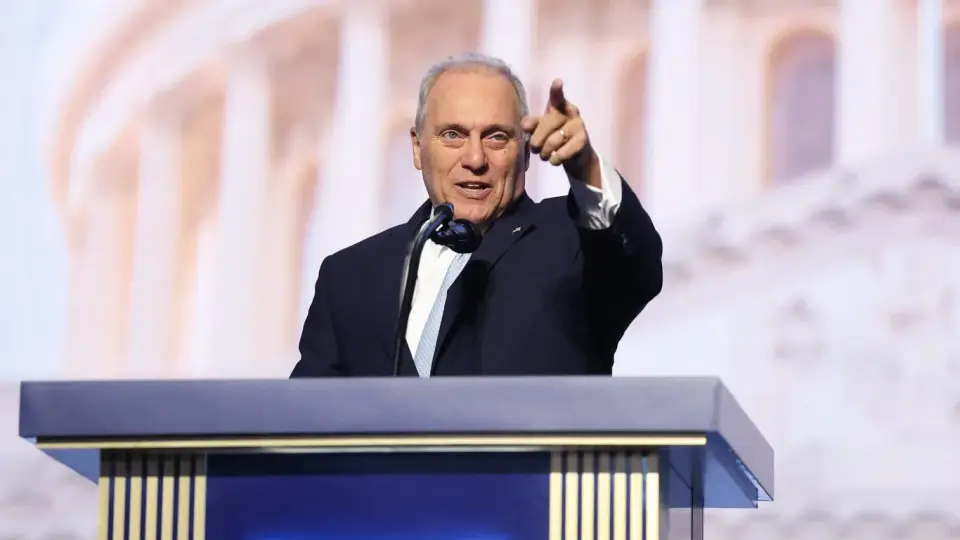
House Majority Leader Steve Scalise is aggressively campaigning to retain the House majority despite record-low approval ratings for President Trump and a significant Democratic lead in generic ballot polling. While Trump focuses on economic optimism, Republicans face internal blame-shifting and voter anger over rising costs. Scalise has identified 35 competitive districts, including 15 Democratic seats, and is deploying super PAC funding to support vulnerable incumbents, arguing that shifting resources to Senate races can still benefit House candidates. Democrats remain confident in winning a majority, targeting specific Republican incumbents in states like Pennsylvania, Texas, and Arizona.
Key points
- Scalise refuses to plan for a House loss, citing 35 competitive districts and 15 potential Democratic flips, while deploying $3.5 million in super PAC support for 52 House Republicans.
- Trump's approval rating has hit a record low of 31%, with 72% of Americans saying the country is on the wrong track, and Democrats leading the generic ballot by eight points.
- Internal GOP conflict has emerged, with House Republicans blaming the Senate side for poor performance, while national operatives criticize candidates for inadequate preparation.
- Voters in red states are expressing anger over high gas and grocery prices, blaming 'corrupt politicians' and 'billionaires,' a shift that has surprised GOP strategists.
- Democrats are confident in flipping seats held by Republicans like Juan Ciscomani, Gabe Evans, and Ryan Mackenzie, while Republicans argue polling underestimates voter enthusiasm.
Background
This election cycle follows a period of significant economic volatility, including record-high diesel prices and inflation concerns that have strained the administration's relationship with its base. Earlier in 2026, the White House explored European reserve releases to mitigate fuel costs, and Trump's $5,000 dividend pledge faced criticism from both parties for its fiscal feasibility. The current midterm contest is being framed as a referendum on the administration's economic management, with voters citing cost-of-living issues as their primary concern.
How outlets are covering it
Axios emphasizes Scalise's defiant campaign strategy and the tactical use of super PACs to support House races, even as some districts are abandoned. Politico highlights the internal blame game, noting that House Republicans are accusing the Senate side of poor performance, while national operatives criticize candidates for failing to prepare for a tough cycle. CNN focuses on the shift in voter sentiment, particularly in red states, where working-class voters are expressing anger over corruption and rising costs, a trend that has surprised GOP strategists. USA Today contrasts Trump's optimistic economic messaging with polling data showing widespread dissatisfaction, noting that voters are more concerned with grocery and gas prices than stock market growth. The outlets differ in their assessment of the likelihood of a House wipeout, with Axios and CNN suggesting a strong Democratic advantage, while Politico and USA Today note some internal GOP optimism based on ground-level enthusiasm and shifting polls in certain races.
Why it matters
The outcome of the House race will determine whether the administration can continue its legislative agenda or face a hostile Congress. A loss of the House could trigger a shift in power dynamics, potentially leading to a three-way fight for the minority leader position among Mike Johnson, Steve Scalise, and Jim Jordan. The economic discontent driving voter anger could have long-term implications for the party's brand and future electoral prospects, particularly in red states that have become competitive due to cost-of-living concerns.
What to watch
The next few weeks will see intensified campaigning, with Trump making 56 stops as part of his 'Save America Tour' and super PACs deploying millions in get-out-the-vote efforts. The focus will be on the 35 competitive districts identified by Scalise, particularly the 15 Democratic-held seats Republicans believe they can flip. The outcome of the election will likely determine the balance of power in Congress and the administration's ability to implement its policies.
- Inside the GOP's fight to avoid a House wipeout Axios
- Republicans already know who they want to blame if they suffer big midterm losses Politico
- Republicans confront anger from their own red-state voters ahead of midterms CNN
- GOP troubles brew as Trump economic pitch clashes with voter sentiment USA Today
- Republicans stare down the midterms barrel The Economist
Want the full story? Read the original reporting
Read on Axios