
Hegseth signs military pact with Venezuela, framing it as a shift from 'threat' to 'partner'
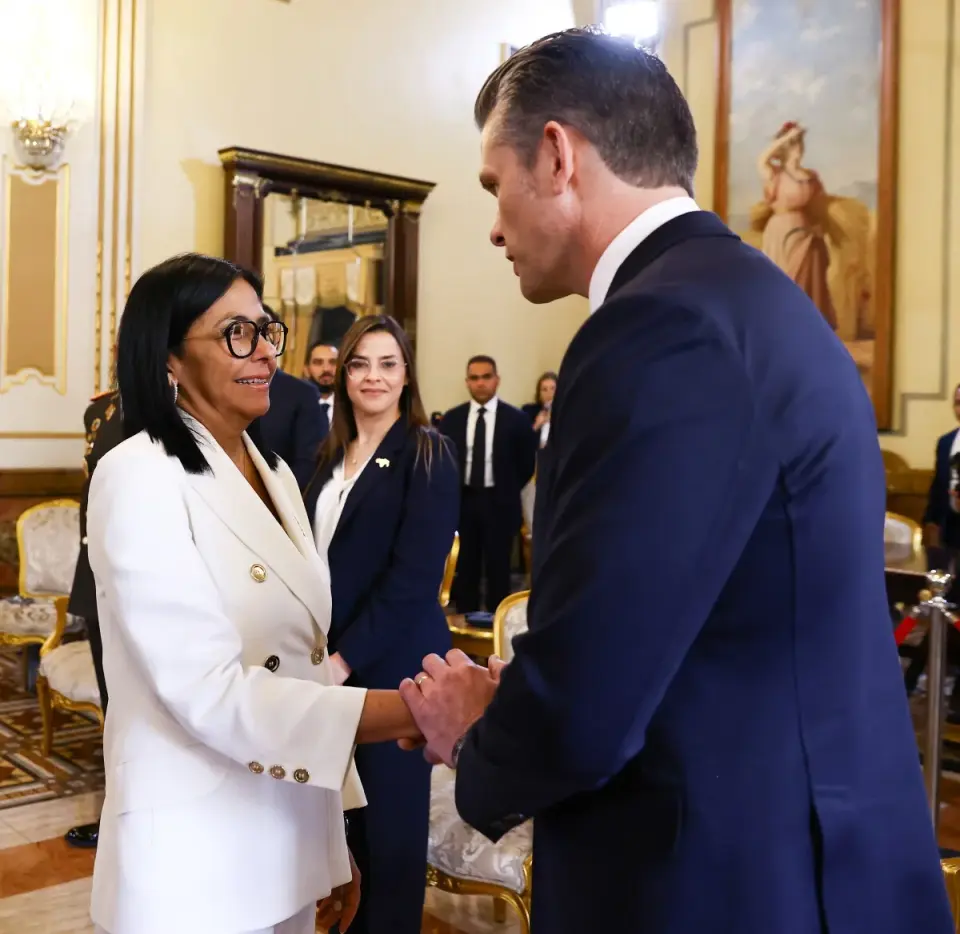
U.S. Defense Secretary Pete Hegseth signed a military agreement with Venezuela on November 18, marking the first visit by a U.S. defense chief to the country since the January capture of President Nicolás Maduro. The pact establishes joint training and intelligence sharing, which Hegseth described as a transition from an adversarial relationship to a 'compliant security partner.' While the U.S. administration emphasizes cooperation against drug trafficking and the stabilization of the region, critics argue the move prioritizes access to Venezuelan oil reserves over democratic reforms. The agreement occurs amid political uncertainty, as acting President Delcy Rodríguez continues to lead despite her term expiring in July, and opposition leader María Corina Machado has recently returned from exile.
Key points
- Hegseth signed a deal to reestablish military ties, including joint training and intelligence sharing, with acting President Delcy Rodríguez.
- The U.S. administration claims the agreement helps combat 'narco-terrorists' and stabilize the region, while critics note it prioritizes oil interests.
- Hegseth described the January capture of Maduro as a 'sophisticated military operation' that resolved a 27-year regional threat in 48 minutes.
- The visit follows a series of U.S. cabinet stops focused on tapping Venezuela’s oil reserves and critical minerals.
- Venezuela’s political future remains uncertain, with no date set for the next presidential election and opposition figures returning from exile.
Background
This development follows the January 2026 capture of President Nicolás Maduro by U.S. forces, which led to Delcy Rodríguez assuming the role of acting president. The U.S. administration has since pursued a strategy of deepening influence in the Western Hemisphere, including a major oil deal brokered by Hegseth in August. Previous coverage noted that while the U.S. frames these actions as stabilization efforts, critics argue they prioritize energy interests over democratic reforms. The current agreement builds on earlier visits by U.S. Interior and Energy secretaries, as well as Gen. Francis Donovan, who have focused on tapping Venezuela’s vast oil reserves and critical minerals.
How outlets are covering it
AP News reports that Hegseth touted the capture of Maduro as a success that transformed Venezuela from a 'most aggressive regional threat' to a 'compliant security partner,' emphasizing cooperation against drug traffickers. The outlet notes that few specifics were provided on the military agreement, beyond joint training and intelligence sharing. The Guardian, however, frames the visit as a 'humiliating act of genuflection' by Rodríguez, highlighting that Maduro’s allies continue to hold power with U.S. support. The outlet criticizes the U.S. for prioritizing oil interests over pro-democracy steps and notes that critics view the agreement as a move to secure 'direct administration' of Venezuela. Both outlets agree that the agreement is tied to the broader U.S. strategy of expanding influence in the region, but they differ in their assessment of the political implications for Venezuela’s sovereignty and democratic future.
Why it matters
The military pact signals a significant shift in U.S.-Venezuela relations, moving from confrontation to cooperation under the Trump administration. It reflects the U.S. strategy of leveraging military and economic pressure to secure access to Venezuela’s oil reserves and combat drug trafficking. The agreement also highlights the ongoing political uncertainty in Venezuela, as the interim government continues to lead without a clear path to democratic elections. For the U.S., the pact aims to stabilize the region and reduce the flow of narcotics, while for Venezuela, it raises questions about sovereignty and the long-term impact of U.S. influence on its political and economic future.
What to watch
The U.S. and Venezuela are expected to implement the military agreement, with joint training and intelligence sharing likely to begin in the coming months. The U.S. administration may continue to press for progress on election preparations, as Secretary of State Marco Rubio has indicated that the 'safe' return of opposition leader María Corina Machado is a step toward free and fair elections. However, the lack of a date for the next presidential election suggests that political uncertainty will persist. The U.S. may also seek to expand its military presence in the region, as reported by The New York Times, to further secure its interests in Venezuela’s oil reserves and combat drug trafficking.
- US and Venezuela sign a deal to reestablish military ties, Hegseth says in visit to Caracas AP News
- Hegseth, in Caracas, announces US-Venezuela military partnership agreement Reuters
- Hegseth Cements New Military Deal in Visit to Venezuela WSJ
- Hegseth meets with Delcy Rodríguez in Venezuela to deepen military partnership The Hill
- Hegseth uses Venezuela visit to boast of Maduro’s capture by US military The Guardian
Want the full story? Read the original reporting
Read on AP News