Tag

Oil Reserves

All articles tagged with #oil reserves

Hegseth signs military pact with Venezuela, framing it as a shift from 'threat' to 'partner'
politics5 days ago

Hegseth signs military pact with Venezuela, framing it as a shift from 'threat' to 'partner'

U.S. Defense Secretary Pete Hegseth signed a military agreement with Venezuela on November 18, marking the first visit by a U.S. defense chief to the country since the January capture of President Nicolás Maduro. The pact establishes joint training and intelligence sharing, which Hegseth described as a transition from an adversarial relationship to a 'compliant security partner.' While the U.S. administration emphasizes cooperation against drug trafficking and the stabilization of the region, critics argue the move prioritizes access to Venezuelan oil reserves over democratic reforms. The agreement occurs amid political uncertainty, as acting President Delcy Rodríguez continues to lead despite her term expiring in July, and opposition leader María Corina Machado has recently returned from exile.

Global energy crisis deepens as reserves hit historic lows amid Iran conflict
energy-and-geopolitics1 month ago

Global energy crisis deepens as reserves hit historic lows amid Iran conflict

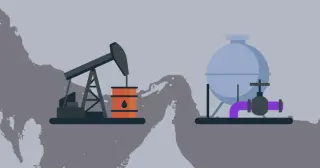
The ongoing US-Israel war with Iran has severely disrupted global energy flows, forcing nations to rely on dwindling emergency stockpiles. While the 25th World Petroleum Council Energy Congress proceeds in Riyadh despite a recent Houthi attack that killed 12 people, the event highlights the fragility of global supply chains. Fossil fuels still account for 81 percent of global energy consumption, with oil making up 31.4 percent. The conflict has constrained key chokepoints like the Strait of Hormuz, which previously handled 27 percent of seaborne oil trade. Consequently, countries heavily dependent on Middle Eastern supplies, such as Eritrea, Madagascar, and Japan, face rising costs and shortages. Emergency oil reserves are critically low, with the US Strategic Petroleum Reserve at its lowest level since 1982, prompting the International Energy Agency to prepare further releases to stabilize prices.

IEA clarifies G7 diesel pledge draws from existing March stockpiles, not new reserves
energy1 month ago

IEA clarifies G7 diesel pledge draws from existing March stockpiles, not new reserves

European diesel futures spiked 8% to $1,435.25 a tonne after the International Energy Agency (IEA) confirmed that the G7’s recent 100 million barrel release commitment will be fulfilled using unspent portions of the March 2026 stockpile agreement, rather than new draws from strategic reserves. The agency stated that 325 million barrels have already been released, leaving approximately 100 million barrels to complete the original pledge. While members agreed to accelerate releases and prioritize diesel, European diplomats indicated reluctance to tap additional reserves due to energy security concerns.

Europe’s Diesel Pledge to Trump Relies on March Commitments, Not New Reserves
energy-and-climate1 month ago

Europe’s Diesel Pledge to Trump Relies on March Commitments, Not New Reserves

France and Germany confirmed that their recent promise to release diesel for the U.S. will not involve new stock releases, but rather the fulfillment of commitments already made in March. This clarification suggests Europe’s response to U.S. pressure was less generous than initially implied, as no additional barrels are being added to the market beyond the 100 million barrels pledged earlier in the year.

IEA Reports 325 Million Barrels Released as G7 Adds 100 Million to Combat Fuel Crisis

IEA Reports 325 Million Barrels Released as G7 Adds 100 Million to Combat Fuel Crisis

The International Energy Agency (IEA) confirmed that 325 million barrels of oil and derivatives have been released from strategic reserves, representing over 80% of the 400 million barrels pledged in March. This update follows a new G7 agreement to release an additional 100 million barrels over four months, a move driven by US pressure to lower record-high diesel prices. The release aims to stabilize markets amid supply disruptions from the US-Iran conflict and Ukrainian strikes on Russian refineries.

G7 Unveils 100 Million Barrel Oil Release to Counter US Diesel Threats

G7 Unveils 100 Million Barrel Oil Release to Counter US Diesel Threats

The G7 has agreed to release 100 million barrels of oil and diesel from strategic reserves over four months to curb record-high energy prices. The decision, coordinated by the International Energy Agency, follows intense pressure from the US administration, which threatened to ban diesel exports. While the release aims to stabilize markets ahead of winter, European leaders criticized the US tactics as coercive, describing the negotiations as 'blackmail.'

energy-and-politics1 month ago

G7 Agrees to Release 100 Million Barrels of Fuel as Trump Drops Export Ban Threat

President Donald Trump has ruled out a U.S. diesel export ban after G7 leaders agreed to release up to 100 million barrels of oil and diesel reserves. This decision follows intense pressure from the U.S. administration to force European nations to tap their stockpiles to combat record-high fuel prices. The move aims to stabilize global markets and ease domestic costs ahead of the November midterm elections, resolving a week of diplomatic friction between Washington and European capitals.

G-7 agrees to release 100 million barrels of fuel to avert U.S. diesel export ban
energy1 month ago

G-7 agrees to release 100 million barrels of fuel to avert U.S. diesel export ban

The Group of Seven (G-7) agreed to release 100 million barrels of diesel, gasoline, and crude oil from strategic reserves over four months to stabilize global fuel prices. The decision followed intense pressure from the U.S. administration, which threatened to ban diesel exports. While the U.S. framed the move as a cooperative effort to lower prices, European leaders described the negotiations as coercive. The agreement includes a front-loaded release of diesel within the first 20 days and explicitly discourages future export restrictions among G-7 members.

G7 Agrees to 100 Million Barrel Fuel Release to Avert US Export Ban
energy1 month ago

G7 Agrees to 100 Million Barrel Fuel Release to Avert US Export Ban

G7 leaders agreed to release 100 million barrels of oil and diesel over four months to stabilize global markets. This deal averted a threatened US export ban on diesel, which would have exacerbated price spikes ahead of US midterm elections. The release is coordinated by the International Energy Agency, with Europe contributing roughly 50 million barrels of diesel.

Macron to Convene G7 on Oil Reserves as Middle East Conflict Drives Diesel Prices to Record Highs
energy-and-geopolitics2 months ago

Macron to Convene G7 on Oil Reserves as Middle East Conflict Drives Diesel Prices to Record Highs

French President Emmanuel Macron announced plans to convene a G7 summit to coordinate the release of strategic oil and fuel reserves, responding to soaring energy prices and supply disruptions caused by Middle East conflict. The move follows a sharp spike in Brent crude and record-high diesel costs, exacerbated by an attack on a Saudi pipeline and reduced Russian diesel exports. Macron also signaled a push for a coordinated European response on natural gas storage, as the EU enters winter with record-low reserves. While the IEA previously coordinated a massive 400 million-barrel release in March, the pace of new releases has slowed, raising questions about the availability of further emergency stocks.

Chevron's $7B Expansion Highlights Funding Gaps in Trump's $100B Venezuela Oil Plan
energy2 months ago

Chevron's $7B Expansion Highlights Funding Gaps in Trump's $100B Venezuela Oil Plan

Chevron has committed to investing over $7 billion to double its Venezuelan oil output to 600,000 barrels per day within five years, a move that underscores the scale of the broader U.S. initiative. While the Trump administration has announced a sweeping $100 billion reconstruction plan for Venezuela's energy sector, significant questions remain regarding the source of this funding. The deal involves the U.S. government taking an equity stake in a private firm to control 65 billion barrels of reserves, with interim President Delcy Rodriguez asserting the agreement will last 25 years and generate substantial revenue for Caracas.

US-Venezuela Oil Deal Faces Technical and Political Hurdles
energy-and-geopolitics2 months ago

US-Venezuela Oil Deal Faces Technical and Political Hurdles

The Trump administration has finalized a controversial agreement to secure majority control of 65 billion barrels of Venezuelan oil through a private partnership. While the deal aims to replenish the US Strategic Petroleum Reserve, experts warn that heavy crude quality, aging infrastructure, and congressional approval requirements make near-term success unlikely.

US-Venezuela Oil Pact: 100-Year Lease, 65 Billion Barrels, and a Colonialism Debate
geopolitics2 months ago

US-Venezuela Oil Pact: 100-Year Lease, 65 Billion Barrels, and a Colonialism Debate

The US and Venezuela have agreed to a 100-year deal granting Washington majority control over 65 billion barrels of Venezuelan oil. While the Trump administration frames this as a historic energy victory that will lower gas prices and boost the US Strategic Petroleum Reserve, critics and analysts argue the arrangement resembles colonial exploitation and lacks clear legal or economic terms.

US-Venezuela Oil Deal Nears Finalization Amid Geopolitical and Legal Scrutiny
politics2 months ago

US-Venezuela Oil Deal Nears Finalization Amid Geopolitical and Legal Scrutiny

The Trump administration is nearing a historic agreement with Venezuela's interim government to secure a long-term ownership stake in select Venezuelan oil fields. The deal, which involves more than a dozen fields containing approximately 90 million barrels of proven reserves, aims to boost US energy security and incentivize private drilling in a high-risk region. While officials describe the agreement as 'massive,' it faces significant hurdles, including legal uncertainties, potential congressional opposition, and concerns over the cost of infrastructure restoration.