
Holscher wins Kansas governorship, extending Democratic hold in red state
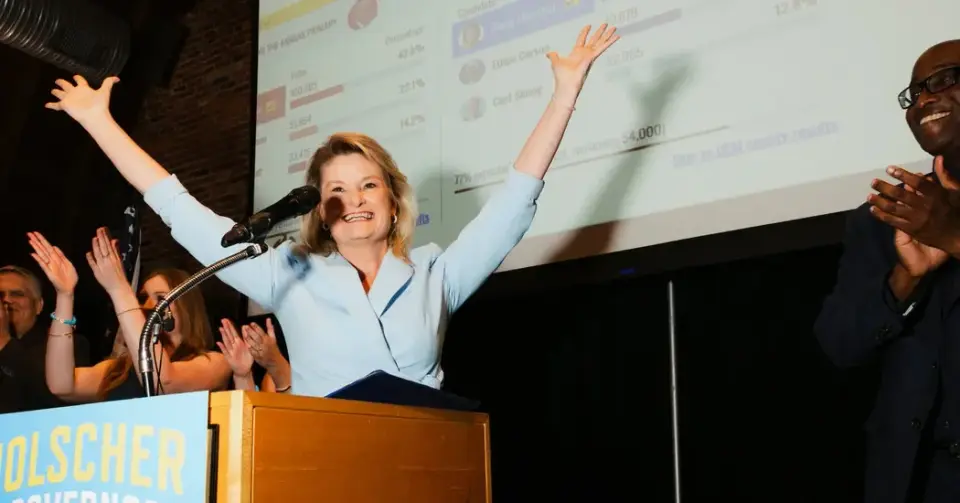
State Senator Cindy Holscher has won the Kansas governor’s race, keeping the office in Democratic hands for a third consecutive term. The Associated Press called the race for Holscher on Thursday, nine days after Election Day, after a narrow victory over Republican Ty Masterson. Holscher, 57, defeated Masterson by a margin of approximately 7,000 votes, or 0.7 percentage points. The result maintains Democratic control of the governor’s office in a traditionally Republican-leaning state, succeeding term-limited Governor Laura Kelly. CNN projects that Holscher’s win means more than 75% of Americans will have a Democratic governor. The victory is part of a broader Democratic surge in the 2026 midterms, where the party now controls 29 governorships. Holscher’s campaign emphasized populist issues, including raising the minimum wage, lowering healthcare costs, and opposing new AI data centers. Masterson, the president of the Kansas Senate and endorsed by President Trump, conceded the race but indicated he might request a recount. The final results will be certified by the State Board of Canvassers on December 1.
Key points
- Cindy Holscher won the Kansas governor’s race by a narrow margin of about 7,000 votes, or 0.7 percentage points, according to the Associated Press.
- The victory keeps the governor’s office in Democratic hands for a third consecutive term in a traditionally Republican state, succeeding term-limited Governor Laura Kelly.
- CNN projects that Holscher’s win means more than 75% of Americans will have a Democratic governor, with Democrats controlling 29 governorships.
- Holscher campaigned on populist issues, including raising the minimum wage, lowering healthcare and housing costs, and opposing new AI data centers.
- Republican Ty Masterson, the president of the Kansas Senate and endorsed by President Trump, conceded the race but indicated he might request a recount.
- The final results will be certified by the State Board of Canvassers on December 1, after counties finish their audits by November 16.
Background
Kansas had been seen as the most likely state to flip from Democratic to Republican control in the 2026 midterms. In the 2024 presidential election, Donald Trump won Kansas by 16 points. Democrats had previously held the governor’s office since 2018, when Laura Kelly first won the seat in the traditionally red state. Holscher, who flipped two Republican-held seats during her time in the Kansas Legislature, was initially considered too progressive by Kelly, who backed a more moderate candidate in the primary. Kelly eventually endorsed Holscher after her primary victory. The 2026 midterms saw a broader Democratic surge, with the party gaining control of 29 governorships, up from 24 before the elections.
How outlets are covering it
The New York Times emphasized the significance of Holscher’s victory in maintaining a rare Democratic lever of power on the Great Plains. Axios highlighted the narrow margin of victory and the need for hand-counting ballots in all 105 counties due to the close race. CNN focused on the broader national implications, noting that Holscher’s win means more than 75% of Americans will have a Democratic governor. NPR detailed the campaign issues, including Holscher’s populist stance on minimum wage, healthcare, and AI data centers, and Masterson’s focus on property taxes and faith-based politics. All sources agreed on the narrow margin and the significance of the Democratic hold in Kansas.
Why it matters
Holscher’s victory maintains Democratic control of the governor’s office in a traditionally Republican state, extending the party’s hold for a third consecutive term. The result is part of a broader Democratic surge in the 2026 midterms, where the party now controls 29 governorships. The narrow margin and the need for hand-counting ballots highlight the competitive nature of the race. Holscher’s populist campaign, focusing on issues like minimum wage and AI data centers, contrasts with the moderate approach of her predecessor, Laura Kelly. The victory also reflects voter frustration with the current administration and economic conditions, despite a significant Republican advertising advantage.
What to watch
The final results will be certified by the State Board of Canvassers on December 1, after counties finish their audits by November 16. Masterson can still request a recount, but the state only covers recount costs in general elections when the margin is within 0.5 percentage points. Otherwise, he would have to post a bond to cover the cost and file the request by 5 p.m. the day after the last county finishes its official count. Holscher has already begun working with Governor Kelly on the transition.
- Holscher Wins Kansas Governor Race, Retaining Seat for Democrats The New York Times
- Democrat Holscher wins Kansas governor's race Axios
- Three quarters of Americans will have Democratic governors with Holscher projected to win in Kansas CNN
- Cindy Holscher wins in Kansas, holding governor’s office for Democrats NPR
- Democrat Cindy Holscher defeats Republican Ty Masterson in Kansas governor’s race NBC News
Want the full story? Read the original reporting
Read on The New York Times