
House vote fails to constitutionally lock Supreme Court at nine seats
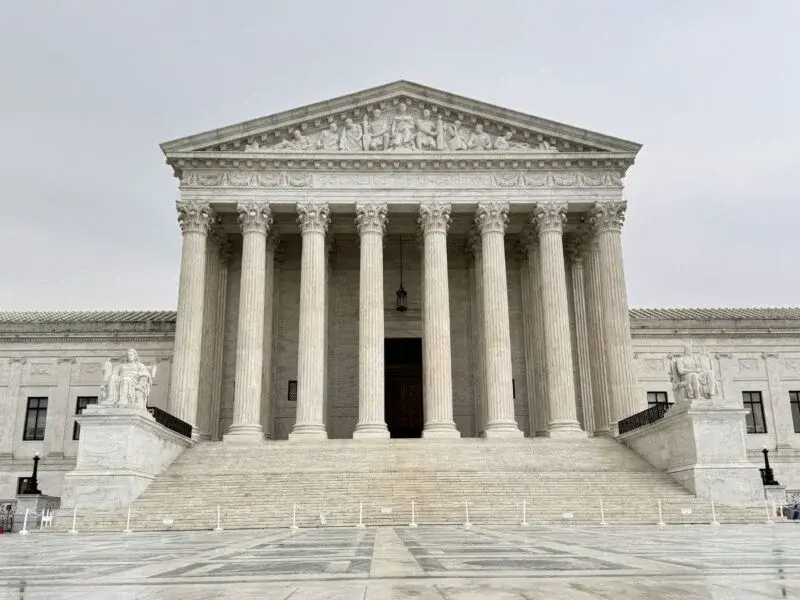
The U.S. House of Representatives rejected a Republican-led proposal to amend the Constitution and permanently cap the Supreme Court at nine justices. The measure failed to achieve the required two-thirds majority, with nearly all Democrats voting against it. While the amendment was unlikely to pass due to high procedural hurdles, the vote highlighted deep partisan divisions over judicial independence and the potential for future court expansion by Democrats.
Key points
- The House voted 211-206 (or 212-206 per some sources) to defeat a constitutional amendment proposed by Rep. Andy Biggs (R-Ariz.) that would fix the Supreme Court size at nine justices.
- The amendment required a two-thirds majority under a suspension-of-the-rules maneuver, a threshold it failed to meet, and would have faced even steeper hurdles in the Senate and state ratification.
- Republicans argued the amendment was necessary to prevent Democrats from 'packing' the court with additional justices if they regain legislative control, citing recent conservative rulings as justification for the current bench's composition.
- Democrats opposed the measure, arguing it would strip Congress of its constitutional authority to determine court size and effectively lock in the current conservative majority, which they view as compromised by ethics scandals and political bias.
- The vote served as a messaging strategy ahead of the 2026 midterm elections, with Republicans framing the issue as a defense of judicial independence and Democrats framing it as an attempt to cement partisan power.
Background
The debate over Supreme Court size has intensified since 2020, following the rapid confirmation of Justice Amy Coney Barrett. In 2023, ethics scandals involving Justices Clarence Thomas and Samuel Alito prompted the Court to adopt a voluntary code of conduct, which critics noted lacked enforcement mechanisms. Democrats introduced legislation to expand the court to 13 seats, but these efforts stalled before President Trump’s 2024 reelection. The current nine-justice composition has remained unchanged since 1869, though the Constitution does not specify a fixed number, leaving the size to congressional discretion.
How outlets are covering it
Courthouse News Service and Fox News emphasized the Republican argument that the amendment was a necessary safeguard against Democratic 'court-packing' and a response to perceived judicial activism. They highlighted statements from Rep. Jim Jordan and Rep. Andy Biggs framing the current conservative majority as under threat. NBC News and The Washington Post focused on the Democratic perspective, noting that the vote was a symbolic defeat for Republicans and a signal of growing support within the Democratic Party for expanding the court to 13 seats. NBC News cited Rep. Don Davis as the only Democrat to support the amendment, while The Washington Post noted that figures like Kamala Harris and Pete Buttigieg have publicly endorsed expansion. All sources agreed that the amendment’s passage was highly unlikely due to the two-thirds threshold and the need for state ratification, but they differed on whether the vote signaled a shift in mainstream Democratic opinion on court reform or merely a partisan messaging tactic for the midterms.
Why it matters
The failed amendment underscores the deepening polarization over the Supreme Court’s role and composition. While the immediate legal impact is nil, the vote forces a public reckoning with the question of whether the court’s size should be fixed or flexible. For Democrats, it validates arguments that the current bench is politically compromised; for Republicans, it reinforces fears of future judicial overreach. As the 2026 midterms approach, the issue may become a central campaign theme, influencing voter perceptions of judicial independence and the balance of power between the branches of government.
What to watch
The Supreme Court will remain at nine justices, as the amendment failed to advance. However, the debate is likely to continue in the 2026 midterm campaigns, with Republicans using the 'court-packing' narrative to attack Democrats and Democrats potentially pushing for expansion if they regain control of Congress. The issue may also resurface in the 2028 presidential cycle, where candidates may take definitive stances on court reform. Additionally, ongoing scrutiny of judicial ethics and the lack of an enforcement mechanism for the Court’s code of conduct may keep the topic in the public eye, potentially leading to new legislative proposals or public pressure for reform.
- Conservative gambit to lock Supreme Court at nine justices falters in House Courthouse News
- House Democrats block constitutional amendment to lock Supreme Court at 9 justices NBC News
- Analysis | Republicans court debate on expanding the Supreme Court The Washington Post
- Democrats sink Republican bid to cap Supreme Court at nine justices Reuters
- Republicans fail to ease one of Trump's greatest fears as Supreme Court measure collapses Fox News
Want the full story? Read the original reporting
Read on Courthouse News