
House Fails to Pass Amendment Locking Supreme Court at Nine Justices
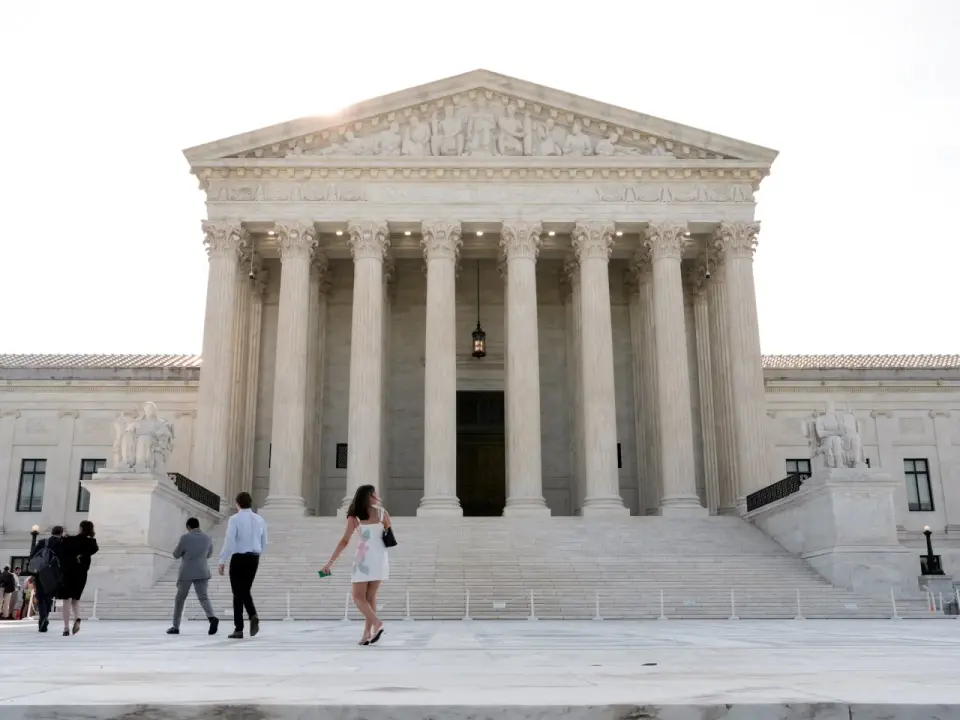
The US House of Representatives failed to advance a joint resolution that would have permanently capped the Supreme Court at nine justices. The measure, championed by Republicans, fell short of the two-thirds majority required for constitutional amendments, receiving 212 votes in favor and 206 opposed. This outcome preserves Congress's current authority to alter the court's size, a power that has been debated since 1869. The vote occurred just one day after the House passed a resolution condemning socialism, with both measures viewed as strategic messaging efforts ahead of the November midterm elections. While some Democrats have previously proposed expanding the court to 13 seats to counter the current conservative majority, this specific amendment aimed to prevent such changes by locking the current structure into the Constitution. The failure ensures that the debate over judicial expansion remains open for future legislative sessions.
Key points
- The House vote on the Supreme Court size amendment ended with 212 in favor and 206 opposed, failing to meet the two-thirds threshold required for constitutional changes.
- Representative Don Davis of North Carolina was the only Democrat to support the amendment, while independent Representative Kevin Kiley of California, who caucuses with Republicans, voted against it.
- The vote took place one day after the House passed a resolution condemning socialism, with Speaker Mike Johnson criticizing Democrats for opposing both measures as inconsistent with their constitutional oaths.
- The current nine-seat composition of the Supreme Court was established in 1869 and has remained unchanged since, though the Constitution does not specify a fixed number of justices.
- Some Democratic lawmakers, including Senator Jim Clyburn and former Vice President Kamala Harris, have previously advocated for expanding the court to 13 seats to restore balance, a move Republicans oppose as 'court packing'.
Background
This vote follows earlier attempts in 2026 to lock the Supreme Court at nine justices, which also failed in the House with similar margins. The issue of court size has been a recurring debate, with the most notable historical attempt being Franklin D. Roosevelt's proposal in the 1930s to add justices. Recent discussions have intensified after President Trump appointed three justices in his first term, leading to a conservative supermajority that has issued several rulings favorable to his administration. The current vote is part of a broader strategy by Republicans to frame Democrats as opposing constitutional integrity, ahead of the pivotal November midterm elections.
How outlets are covering it
Al Jazeera emphasizes the procedural failure of the amendment and the political messaging aspect, noting that both the court size and socialism resolutions were seen as attempts to put Democrats on the record. Yahoo's coverage, though largely obscured by technical code in the provided source, aligns with the narrative that Democrats blocked the measure, framing it as a defense of the status quo against Republican attempts to constrain future judicial changes. Both sources agree on the vote count and the party-line nature of the decision, but Al Jazeera provides more detail on the historical context and the specific arguments from both sides, while Yahoo focuses on the immediate political implications for the upcoming elections.
Why it matters
The failure to pass this amendment leaves the door open for future attempts to expand the Supreme Court, a move that some Democrats have advocated to counter the current conservative majority. The vote highlights the deep partisan divide on judicial independence and the role of Congress in shaping the court's composition. As the November midterm elections approach, this issue is likely to remain a key talking point, with both parties using it to frame their positions on constitutional integrity and democratic norms. The outcome also underscores the difficulty of passing constitutional amendments, which require a supermajority in both houses of Congress and ratification by three-fourths of the states.
What to watch
The debate over Supreme Court size is expected to continue in the Senate, where the amendment would face even steeper odds of passing. Democrats may revisit the idea of expanding the court in future sessions, particularly if they gain control of Congress after the midterms. Republicans, meanwhile, are likely to continue pushing for measures that protect the current court structure, framing any expansion as an unconstitutional overreach. The issue will remain a central part of the political discourse, with both sides using it to appeal to their bases and shape public opinion on judicial independence and constitutional norms.
- US Congress rejects constitutional amendment to restrict Supreme Court size Al Jazeera
- Opinion | The GOP’s major concession about expanding the Supreme Court MS NOW
- House Shoots Down Constitutional Amendment To Prevent Packing The Supreme Court—What To Know forbes.com
- House squashes measure to prevent Supreme Court from expanding USA Today
- Democrats block proposed constitutional amendment to keep Supreme Court justices to nine Yahoo
Want the full story? Read the original reporting
Read on Al Jazeera