
Judge blocks DOJ bid to segregate 20,000 California ballots ahead of midterms
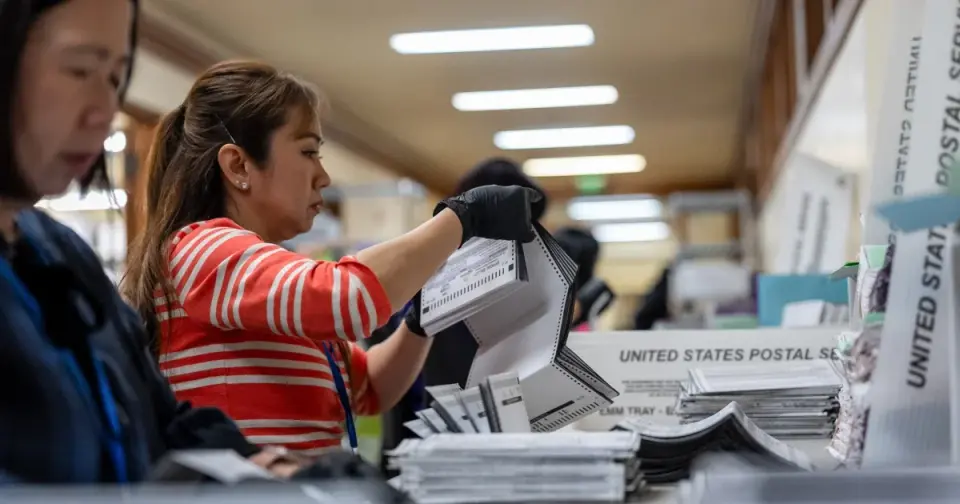
U.S. District Judge David Carter rejected the Justice Department's emergency request to segregate 20,000 mail-in ballots in California, ruling that the federal government must use prosecutorial tools rather than disrupting state election procedures. The ruling follows a failed attempt by the administration to bypass the district court via the 9th Circuit. While the DOJ claims these ballots belong to noncitizens, California officials and legal experts argue the data is unreliable and the move violates the National Voter Registration Act's quiet period. The decision allows California to count ballots as scheduled for the November 3 midterms, though the administration is expected to appeal.
Key points
- Judge David Carter denied the DOJ's request to set aside 20,000 mail-in ballots, stating it would 'wreak havoc' and violate state sovereignty.
- The DOJ filed the suit on Oct. 15 after California refused a 48-hour deadline to verify citizenship for names on a list provided via USB drive.
- The 9th Circuit Court of Appeals previously rejected an emergency appeal, finding the government's claimed emergency was 'self-constructed' due to its own delays.
- California officials and legal experts argue the DOJ's data is inaccurate and that the action violates the 90-day quiet period before federal elections.
- The DOJ has separately threatened criminal charges against local election officials in counties like San Diego who count ballots from the flagged list.
Background
This dispute follows a series of federal actions in October 2026, including a July DHS report claiming 190,000 potential noncitizen voters in California. The current lawsuit is part of a broader pattern of pre-election litigation by the Trump administration, which has faced legal setbacks in similar cases in other states. Previous archive coverage noted that California officials rejected the initial 48-hour demand as operationally impossible and legally baseless, leading to the current emergency motion.
How outlets are covering it
The DOJ, represented by First Assistant U.S. Attorney Bill Essayli, argues that California cannot 'do nothing' and must act on the list of 20,000 names to prevent illegal voting, claiming the state is failing its duty to clean voter rolls. In contrast, California attorneys, including Christina McCall and Anne Bellows, describe the government's data as 'vague' and 'unreliable,' arguing that the demand is a 'recipe for disenfranchisement' that creates chaos without clear standards. The Guardian emphasizes the legal thinness of the request and the rarity of noncitizen voting, while the San Diego Union-Tribune highlights the threat of criminal charges against local registrars. Former federal prosecutor Phillip Halpern calls the DOJ's letters 'heavy-handed intimidation,' and legal expert David Becker notes the actions likely violate the National Voter Registration Act's quiet period. The 9th Circuit judges were split, with Judge Bumatay dissenting to argue that federal law precludes commingling ballots from likely aliens.
Why it matters
The ruling sets a precedent for federal-state relations in election administration, affirming that states retain control over their election procedures even when the federal government alleges irregularities. It prevents the immediate disruption of ballot counting in California, a key swing state in the 2026 midterms, and limits the DOJ's ability to use litigation to suppress votes or cast doubt on election results without robust evidence. The case also highlights the tension between federal enforcement powers and state sovereignty in the lead-up to major elections.
What to watch
The Justice Department is expected to appeal the district court's ruling to the 9th Circuit. Meanwhile, local election officials in counties like San Diego are evaluating responses to DOJ letters threatening criminal charges for counting flagged ballots. The November 3 midterm elections will proceed with California counting its mail-in ballots as scheduled, though the legal battle over the 20,000 flagged voters may continue post-election.
- Judge declines to block California from counting alleged noncitizen voters’ ballots in DOJ lawsuit NBC News
- Judge rejects US Justice Dept bid to block votes from alleged noncitizens in California Reuters
- Judge rebuffs Trump DoJ’s bid to order California to set aside 20,000 ballots The Guardian
- San Diego Registrar ‘evaluating’ response to DOJ voter-information demand, threat of prosecution San Diego Union-Tribune
- Federal judge warns Trump administration bid to set aside 20,000 California mail ballots would ‘wreak havoc’ CNN
Want the full story? Read the original reporting
Read on NBC News