
Judge Chutkan tightens legal grip as Trump arch faces final approval vote
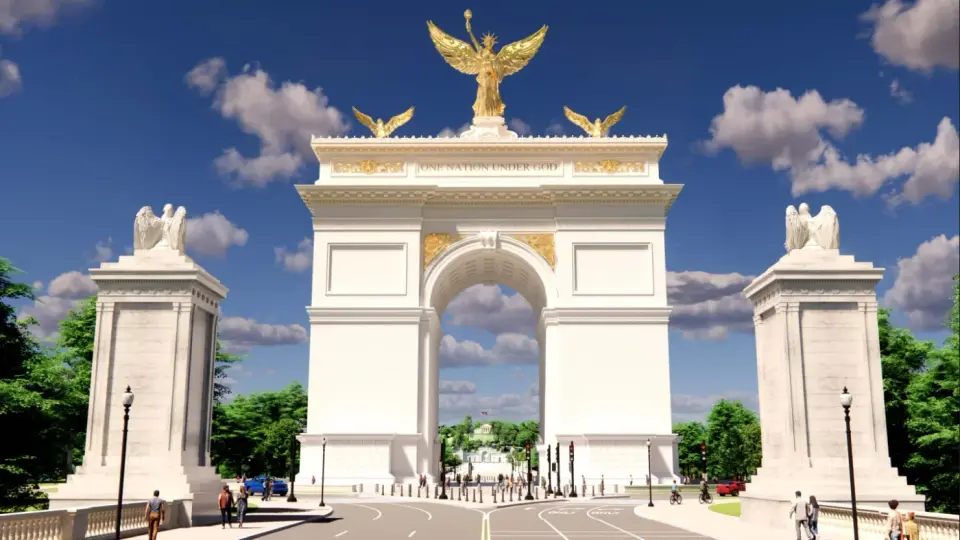
The National Capital Planning Commission is expected to approve President Trump’s 250-foot arch on Thursday, potentially allowing construction to begin immediately. However, Judge Tanya Chutkan has imposed strict notification deadlines to prevent the administration from bypassing legal challenges. The project faces intense opposition from veterans, local governments, and preservationists who argue it violates federal laws and historic preservation standards. The administration claims the structure serves national security and tourism goals, while critics view it as a rushed vanity project lacking congressional authorization.
Key points
- The National Capital Planning Commission is scheduled to vote on the arch’s final design on Thursday, with nearly 120 public speakers registered to oppose it.
- Judge Tanya Chutkan ordered the government to notify the court within one hour of any commission decision and 30 minutes before any construction activity, rejecting the administration’s request for 24-hour notice.
- The administration claims construction could commence as early as Thursday, citing a two-to-three-year timeline with 20-hour daily work shifts, though the judge questioned the urgency.
- Critics, including Vietnam veterans and the governments of D.C. and Virginia, argue the arch lacks congressional authorization and will disrupt historic views, traffic, and airspace safety.
- The White House describes the arch as a 'generational national defense opportunity' and a major tourist landmark, while opponents label it a personal vanity project that insults nearby memorials.
Background
The arch project has faced multiple legal hurdles since its announcement, including a terminated historic preservation review and a lawsuit by Vietnam veterans. Previous coverage highlighted Judge Chutkan’s skepticism regarding the administration’s national security justifications and its attempt to rush construction before the midterm elections. The project is part of a broader effort by the Trump administration to reshape Washington’s landscape, including renovations to the Lincoln Memorial and the White House ballroom.
How outlets are covering it
NPR emphasizes the legal battle and the judge’s strict notification orders, highlighting the administration’s attempt to circumvent court oversight. CNN focuses on the political timing, noting the vote occurs two days after the president’s midterm election loss and framing the arch as part of a broader legacy-building effort. Both sources agree on the lack of congressional authorization but differ in emphasis: NPR details the procedural delays and public opposition, while CNN stresses the administration’s aggressive timeline and the National Park Service’s acknowledgment of adverse historic impacts. The administration’s dual claim of the arch as both a tourist attraction and a military complex is presented as a contentious point, with critics questioning the feasibility of combining these functions.
Why it matters
The outcome of the Thursday vote could set a precedent for federal construction projects that bypass standard approval processes. If the arch is approved and construction begins, it may face further legal challenges, potentially delaying completion. The project also raises broader questions about the balance between executive authority and congressional oversight in national monument decisions, as well as the impact of large-scale construction on historic sites and local infrastructure in Washington, D.C.
What to watch
The National Capital Planning Commission will vote on the arch’s final design on Thursday, followed by potential sign-off from the Department of the Interior. Judge Chutkan may issue a ruling on construction after the meeting, depending on the administration’s compliance with her notification orders. If construction begins, opponents plan to continue legal challenges, while the administration aims to complete the project within two to three years. The midterm election results may also influence future congressional action on the project.
- Trump's arch is on the verge of federal approval. But a judge could block construction NPR
- Triumphal Arch Set to Win Final Approval Despite Court Challenges The New York Times
- Trump wants his arch approved Thursday — and to immediately start work The Washington Post
- Trump’s arch is poised for final approval two days after the president’s election drubbing CNN
- Lead attorney in fight against Trump’s arch project discusses court battle The Hill
Want the full story? Read the original reporting
Read on NPR