
Massachusetts voters face record-tying nine ballot questions amid logistical and transparency debates
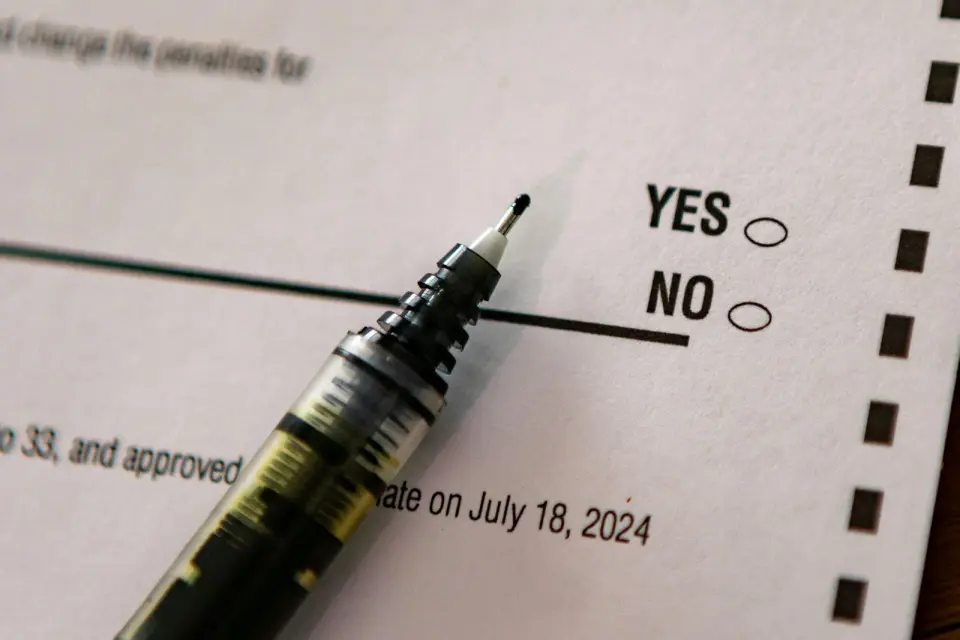
Massachusetts voters will decide on a record-tying nine ballot questions on November 3, 2026, covering topics from public records transparency to gun laws. While officials warn of logistical challenges with multi-card ballots, polls indicate strong support for expanding public records access and same-day voter registration, though measures on unionizing public defenders and repealing cannabis laws face significant opposition.
Key points
- The 2026 election features nine statewide ballot questions, a record-tying number that has prompted voter education groups to request additional training resources.
- Question 1 seeks to expand the state public records law to cover the governor’s office and legislature, a move supported by 55% of likely voters in a recent poll.
- Question 4 proposes allowing same-day voter registration, which has strong support, while Question 8, aiming to repeal recreational marijuana laws, faces the lowest approval ratings.
- Secretary of State Bill Galvin advises voters to bring personal notes to polling places to manage the complex multi-card ballots and avoid tabulator jams.
- Logistical concerns include potential ballot box overflows in busy precincts, though officials note that physical hand-counts can resolve any close races.
Background
The current slate of nine questions is the most since the early 2000s, a period when gas prices were near $1 per gallon. The volume of questions has led to increased inquiries from voters and election officials alike. Previous ballot measures, such as the 2022 tax refund initiative and the 2024 gun law referendum, have set precedents for how these measures are implemented and debated.
How outlets are covering it
WBUR and The Boston Globe emphasize the complexity of the slate, noting that while some questions like public records (Q1) and same-day registration (Q4) have broad support, others like unionizing public defenders (Q2) and non-partisan primaries (Q3) are more contentious. WGBH highlights Massachusetts as an outlier in government transparency, citing a recent test where the state was the only New England jurisdiction unable to provide a timeline for records requests. WCVB’s poll data suggests that while Q1 and Q4 are likely to pass, Q8 (cannabis repeal) is likely to fail, and Q3 (primaries) remains a close race. There is a noted tension between legislative efforts to pass narrower public records laws and the broader scope of the ballot question, which could lead to legal confusion if both pass.
Why it matters
The outcome of these nine questions will significantly reshape state governance, transparency, and voting procedures. A 'yes' on Q1 could fundamentally change how the state handles public information, while Q4 could alter voter access. The logistical challenges of voting on nine questions simultaneously highlight the strain on election infrastructure and the need for robust voter education to ensure informed participation.
What to watch
Voters can vote in person from October 17 to 30, with mail-in ballots already in circulation. The results of the November 3 election will determine the immediate implementation of measures like same-day registration (effective January 2028) and the long-term impact on state transparency and labor relations. Legal challenges may arise if the legislature passes competing legislation on public records, potentially conflicting with the ballot question outcome.
- Here are all 9 of our Massachusetts ballot question explainers — plus some tips for managing all of them WBUR
- Massachusetts ballot questions, explained The Boston Globe
- How do public records laws work in New England? We tested it. WGBH
- Poll indicates which Massachusetts ballot questions are likely to pass in November WCVB
- Voters To Decide Nine Statewide Ballot Questions On November 3 Nantucket Current
Want the full story? Read the original reporting
Read on WBUR