
Megadonors Pour $2 Billion Into 2026 Midterms as Republicans Brace for Defeats
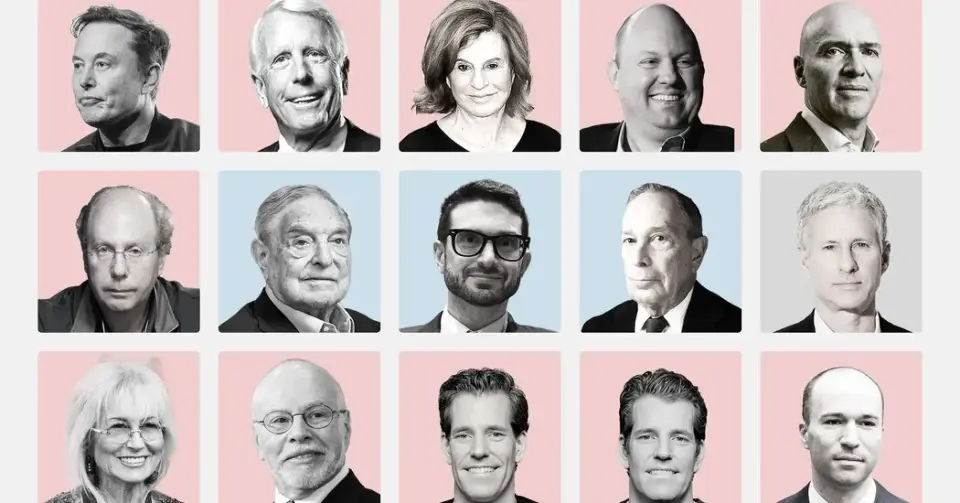
The 2026 midterm cycle has become the most expensive in history, with the top 20 donors contributing approximately $2 billion to federal races. This massive influx, led by Elon Musk’s $445.6 million, is primarily funding Republican efforts to retain Senate control despite significant political headwinds. While Republicans dominate the donor list, Democrats have out-raised their opponents in key Senate races, leveraging lower ad rates to offset the spending gap. The election is being framed by Republicans as an existential crisis, though polls suggest Democrats may reclaim the House and potentially the Senate.
Key points
- Top 20 donors have contributed roughly $2 billion to federal races, equivalent to 15% of total ad spending.
- Elon Musk is the largest donor, contributing $445.6 million, primarily to support Ken Paxton in Texas.
- Republicans have out-raised and out-spent Democrats overall, but Democrats have raised more in competitive Senate races.
- The 2026 midterms are the most expensive cycle since 2018, with total ad spending reaching $11.21 billion.
- Late-stage spending by Republicans is seen as inefficient compared to earlier Democratic fundraising surges.
Background
This cycle follows a 2025 period where Republican small-dollar donor support began to wane due to economic concerns. Recent months have seen intensified political headwinds for Republicans, including an unpopular war with Iran and high consumer prices. The USDA recently launched an $8 billion fuel relief program for farmers, a move aimed at securing agricultural votes ahead of the election. The Texas Senate race has been the focal point of spending, becoming the most expensive in U.S. history, with over $1 billion in ad spending reported in late October.
How outlets are covering it
The New York Times emphasizes the sheer scale of megadonor influence, noting that the top 20 donors’ $2 billion accounts for 15% of all ad spending. It highlights the tech and crypto tilt among Republican donors, such as Elon Musk and Andreessen Horowitz, while noting new Democratic entrants like Reid Hoffman. The Washington Post focuses on the political messaging, with Republicans framing the election as a battle against 'communism' and 'extremism,' while Democrats highlight affordability issues, such as the cost of heating wood in Maine. Al Jazeera provides a comparative analysis of spending, noting that while Republicans have more overall funds, Democrats have out-raised them in key Senate races like Texas, Ohio, and Michigan. MS NOW argues that late-stage Republican spending is inefficient, as Democratic candidates have raised more in competitive races and benefit from lower ad rates, potentially negating the GOP’s spending advantage. The outlets agree on the record-breaking nature of the spending but differ on its likely impact, with some suggesting the money may not translate to electoral success for Republicans.
Why it matters
The unprecedented spending highlights the growing influence of megadonors in U.S. politics, particularly in shaping the outcome of key races. The disparity in fundraising and spending between parties could determine control of Congress, impacting the legislative agenda for the final two years of President Trump’s term. The efficiency of late-stage spending and the ability of Democrats to offset Republican advantages through lower ad rates may influence the final results, potentially leading to a Democratic resurgence in both chambers.
What to watch
Voters will cast ballots on November 3, 2026, with results expected to determine control of Congress. The outcome of key Senate races in Texas, Ohio, and Michigan will be critical, as these states are heavily contested and have seen record spending. The effectiveness of late-stage Republican spending and the ability of Democrats to leverage their fundraising advantage will be closely monitored in the days following the election.
- $2 Billion From 20 Top Donors Fuels a Hugely Expensive Midterms The New York Times
- In Maine, affordability means the cost of wood The Washington Post
- Where are the most expensive midterm races and who is funding them? Al Jazeera
- Opinion | The bright side of the GOP’s big spending midterms bailouts MS NOW
- These 10 megadonors have spent a total of $1 billion on the midterm elections MarketWatch
Want the full story? Read the original reporting
Read on The New York Times