
Midterm blue wave dismantles GOP redistricting efforts across eight states
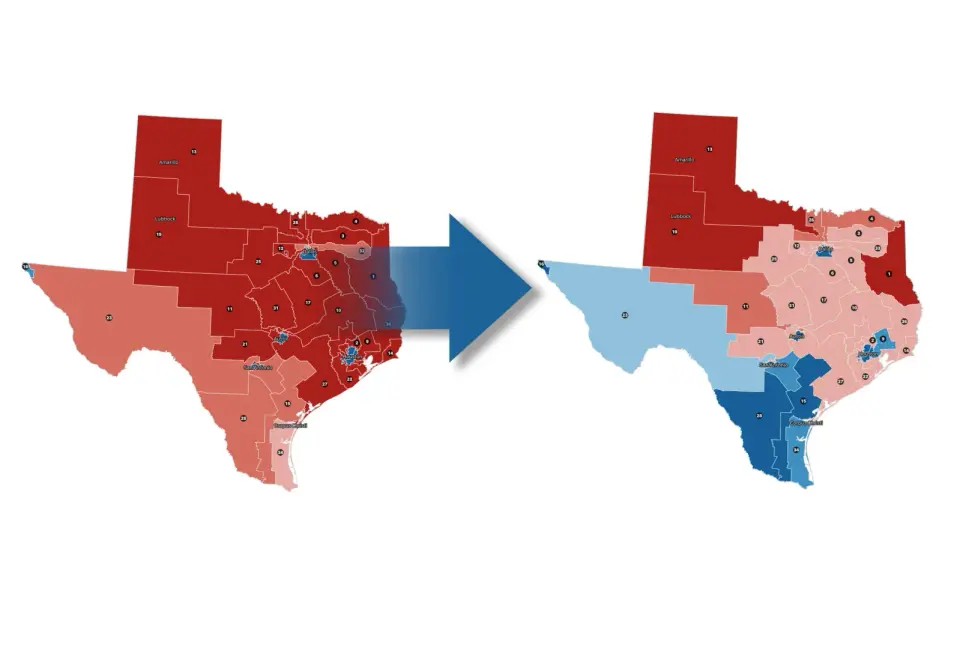
A historic midterm blue wave neutralized Republican gerrymandering efforts, with Democrats flipping 37 House seats and winning control of the chamber despite GOP attempts to redraw maps in Texas, Florida, and Ohio.
Key points
- Democrats flipped 37 House seats, securing a majority despite Republican redistricting in eight states.
- Texas Republicans aimed to gain five seats via new maps but won only one, while Democrats gained one.
- Latino voter approval of President Trump dropped from 93% in Feb 2025 to 57% by Oct 2026, driving shifts in key districts.
- California’s Democratic-led redistricting succeeded, flipping multiple seats, while Ohio and Florida saw targeted Democratic incumbents win.
- Speaker Mike Johnson conceded defeat, stating history’s midterm trend of losing seats was upheld.
Background
Following the 2024 presidential election, Republicans initiated a mid-decade redistricting push, starting in Texas, to protect their House majority. This followed a Supreme Court ruling that invalidated race-based districting in Louisiana, prompting similar moves in Alabama, Tennessee, and South Carolina. Democrats in California and Virginia responded with counter-redistricting measures. The 2026 midterms marked a historic reversal, with Democrats seizing both chambers of Congress amid voter dissatisfaction over the Iran war, economic costs, and immigration enforcement.
How outlets are covering it
USA Today and Politico emphasize the statistical failure of GOP gerrymandering, noting that while new maps theoretically favored Republicans by three seats based on 2024 results, the 2026 blue wave reversed this. The Atlantic highlights the collapse of the 'wall' Republicans built, focusing on the sharp leftward swing among Latino voters in Texas. CBS News provides a state-by-state breakdown, labeling Texas, Ohio, and Alabama as 'dummymanders' where redistricting efforts backfired. All sources agree that immigration enforcement and economic concerns were primary drivers of the Democratic surge, particularly in states with large Latino populations like Texas and Florida.
Why it matters
The failure of mid-decade redistricting to secure a House majority signals a shift in electoral dynamics, where voter turnout and demographic shifts can override structural advantages. It underscores the volatility of Latino voter support for the GOP and the potential for counter-redistricting to neutralize partisan map-drawing. This outcome may influence future legislative strategies and redistricting challenges in states with contested maps.
What to watch
Republicans face internal scrutiny over candidate selection and strategic missteps, while Democrats consolidate power in the House. Louisiana’s 5th District will hold a runoff in December, and Maryland may redraw its map after passing Question 3. The new Democratic majority is expected to initiate investigations into the Trump administration and reshape federal health policy.
- See how the blue wave battered the GOP's gerrymandered districts USA Today
- Republicans Redistricted Themselves Out of Congress The Atlantic
- Failed GOP redistricting in South Carolina, Indiana would have backfired: DDHQ The Hill
- The blue wave swamped Trump’s redistricting wall Politico
- Did Republican efforts to redistrict the House turn into a dummymander? A state-by-state guide CBS News
Want the full story? Read the original reporting
Read on USA Today