
Midterm Math: Democrats Chase Senate Majority as Trump’s Unpopularity Shifts Red-State Odds
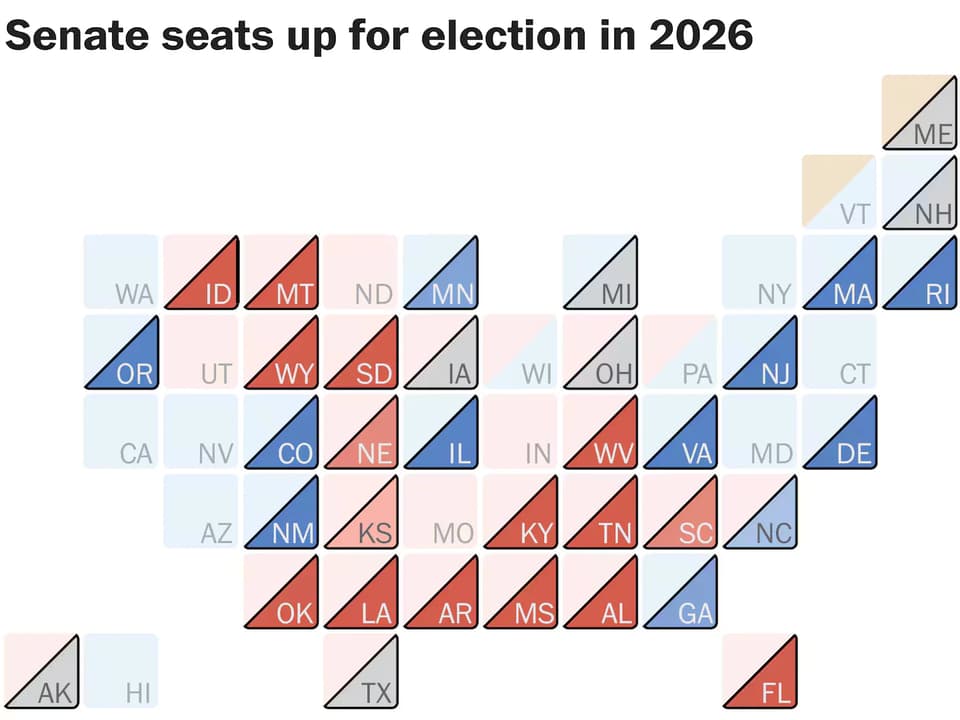
With 40 days left until the 2026 midterms, Democrats have a feasible path to flipping the Senate, needing a net gain of four seats to overcome a 53-47 deficit. Rising unpopularity of President Trump and economic frustration have shifted several red-state races toward Democrats, though Republicans retain significant financial advantages.
Key points
- Democrats currently hold 47 Senate seats and need to win a net four to secure a majority.
- The Cook Political Report rates six GOP-held seats as toss-ups or leaning Democratic, including Kansas, Georgia, and South Carolina.
- Recent polling shifts have moved the Georgia race from 'Leans Democratic' to 'Likely Democratic' and the Kansas race from 'Likely Republican' to 'Leans Republican'.
- Republicans are focusing spending on defending seats in Maine, Alaska, Ohio, Iowa, and Texas, while attempting to flip Michigan and New Hampshire.
- Democrats are 'massively overperforming' in red states, particularly in the Midwest and South, according to polling analysis by Nate Silver.
Background
Earlier analyses in September 2026 described the Senate race as a 'true coin flip,' with Democrats needing a net gain of four seats. Previous concerns included the potential impact of Michigan primary winner Abdul El-Sayed on party unity and the difficulty of flipping deep-red states like Texas. The current landscape reflects a shift from these earlier uncertainties, with more races moving toward Democratic favorability despite Republican financial advantages.
How outlets are covering it
The Washington Post and Vox emphasize the broad impact of Trump's unpopularity and economic frustration, noting that even traditionally red states are becoming competitive. New York Magazine highlights the 'red-state Democrat' phenomenon, pointing to the potential for a realignment if Democrats win in states like Iowa and Ohio. The Cook Political Report provides a more cautious view, noting that while Democrats could net one to five seats, the outcome remains uncertain due to Republican spending advantages and the reliability of polling in states like Maine. All sources agree that the Senate race is more competitive than initially expected, but differ on the likelihood of a Democratic majority.
Why it matters
A Democratic Senate majority would block key aspects of Trump's agenda, including federal judicial confirmations and policy initiatives. The outcome of the 2026 midterms could signal a broader realignment in American politics, potentially undoing some of the gains Republicans made in 2016, 2020, and 2024. The race also highlights the growing influence of economic and foreign policy issues, such as the Iran war and tariffs, on voter sentiment in red states.
What to watch
The next 40 days will be critical, with early voting underway and campaigns intensifying. Key races to watch include Georgia, Kansas, and South Carolina, where polling shifts have been most significant. Republicans will likely focus on spending in deep-red states to defend their seats, while Democrats will continue to target red-state voters. The outcome of these races will determine whether Democrats can achieve the net four-seat gain needed for a majority.
- Democrats now have easier paths to flipping the Senate. Here are races to watch. The Washington Post
- 2026 midterms: Why Democratic Senate hopes are rising in Texas, Kansas, and elsewhere vox.com
- Cook Political Report shifts Kansas, South Carolina Senate races toward Democrats The Hill
- Rise of the Red-State Democrats New York Magazine
- Checking in on the State of the Senate Toss Up Races Cook Political Report
Want the full story? Read the original reporting
Read on The Washington Post