
NC Board Approves Controversial Mail Ballot Rules Hours Before First Mailing
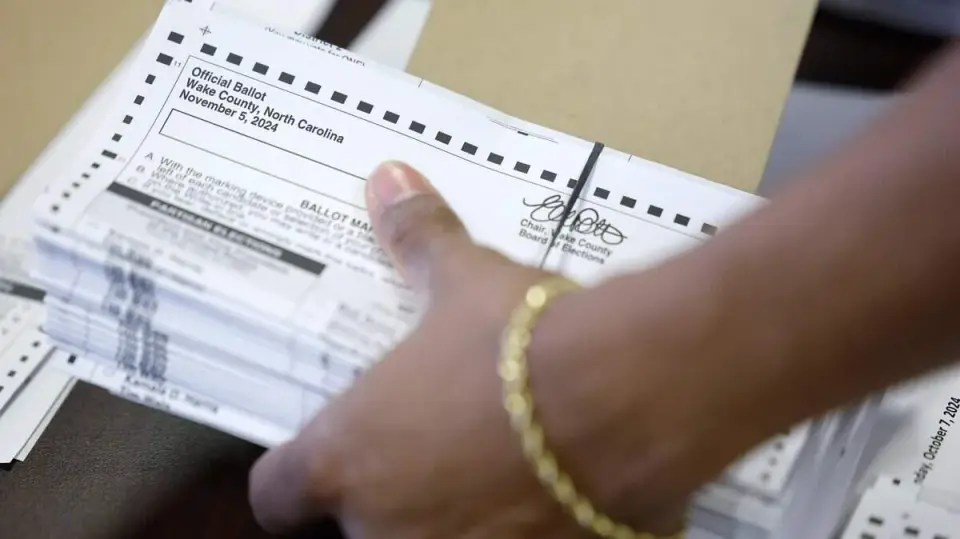
The North Carolina State Board of Elections approved new guidelines for mail-in ballots in a split 3-2 vote on Friday, just hours before the state began sending out absentee ballots for the 2026 general election. The new numbered memos alter standards for counting returned ballots, specifically requiring county officials to spoil votes if inner envelopes are not properly sealed or if signatures do not match application numbers. While Republican board members argued these are routine administrative updates that will eventually become permanent rules, Democratic members contended the measures create unnecessary hurdles that could disenfranchise voters. The decision follows a period where similar permanent rules were blocked from taking effect due to formal objections, prompting the board to use less permanent memos to bypass legislative review. North Carolina is the first state to begin mailing ballots this cycle, a move occurring amid ongoing federal legal battles over postal restrictions on mail voting.
Key points
- The NC State Board of Elections passed new mail ballot guidelines in a party-line vote, with Republicans supporting and Democrats dissenting.
- The new rules require county officials to spoil ballots if the inner envelope is unsealed, the signature does not match the application number, or multiple ballots are included in one return envelope.
- The memos restrict who can deliver a ballot on behalf of a voter to only near relatives or legal guardians, with limited exceptions for disabilities.
- The guidelines were approved as numbered memos rather than permanent rules, which had been blocked from taking effect earlier due to more than 10 formal objections requiring legislative review.
- North Carolina began mailing its first batch of absentee ballots to over 46,000 voters on Friday, making it the first state to start the process for the 2026 midterms.
Background
This development follows earlier coverage from September 4, 2026, which noted that North Carolina began mailing ballots while the Trump administration’s executive order restricting mail voting remained legally unsettled. Previous reports indicated that a federal judge had temporarily blocked a U.S. Postal Service rule that could have impeded mail voters, and the White House had asked the Supreme Court to weigh in on the matter. The current situation adds state-level procedural changes to the existing federal uncertainty surrounding mail voting in the upcoming midterms.
How outlets are covering it
The Raleigh News & Observer and The New York Times reported the core facts of the board’s vote and the timing of the ballot mailing, noting the split between party lines. The News & Observer highlighted the debate over whether the changes affect the voter experience, quoting board members on both sides. Democracy Docket provided a more critical perspective, emphasizing that the memos were not publicized until 7:09 a.m., just hours before ballots went out, and framed the move as a circumvention of legislative review. Democracy Docket also noted that Governor Josh Stein called the vote a 'slap in the face to voters' and highlighted that the new rules align with broader restrictive measures, such as reduced Sunday voting hours. AP News focused on the broader context of the Trump administration’s efforts to restrict mail voting, noting that North Carolina’s actions occur as the administration attempts to impose new restrictions that are currently blocked by a federal court. The outlets differ in their emphasis: The News & Observer and NYT focus on the procedural mechanics and the board’s internal debate, while Democracy Docket focuses on the political implications and the lack of transparency in the timing of the vote.
Why it matters
The approval of these guidelines could impact the validity of mail-in ballots in North Carolina, a state with a significant number of absentee voters. If the new standards for sealing envelopes and matching signatures lead to a higher rate of spoiled ballots, it could affect the outcome of the 2026 midterms. The timing of the vote, just hours before ballots were sent, raises concerns about transparency and the ability of voters to understand the new requirements. Additionally, the state’s move to adopt these rules via memos, rather than permanent legislation, highlights the ongoing tension between the State Board of Elections and the General Assembly regarding the process for changing election rules. This situation also adds to the national debate over mail voting restrictions, as North Carolina’s actions may set a precedent for other states facing similar legal challenges from the federal government.
What to watch
Voters in North Carolina have until October 20 at 5 p.m. to request an absentee ballot, and ballots must be received by county boards of elections by 7:30 p.m. on Election Day, November 3. The state legislature will review the permanent rules that were blocked earlier, potentially in their next session. The federal court battle over the Trump administration’s mail voting restrictions will continue, with the Supreme Court potentially weighing in. County officials will need to implement the new numbered memos, which may lead to an increase in spoiled ballots if voters are not aware of the stricter sealing and signature requirements. Voters are encouraged to track their ballots using the BallotTrax system and to return their ballots as soon as possible to avoid any issues with the new guidelines.
- In split vote, NC approves new mail-in ballot guidelines hours before voting begins Raleigh News & Observer
- Midterm mail ballots start to go to voters as litigation over Trump’s order creates uncertainty AP News
- Hours before absentee ballots go out, North Carolina approves new restrictions Democracy Docket
- NC election board to discuss 2026 midterm voters preparations and absentee ballots abc11.com
- North Carolina Set to Mail The Fall’s First Ballots As Trump Tries to Restrict Them The New York Times
Want the full story? Read the original reporting
Read on Raleigh News & Observer