
NC Early Voting Surges 37% as Democrats Outpace GOP 2-to-1
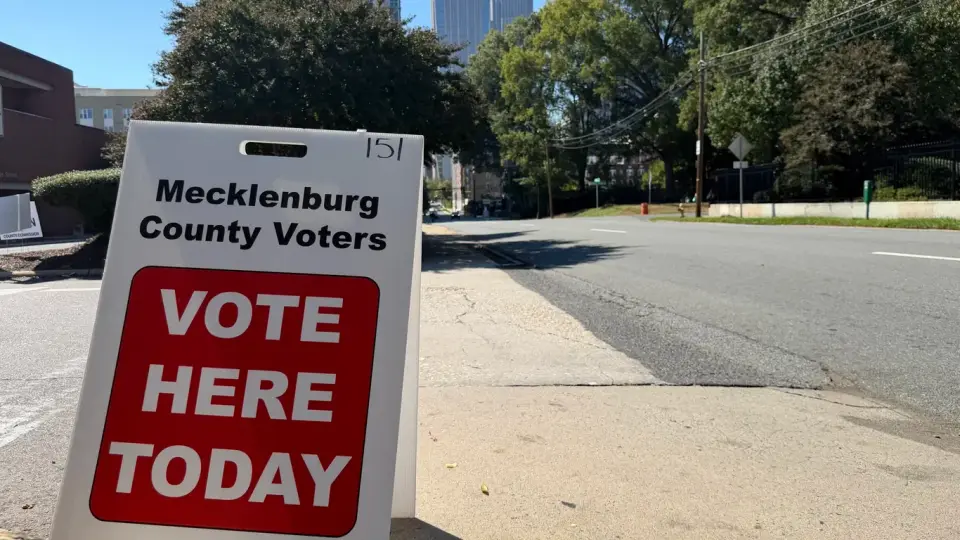
North Carolina early voting has surged 37% compared to 2022, with over 500,000 ballots cast. Democrats are voting at twice the rate of Republicans, driven by low presidential approval and high enthusiasm for Senate candidate Roy Cooper. While overall turnout is high, access issues have prompted student protests at universities, and local officials are expanding polling locations to manage demand.
Key points
- Statewide early voting reached 501,321 ballots by October 19, a 37% increase over the same period in 2022.
- Registered Democrats cast 240,206 ballots compared to 102,845 for Republicans, a 2-to-1 ratio.
- Black voter turnout reached 8%, surpassing white voter turnout at 7%, while women accounted for 52% of all ballots.
- Wake County opened 18 early voting sites, the most for a midterm election in the county's history.
- Students at NC A&T and UNC Greensboro marched to polls after on-campus sites were denied for the first time in a midterm.
Background
This surge follows a national trend where Democrats are widening their lead in polls, driven by President Trump’s approval rating hitting an all-time low of 34% in late September. National trackers launched on October 19 to monitor these midterms, noting that while 31 states track party affiliation, not all have opened early voting yet. The current environment contrasts with recent federal legal battles, such as the DOJ’s lawsuit in California regarding noncitizen ballots, highlighting the intense scrutiny on voter eligibility and access across the country.
How outlets are covering it
Axios emphasizes the partisan gap, noting that Democrats are betting on North Carolina to capture Senate control and stymie the president’s agenda, with enthusiasm for former Gov. Roy Cooper driving down-ballot support. WBTV highlights the sheer volume of participation, noting that 461,048 of the 501,321 ballots were cast in person, and points to the demographic breakdown where unaffiliated voters make up 34% of the total. WFDD focuses on logistical expansion, noting Wake County’s record 18 sites to handle the surge. In contrast, local reporting on student protests highlights a tension between high turnout and access barriers, as the Guilford County Board denied on-campus sites for NC A&T and UNC Greensboro, forcing students to march to distant polling places despite the high overall numbers.
Why it matters
The data suggests that dissatisfaction with the current administration is translating into tangible voter mobilization, particularly among Democrats and Black voters. However, the disparity in access, such as the removal of on-campus voting sites, indicates that high turnout numbers may mask significant logistical hurdles for specific demographics. As the election approaches, the ability of local boards to manage these surges without creating new barriers will be critical to determining final outcomes.
What to watch
Early voting continues through October 31, with the absentee ballot request deadline set for October 20. Voters are encouraged to use live wait-time trackers to avoid lines, particularly during the final days of the early voting period. The next major data release will likely come after the early voting period closes, providing a clearer picture of the final turnout gap between parties.
- NC Democrats have cast twice as many ballots as Republicans so far Axios
- Greensboro, NC students protest the absence of early voting sites on campus NPR
- North Carolina early voting numbers spike from 2022 general election WBTV
- After losing on-campus voting sites, NC A&T and UNCG students march to polls WFDD
- Early voting now underway for the 2026 General Election Wake County Government (.gov)
Want the full story? Read the original reporting
Read on Axios