
NTSB report links White House construction to Marine One radio failure and near-miss
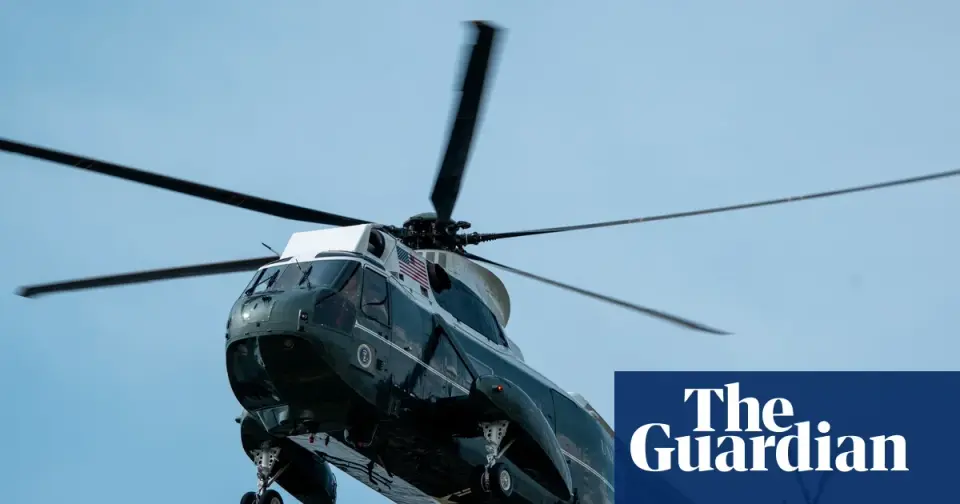
A preliminary National Transportation Safety Board report attributes a close encounter between Marine One and a commercial jet to communication failures caused by the relocation of the presidential helipad due to White House construction. The incident occurred on August 4, 2026, when the helicopter took off from the Ellipse instead of the South Lawn, leading to a loss of separation with an American Airlines subsidiary jet. Although officials claimed the issue was resolved, a second communication failure occurred on August 14, raising concerns about the reliability of the new setup.
Key points
- The NTSB found that Marine One failed to provide the required three-minute notice to air traffic controllers before takeoff on August 4, 2026, resulting in a 'loss of separation' with an Embraer E170 jet.
- The helicopter was operating from the Ellipse rather than the White House South Lawn due to ongoing construction, including a new ballroom and helipad, which caused radio interference and communication issues.
- At the time of the incident, the two aircraft were separated by 0.82 nautical miles horizontally and 700 feet vertically, violating standard safety margins of 1.5 miles and 500 feet.
- A second communication failure occurred on August 14, 2026, when Marine One briefly lost contact with controllers while heading to Texas, despite Transportation Secretary Sean Duffy claiming the issue had been fixed in early August.
- The FAA relocated an antenna and changed procedures following the August 4 incident, but the recurrence of the problem suggests the solution may be incomplete.
Background
This incident follows a January 2025 collision between a commercial airliner and an Army Black Hawk helicopter over Washington, D.C., which killed 67 people and led to tightened proximity rules. The current issues arise amidst significant White House renovations, including a controversial $400 million ballroom project that is approximately 65% complete. The Supreme Court recently granted a temporary stay allowing the ballroom construction to continue, despite legal challenges from the National Trust for Historic Preservation. Trump had previously showcased a new helipad on the South Lawn in August, but the ongoing construction necessitated the temporary use of the Ellipse for Marine One operations.
How outlets are covering it
The Guardian and The Daily Beast emphasize the direct link between White House construction and the communication failures, highlighting the NTSB's finding that the relocation to the Ellipse was a primary factor. CBS News focuses on the recurrence of the issue, noting that the problem re-emerged on August 14 despite assurances from Transportation Secretary Sean Duffy that it had been resolved. The Associated Press reported on the August 14 incident, stating that communication was quickly restored and no safety issue occurred, while the FAA maintained that the August 4 incident was not a dangerous close call. The NTSB report provides the technical details of the communication breakdown, while the White House and FAA downplay the severity of the incidents, asserting that the president was never in danger.
Why it matters
The incident raises significant concerns about aviation safety and the impact of major construction projects on critical infrastructure. The recurrence of communication failures despite claimed fixes suggests potential systemic issues in the coordination between the White House, the FAA, and air traffic control. This could have broader implications for the safety of presidential travel and the reliability of air traffic management in the D.C. area. Additionally, the incident highlights the tensions between political priorities and safety regulations, as the White House continues its construction projects despite legal challenges and safety concerns.
What to watch
The NTSB investigation is ongoing, and further details may emerge regarding the specific technical causes of the communication failures. The FAA may need to implement additional measures to ensure reliable communication between Marine One and air traffic controllers. There may be increased scrutiny of the White House construction projects and their impact on safety protocols. The recurrence of the issue could lead to further legal challenges or regulatory actions if safety standards are not met.
- White House construction played part in Trump helicopter incident, safety officials say The Guardian
- Trump's Marine One helicopter has trouble communicating with air traffic control for second time this month CBS News
- Report reveals communication issues before jet got too close to Trump’s Marine One — and role White House construction played CNN
- Donald Trump’s Chopper Scare Takes an Embarrassing New Turn The Daily Beast
- Investigators Say White House Construction Was a Factor in Marine One Incident WSJ
Want the full story? Read the original reporting
Read on The Guardian