
Record Early Vote Surges as Democrats Outpace Republicans in Key Senate Battlegrounds
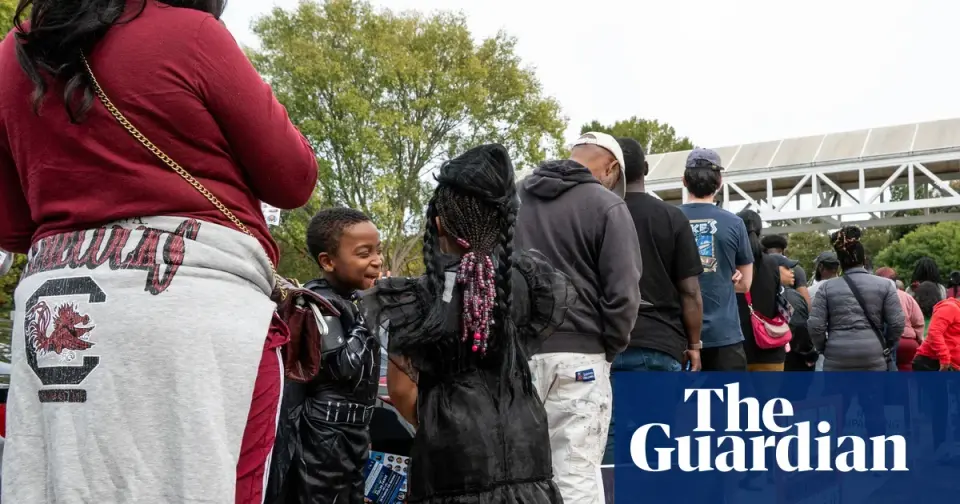
Over 43 million Americans have voted early ahead of the November 3 midterms, a record high that signals deep dissatisfaction with President Trump. Democrats are casting ballots at significantly higher rates than Republicans, particularly in competitive Senate states like Texas, Georgia, and South Carolina. While the surge suggests a potential shift in congressional control, analysts note that early voting trends do not always predict final outcomes, and Republicans are making last-minute efforts to limit losses in key swing states.
Key points
- More than 43 million ballots have been cast early, nearly 10 million more than at the same point in 2022.
- Democrats account for 43% of early votes in states requiring party registration, compared to 31% for Republicans.
- Texas saw a 50% increase in early voters compared to 2022, with over 6.3 million ballots cast.
- South Carolina early voting is up 83%, and Maine is up 44%, both critical for Senate control.
- Trump’s approval rating has fallen to 37%, a level historically associated with severe midterm losses for the incumbent party.
Background
This surge follows a period of intense data tracking since late October, when early voting in Texas and other battlegrounds began to show Democratic advantages. Previous reports highlighted concerns over voter ID mandates and noncitizen voter roll lawsuits, but the current focus is on the sheer volume of early participation. The 2022 midterms also saw record early voting, but the 2026 numbers are outpacing even that benchmark, suggesting a higher level of mobilization among Democratic voters.
How outlets are covering it
The Guardian and AP emphasize the record-breaking nature of the turnout and the clear Democratic lead in early voting, framing it as a referendum on Trump’s second term. BBC highlights the surge in Hispanic and Black communities, noting that while white voter turnout is on par with 2022, communities of color are voting at higher rates. NPR provides a broader political analysis, suggesting that while Democrats are mobilized, their potential majority may be narrow and internally divided, while Republicans are focused on limiting losses in states like Iowa and Kansas. All sources agree that early voting does not guarantee final results, but the scale of the surge is unprecedented for a midterm cycle.
Why it matters
The outcome of these midterms will determine which party controls Congress for the next two years, directly impacting the ability to check or support Trump’s executive powers. The record early voting suggests a high level of voter engagement and dissatisfaction with the current administration, which could lead to significant shifts in congressional control. However, the narrow margins predicted for the Senate and the internal divisions within the Democratic party could limit the impact of any majority gained.
What to watch
Early voting will taper off in the days before November 3 as states cut off early voting options. The focus will shift to Election Day turnout, particularly in rural and undecided voter demographics. Trump is expected to make last-minute appearances in key swing states to bolster Republican candidates. The final results will determine whether Democrats can secure a majority in the House and potentially the Senate, or if Republicans can hold their current advantage.
- Three key takeaways from early voting in midterm elections The Guardian
- More than 43 million ballots cast so far in midterms early voting surge BBC
- Early voting jumps across Senate battlegrounds as millions more Americans vote ahead of Election Day AP News
- The midterms will test the nation’s political direction and confidence NPR
- More than 50 million votes cast in US midterm elections: What does it mean? Al Jazeera
Want the full story? Read the original reporting
Read on The Guardian