
California’s record coastal flooding signals a worsening winter ahead
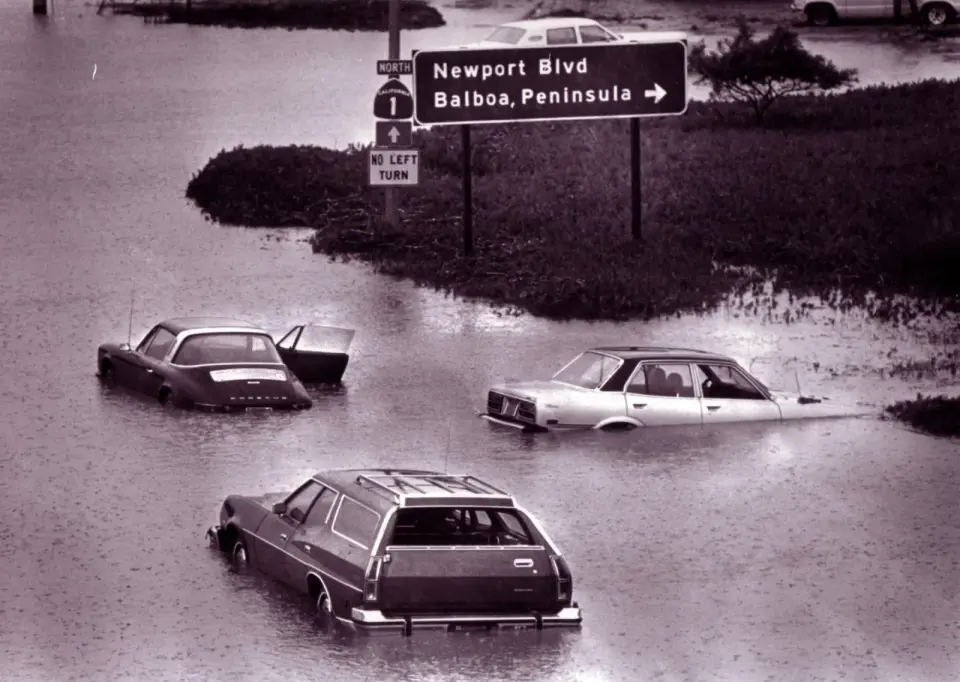
Record-breaking tides and a strengthening El Niño have caused widespread coastal flooding across California, from Marin County to Newport Beach. While current water levels are driven by thermal expansion and Kelvin waves rather than astronomical king tides, experts warn that conditions will worsen significantly during the holiday season. Local governments are struggling with inadequate infrastructure, relying on temporary sandbag barriers and manual valve systems to protect low-lying communities from rising seas.
Key points
- Newport Beach experienced two distinct flood events in October: a surf surge on October 9 and record high tides on October 27, which reached 8.4 feet.
- The current flooding is primarily caused by thermal expansion of record-warm ocean water and a coastally trapped Kelvin wave, not astronomical king tides.
- Climate scientist Daniel Swain warns that water levels could rise an additional 1 to 2 feet during true king tides in late November and December.
- Newport Beach deployed over 20,000 sandbags and manually operated 90 tide valves to mitigate water intrusion, but many seawalls remain too low for current sea levels.
- In Marin County, temporary inflatable barriers and sandbags were used to protect neighborhoods, highlighting a lack of long-term infrastructure upgrades.
Background
Newport Beach has a history of tidal flooding dating back to 1983, with recorded events in nearly every decade since. The city’s current infrastructure, including a system of tide valves, was designed in the early 1900s and has not been fully updated for modern sea-level rise. Recent flooding follows earlier coastal impacts from Tropical Storm Rachel in October 2026.
How outlets are covering it
The Orange County Register emphasizes the historical recurrence of flooding in Newport Beach and the inadequacy of existing seawalls, noting that the city is relying on temporary measures like sandbags. Weather West and The Guardian focus on the broader scientific context, attributing the record water levels to a strengthening El Niño and thermal expansion rather than astronomical tides. The Marin Independent Journal highlights the logistical challenges local governments face in coordinating temporary defenses across fragmented jurisdictions, describing the current efforts as a 'patchwork' of emergency measures.
Why it matters
The current flooding serves as a preview of more severe conditions expected during the winter holiday season. If a storm coincides with astronomical king tides, water levels could rise significantly higher, potentially causing catastrophic damage to coastal infrastructure and homes. The reliance on temporary barriers indicates that current coastal defenses are insufficient to handle the compounding effects of climate change and El Niño.
What to watch
Authorities and residents are preparing for king tides expected in late November and December, which could add 1 to 2 feet to current water levels. Local governments are planning to deploy more sandbags and temporary barriers, while some communities are exploring long-term infrastructure upgrades, such as raising roads and installing tidal gates. Forecasters warn that the risk of severe flooding will persist through the winter, with potential for even higher water levels if storms occur during peak tide periods.
- Newport Beach’s recent flooding wasn’t the first time — and likely not the last Orange County Register
- As unusual low-latitude storm approaches SoCal and threatens serious Four Corners flood risk once again, record-warm and record-high ocean conditions persist along CA coast amid still-strengthening El Niño Weather West
- Record-breaking high tides spark chaos – and kayak commutes – across California The Guardian
- Days of flooding in Marin foreshadow holiday surge Marin Independent Journal
- High tides damage 114 structures in Huntington Beach. City warns of more flooding to come Los Angeles Times
Want the full story? Read the original reporting
Read on Orange County Register