
Record-Low Approval and Economic Pain Put Republicans on Defensive Before Midterms
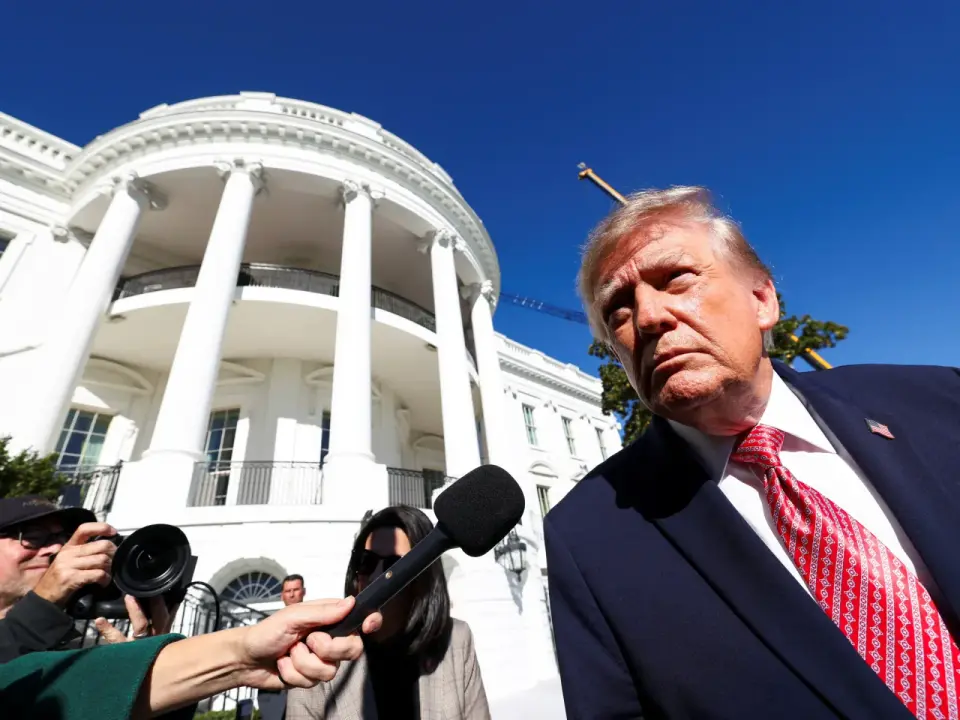
President Donald Trump’s approval rating has hit a historic low of 31%, with Democrats holding a 12-point lead in generic congressional ballots. Rising gasoline prices from the US-Iran war and economic dissatisfaction are driving voters toward Democrats, threatening Republican control of both the House and Senate in the November 3 elections.
Key points
- A Reuters/Ipsos poll shows Trump’s approval at 31%, the lowest of his two terms, while a Washington Post/ABC News poll places it at 33%.
- Democrats lead Republicans by 12 points in generic ballot questions, the widest margin of the cycle, driven by a 40% to 33% advantage on economic trust.
- Gasoline affordability has flipped from 71% positive in February to 71% negative now, directly linking the US-Iran war to voter dissatisfaction.
- Historical data suggests presidents with sub-50% approval ratings often see their parties lose significant seats, with 18 of the last 20 midterms resulting in House losses for the governing party.
- Republicans hold slim majorities (218-214 in the House, 53-47 in the Senate) but face potential losses in 15 House districts and key Senate races in North Carolina and Maine.
Background
This decline follows a rapid drop in Trump’s approval from 37% in early October to 31% by mid-October. Previous analyses warned of a potential 'historic collapse' for Republicans, with Democrats needing only a net gain of four Senate seats to seize the majority. The current crisis is compounded by a funding shortage for Democratic campaigns and intense Republican efforts to defend red-state seats like Texas and Iowa.
How outlets are covering it
While all major outlets agree on the record-low approval figures, they differ on the primary drivers. The Washington Post emphasizes the 'acrid mood' regarding inflation and the shift in partisan leanings, noting that 63% of Americans now view the Republican Party unfavorably. Al Jazeera and Channel 3000 focus heavily on the US-Iran war as the catalyst for economic pain, specifically highlighting gasoline prices. USA Today highlights the broader polling averages, noting that while Trump’s approval is low, 58% of those who 'somewhat disapprove' still prefer Republican candidates, suggesting a floor of support among the base. There is also a divergence in turnout expectations: The Washington Post notes that non-MAGA Republicans are less certain to vote, while Al Jazeera suggests exit polls may show higher approval than pre-election surveys due to higher turnout among loyalists.
Why it matters
The outcome of the midterms will determine whether Trump can pass legislation in his final two years. A Democratic sweep of both chambers would create a 'headache' for the White House, potentially blocking his agenda and increasing the likelihood of impeachment proceedings or legislative gridlock. The economic fallout from the Iran war is now a central political issue, reshaping the 2026 election landscape.
What to watch
The final two weeks will focus on turnout efforts, particularly among non-MAGA Republicans and Democratic Socialists, who show high voting certainty. Republicans are shifting advertising resources to protect candidates in redder areas. The November 3 vote will determine if Democrats can flip the House and Senate, a scenario that would significantly constrain Trump’s remaining term.
- Trump’s approval ratings plummet: what that means for the US midterms Al Jazeera
- Trump approval hits record low, handing Democrats a clear midterm edge The Washington Post
- Trump approval rating falls to career low in new poll USA Today
- Donald Trump's approval rating as of today; Trump approval rating now Yahoo
- Trump approval falls to record low of 31% as midterms near, poll finds Channel 3000
Want the full story? Read the original reporting
Read on Al Jazeera