
Spanberger Restores Voting Rights for 66,000 Virginians Amid November Ballot Fight
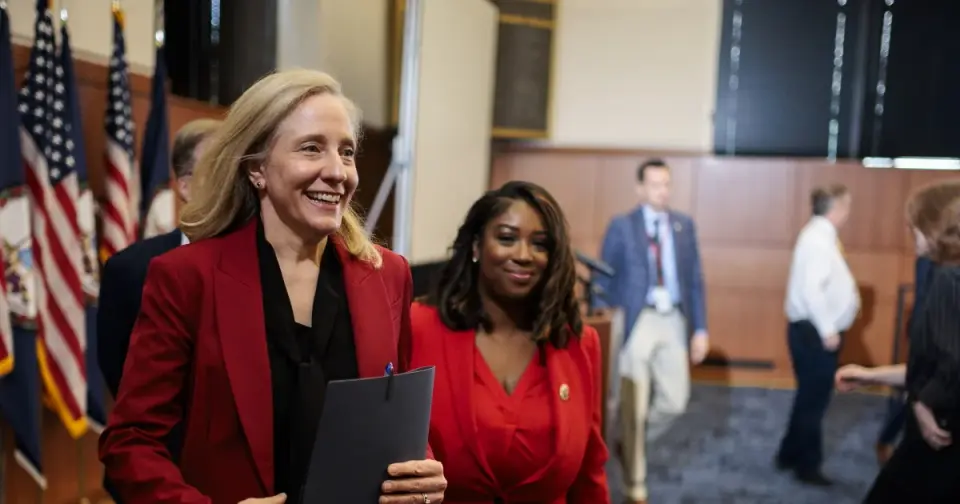
Virginia Governor Abigail Spanberger announced on July 31 that her administration has restored voting rights to 66,085 residents who lost them due to felony convictions. This mass restoration reverses the restrictive policies of her predecessor, Glenn Youngkin, who restored rights for fewer than 10,000 people during his tenure. Spanberger’s office removed barriers added by the previous administration, such as requirements to prove payment of fines, and is now proactively identifying eligible voters. The move precedes a November 3 ballot measure that would make voting rights restoration automatic for those who complete their sentences, removing the governor’s discretionary power.
Key points
- Spanberger’s office restored rights for 66,085 Virginians in under six months, compared to fewer than 10,000 under Governor Youngkin.
- The administration removed a Youngkin-era requirement that applicants prove they paid all fines, fees, and restitution.
- Virginia is one of three states with a constitutional provision that permanently disenfranchises felons, leaving restoration to the governor’s discretion.
- A federal court ruling in January 2026 found Virginia’s disenfranchisement practices violated Reconstruction-era Readmission Acts.
- Voters will decide on a constitutional amendment on November 3 to make voting rights restoration automatic upon release from incarceration.
Background
Virginia’s felony disenfranchisement system has evolved significantly since 2013, when governors began using executive powers to automatically restore rights for nonviolent offenders. Previous governors, including Bob McDonnell, Terry McAuliffe, and Ralph Northam, expanded these restorations, with Northam restoring rights for over 126,000 people. In 2022, Glenn Youngkin reversed this trend by implementing a case-by-case review system, which drastically reduced the number of restorations. A federal court ruling in January 2026 declared Virginia’s lifetime ban on voting for felons illegal under the Readmission Acts, adding legal pressure to reform the system.
How outlets are covering it
VPM and WSET emphasize the scale of Spanberger’s restoration efforts and the administrative changes made to streamline the process, highlighting the contrast with Youngkin’s restrictive policies. MS NOW frames the restoration as a political consequence of Spanberger’s victory over a Republican opponent, linking it to broader national debates on voter access. Bolts Magazine focuses on the systemic issues, noting that while Spanberger’s actions are positive, advocates argue that voting rights should not depend on a single governor’s discretion. Bolts also highlights the ongoing legal challenges and the push for a constitutional amendment to ensure permanent reform. All sources agree on the numbers and the timeline but differ in their emphasis on the political and legal implications of the restoration.
Why it matters
The restoration of voting rights for 66,000 Virginians could significantly impact the upcoming August 4 primaries and the November 3 general election, as these newly enfranchised voters may influence outcomes in key races. The November ballot measure, if passed, would permanently alter Virginia’s voting laws, aligning the state with 23 others that automatically restore rights upon release from prison. This shift could reduce the political power of governors to restrict voting rights and address long-standing criticisms of the system as a relic of Jim Crow-era policies.
What to watch
Virginia voters will cast ballots on November 3 to decide whether to amend the state constitution to automatically restore voting rights for felons who complete their sentences. Early voting begins on September 18. The Spanberger administration is expected to continue proactively identifying and restoring rights for more Virginians in the coming months. The outcome of the November vote will determine whether Virginia’s voting rights system becomes permanent or remains subject to gubernatorial discretion.
- Spanberger has restored voting rights to more than 66,000 Virginians VPM
- Virginia governor restores voting rights for thousands of formerly incarcerated people MS NOW
- Virginia Governor Restores Voting Rights for Thousands With Past Felony Convictions boltsmag.org
- Spanberger says her administration restores voting rights for more than 66,000 Virginians WSET
- Gov. Spanberger restores voting rights for more than 66K Virginians 13newsnow.com
Want the full story? Read the original reporting
Read on VPM