
Supreme Court Blocks Student ID Use in New Hampshire Midterm Vote
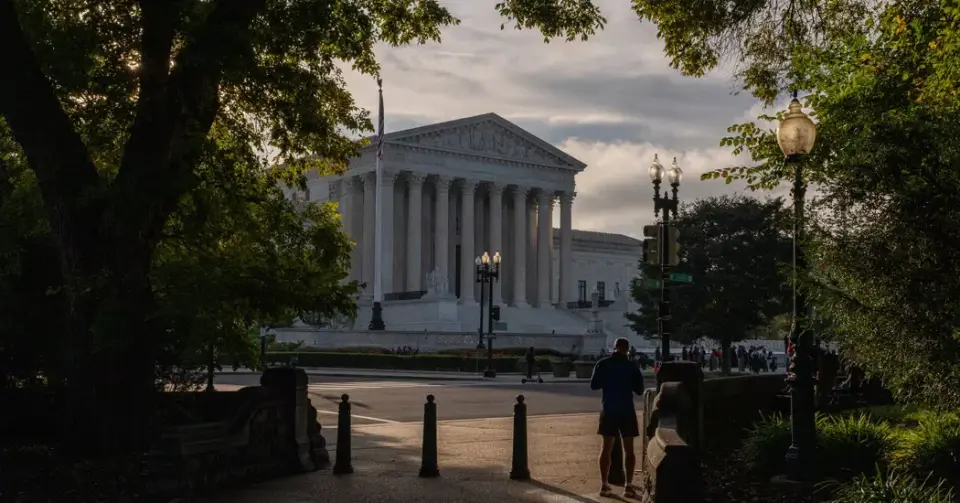
The Supreme Court ruled that New Hampshire can prohibit election officials from using student IDs to verify voter identity for the November midterms. The decision, based on the Purcell principle against last-minute rule changes, reversed a lower court order that had allowed student IDs as backup evidence. Justice Ketanji Brown Jackson dissented, arguing the lower court merely corrected misinformation about state law.
Key points
- The Supreme Court granted an emergency request from New Hampshire, allowing the state to enforce a ban on student IDs for voting in the November 3 midterms.
- The ruling invoked the Purcell principle, which discourages federal courts from altering election rules close to Election Day, citing the lack of justification for deviating from this precedent.
- Justice Ketanji Brown Jackson was the sole dissenter, arguing that the lower court’s order was necessary to ensure the public received accurate information about the state’s electoral processes.
- The dispute centers on whether student IDs can be used as backup evidence under a 'safety valve' provision of state law, with the state arguing they cannot be considered at all.
- The case impacts a closely watched Senate race in New Hampshire, where control of the chamber is at stake, and involves a challenge by the Coalition for Open Democracy.
Background
This ruling follows a series of high-profile election disputes before the midterms, including a September decision rejecting President Trump’s proposal to change mail ballot procedures. The case also follows a lower court ruling on October 2 that had blocked the state’s broader interpretation of its ID laws. The background includes a state law enacted in April that restricted student IDs, which was challenged by a voting rights group as discriminatory against young voters.
How outlets are covering it
The New York Times and CNN framed the decision as a victory for Republican state leaders and the RNC, emphasizing the Purcell principle. NBC News highlighted the political implications for the Senate race and the dissent by Justice Jackson. MS NOW focused on the legal debate over the Purcell doctrine’s limits, noting Jackson’s argument that the lower court was correcting misinformation rather than changing law. The Coalition for Open Democracy, as reported by MS NOW, argued that reversing the rules would cause chaos, while the state argued the lower court overstepped its bounds.
Why it matters
The ruling sets a precedent for how federal courts handle election-related disputes close to Election Day, potentially influencing future cases involving voting restrictions. It also impacts the balance of power in the Senate, as New Hampshire’s seat is a key swing state in the midterms. The decision may embolden states to enforce stricter ID laws, while critics argue it burdens young voters and undermines voting rights.
What to watch
The ruling is expected to take effect immediately, with New Hampshire election officials following the state’s guidance to exclude student IDs from identity verification. The Coalition for Open Democracy may seek further legal remedies or public advocacy. The outcome of the New Hampshire Senate race will be closely watched as a test of the ruling’s impact on voter turnout and participation.
- Supreme Court Allows Blanket Ban on Student IDs at Polls in New Hampshire The New York Times
- Supreme Court says New Hampshire student IDs can’t be used to vote in November NBC News
- Supreme Court backs GOP and New Hampshire against student IDs for voting MS NOW
- Supreme Court Backs Republicans in New Hampshire Voter-ID Clash Bloomberg.com
- Supreme Court says New Hampshire can limit use of student IDs for voting CNN
Want the full story? Read the original reporting
Read on The New York Times