
Supreme Court Halts New Hampshire Student ID Restrictions Ahead of Midterms
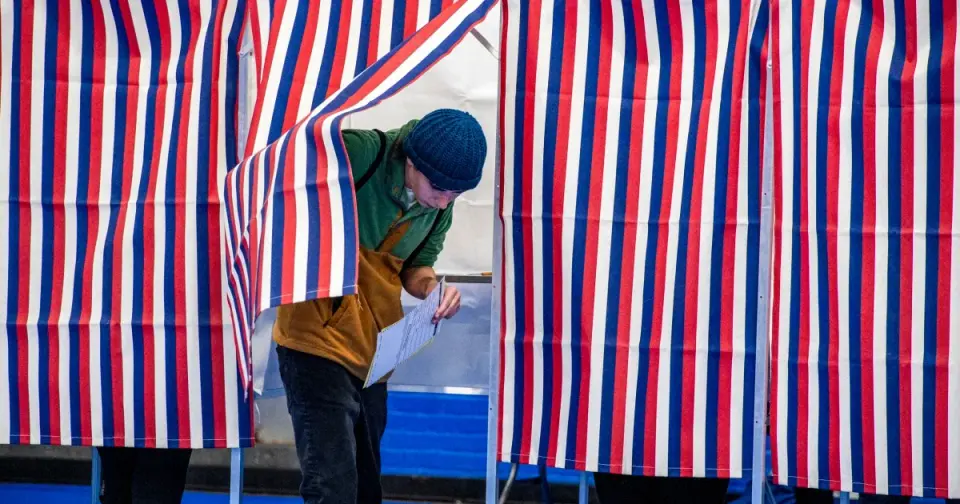
The Supreme Court ruled that New Hampshire can fully enforce a ban on using student IDs for voting in the November midterms, reversing a lower court order that allowed them as backup identification. The decision, which favored the state and the Republican National Committee, was based on the 'Purcell principle' against changing election rules close to Election Day. Justice Ketanji Brown Jackson dissented, arguing the lower court merely corrected a misinterpretation of state law. The case stems from an April state law restricting student IDs, challenged by a voting rights group as discriminatory against young voters. The ruling impacts a closely watched Senate race in New Hampshire, where control of the chamber is at stake.
Key points
- The Supreme Court issued an unsigned order on Oct. 22, 2026, allowing New Hampshire to enforce its ban on student IDs for voting in the Nov. 3 midterms.
- The court cited the 'Purcell principle,' which discourages federal courts from altering election rules close to Election Day, to reverse a lower court ruling.
- Justice Ketanji Brown Jackson was the sole dissenter, arguing that the lower court's Oct. 2 order was a justifiable correction of the state's misinterpretation of its own law.
- The dispute arose from an April 2026 state law that removed student IDs from the list of accepted primary identification forms for requesting ballots.
- The case was brought by the nonprofit Coalition for Open Democracy, which argued the law discriminated against young voters and burdened their right to vote.
- New Hampshire Secretary of State David Scanlan, a Republican, argued that the lower court's order injected uncertainty into voting procedures less than three weeks before the election.
Background
This decision follows a series of Supreme Court interventions in election-related disputes ahead of the 2026 midterms. In September 2026, the court blocked Missouri from using a new congressional map for the midterms, citing potential 'electoral chaos.' Similarly, in Texas, the state supreme court halted mid-cycle redistricting in Galveston County to ensure uniformity between primary and general elections. These cases highlight the court's recent focus on maintaining stability in election procedures close to Election Day. The New Hampshire case also occurs amid broader national debates over voter identification laws and their impact on younger voters, as noted in a CNN poll showing a significant Democratic advantage among younger adults in New Hampshire.
How outlets are covering it
NBC News and USA Today framed the Supreme Court's decision as a clear win for the Republican Party and its efforts to tighten voting procedures, emphasizing the state's argument that the lower court's ruling disrupted election rules too close to Election Day. CNN highlighted the legal nuance, noting that the Supreme Court did not provide a vote count but invoked the 'Purcell principle' to justify its intervention. All three outlets reported on Justice Ketanji Brown Jackson's dissent, where she argued that the lower court's order was a justifiable correction of the state's misinterpretation of its own law, not a change in rules. The Coalition for Open Democracy, as reported by USA Today and CNN, maintained that the state's law discriminated against young voters and that the lower court correctly identified a lack of specific security concerns related to student IDs. The RNC, as noted by CNN, warned that the lower court's order threatened to disrupt identity verification in New Hampshire's looming elections.
Why it matters
The Supreme Court's ruling in New Hampshire sets a precedent for how federal courts handle challenges to state election laws close to Election Day, reinforcing the 'Purcell principle' that discourages last-minute changes to voting rules. This decision could influence similar disputes in other states with strict voter identification laws, potentially affecting turnout among younger voters who may rely on student IDs. The outcome also has direct implications for the closely watched New Hampshire Senate race, which could determine control of the U.S. Senate after the 2026 midterms. By upholding the state's ban on student IDs, the court prioritized election stability over the voting rights arguments of younger voters, a move that may shape future litigation over voter identification requirements nationwide.
What to watch
New Hampshire will proceed with its November 3 midterms using the state's current voter identification rules, which exclude student IDs as a primary or backup form of identification. The Coalition for Open Democracy may continue to litigate the case in lower courts, challenging the constitutionality of the state law. The Supreme Court's decision could prompt similar emergency appeals from other states facing voter identification disputes ahead of the midterms. The outcome of the New Hampshire Senate race, which could determine control of the U.S. Senate, will be closely watched as a potential indicator of the broader impact of voting restrictions on younger voters. The RNC and other Republican groups may use this ruling to support similar efforts to tighten voting procedures in other states.
- Supreme Court says New Hampshire student IDs can’t be used to vote in November NBC News
- Supreme Court Backs Republicans in New Hampshire Voter-ID Clash Bloomberg.com
- Supreme Court sides with GOP in New Hampshire student ID voting fight USA Today
- New Hampshire’s SCOTUS appeal puts student voter ID law in flux New Hampshire Bulletin
- Supreme Court says New Hampshire can limit use of student IDs for voting CNN
Want the full story? Read the original reporting
Read on NBC News