
Supreme Court oral arguments in Suncor v. Boulder reveal deep divisions over climate liability
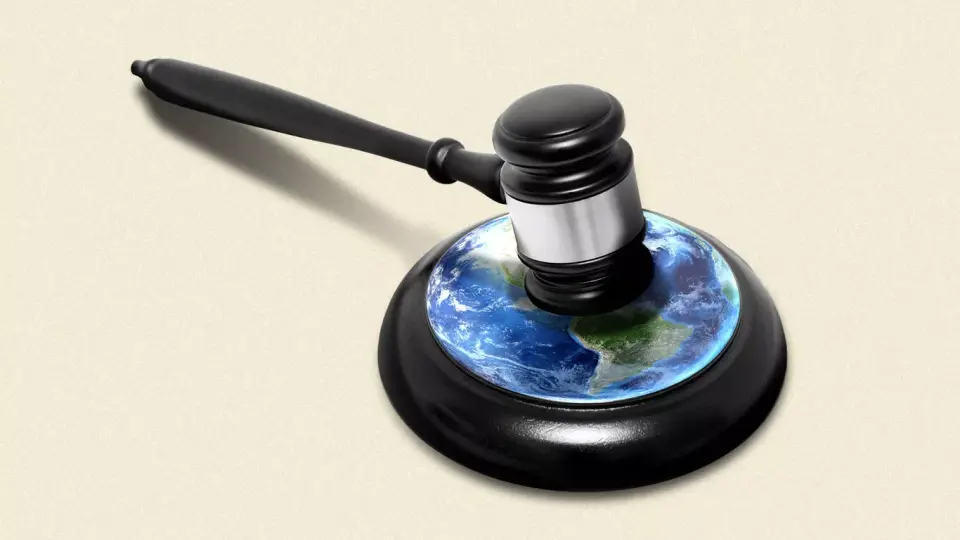
The Supreme Court heard oral arguments in Suncor Energy v. Boulder, a case determining whether federal law preempts state-level climate damages claims against fossil fuel companies. Justices appeared divided on both the merits and jurisdiction, with conservatives leaning toward preemption and liberals seeking procedural exits. The outcome could impact dozens of similar lawsuits nationwide.
Key points
- The case centers on whether the Clean Air Act preempts Boulder's state-law claims against Suncor and ExxonMobil for climate damages.
- Justice Kavanaugh supported preemption, citing existing precedent, while Justices Jackson and Sotomayor questioned the Court's jurisdiction.
- Chief Justice Roberts expressed concern that a Boulder win could trigger a wave of similar lawsuits across all states.
- Justice Alito's recusal creates a risk of a 4-4 split, which would uphold the lower court's decision without setting national precedent.
- Boulder alleges the companies misled the public about climate risks, seeking over $100 million in damages for adaptation costs.
Background
This case follows a growing trend of climate litigation, including Nepal's demand for reparations after catastrophic floods and a 2026-10-03 archive note on the Alito recusal. The Supreme Court's decision could influence dozens of similar lawsuits across the US, with over 20 civil cases and 11 state attorney general actions already pending.
How outlets are covering it
Axios and Fox News agree that Justices Jackson and Sotomayor sought jurisdictional 'off-ramps,' but Fox News frames this as a liberal attempt to avoid losing on the merits, while Axios notes it could allow Boulder to proceed without setting precedent. The New York Times emphasizes the role of attribution science in holding fossil fuel companies accountable, arguing that even a Supreme Court loss for Boulder won't stop the science from advancing. The Washington Post editorial board warns that allowing Boulder's case could unleash an 'economic tsunami' on the energy industry, framing it as a backdoor carbon tax. All sources agree that the case's outcome will have significant implications for climate litigation nationwide, but they differ on whether the Court should resolve the federalism issue or punt on procedural grounds.
Why it matters
The Supreme Court's decision in Suncor v. Boulder could determine whether fossil fuel companies face billions in damages from state-level climate lawsuits or whether federal law preempts such claims. A narrow ruling could preserve some state claims while blocking others, while a broad preemption ruling could shield the industry from liability. The case also highlights the growing role of attribution science in linking climate harms to specific companies, potentially transforming climate accountability from a political issue into a legal one.
What to watch
The Supreme Court is expected to issue a ruling in the coming months, potentially as early as late 2026. If the Court rules on jurisdictional grounds, the case may return to the Colorado Supreme Court, leaving the broader federalism question unresolved. If it rules on the merits, the decision could impact dozens of similar lawsuits across the US, including those filed by municipalities, tribes, and state attorneys general. The outcome will also influence ongoing legislative efforts to regulate climate liability, including bills introduced by Senator Ted Cruz and Representative Harriet Hageman.
- How the chips could fall in the blockbuster SCOTUS climate case Axios
- Opinion | The Science That Has Oil Companies Running Scared The New York Times
- Liberal justices look for 'escape hatch' as high-stakes climate case lands at Supreme Court, experts say Fox News
- Opinion | The Supreme Court foresees a shakedown of the energy industry The Washington Post
- Court sends mixed signals on whether it will allow state-tort suits seeking to hold energy companies liable for climate change to go forward SCOTUSblog
Want the full story? Read the original reporting
Read on Axios