
Trump Announces End of $4B Israel Aid, Citing Domestic Political Pressure
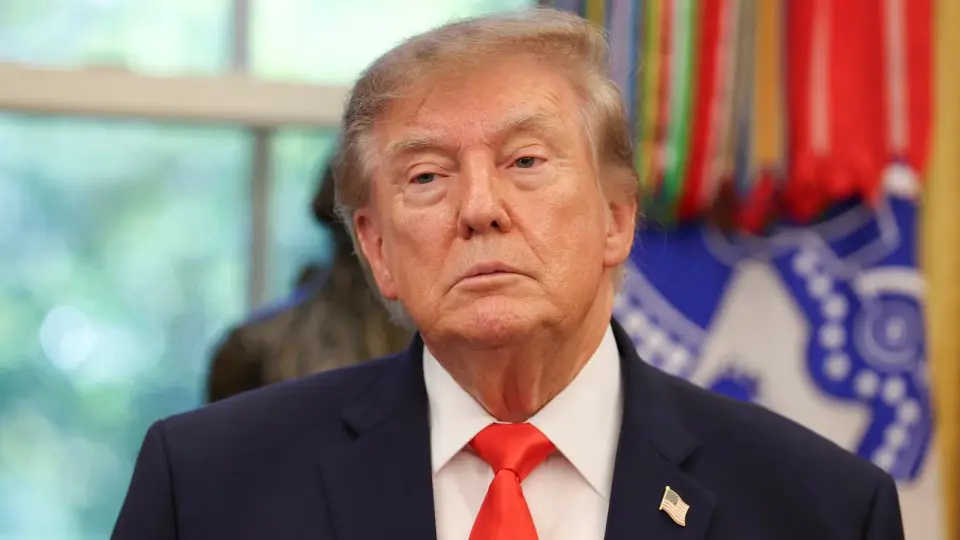
President Donald Trump announced on Election Day that the United States will cease $4 billion in annual military aid to Israel by year-end. He claimed this was a pre-agreed deal with Prime Minister Benjamin Netanyahu, motivated by the desire to neutralize criticism from Democratic candidates like Michigan’s Abdul El-Sayed. While Trump argued Israel no longer needs the funds, the move faces significant hurdles, including existing legislation and surprise from Israeli officials. Analysts suggest the announcement may be a political maneuver rather than an immediate policy shift, reflecting a broader bipartisan shift in US public opinion regarding Israel.
Key points
- Trump stated in a Fox News interview that the US will stop paying Israel $4 billion annually by the end of 2026, claiming a prior agreement with Netanyahu.
- The President cited domestic political pressure, specifically mentioning Michigan Democratic Senate candidate Abdul El-Sayed, as a reason for the cut to avoid giving Democrats a 'talking point.'
- Trump did not specify whether the cut involves money, equipment, or both, nor did he detail the transition mechanism, though he suggested it helps balance the federal budget.
- Israeli Finance Ministry sources expressed surprise, noting that the current 10-year memorandum of understanding (MoU) expires in 2028 and that the annual budget was already drafted based on the existing agreement.
- Gadi Eisenkot, Netanyahu’s main rival, criticized the announcement, stating that learning of such a strategic change through the media highlights the danger of Netanyahu’s conduct and demands immediate answers.
- An ABC News/Washington Post/IPSOS poll found that 58% of Americans support reducing or ending military support to Israel, while a Quinnipiac poll showed 48% believe the US is too supportive of Israel.
Background
This announcement follows a period of shifting US public opinion and bipartisan skepticism regarding unconditional military aid to Israel. Previous coverage noted that while Trump framed the cut as a definitive end to aid, experts questioned its feasibility due to existing legislation codified in the National Defense Authorization Act for Fiscal Year 2021. The current MoU, signed under the Obama administration, guarantees $3.8 billion annually through 2028, with 92% of funds required to be spent on US-made defense products in 2026 and 2027. The timing coincides with the 2026 midterm elections, where the issue of Israel has become a significant domestic political flashpoint, influencing campaigns in states like Michigan.
How outlets are covering it
ABC News emphasizes the political motivation behind the cut, highlighting Trump’s desire to neutralize Democratic criticism and the lack of specifics regarding the aid’s structure. CNN frames the announcement as a 'bombshell' that signals a historic shift in the bipartisan pro-Israel consensus, noting that while the practical impact may be less severe than the shock suggests, it reflects growing domestic backlash against Netanyahu’s policies. CNN also points out that Trump’s move may be a political play to distract from midterm losses, whereas ABC focuses on the immediate political friction with candidates like El-Sayed. Both outlets agree that the move faces legal and logistical hurdles, but CNN places greater emphasis on the long-term geopolitical implications and the potential for a new era in US-Israel relations, while ABC highlights the immediate surprise among Israeli officials and the opposition’s reaction.
Why it matters
The announcement signals a potential fracture in the long-standing bipartisan consensus on US support for Israel, which could reshape Middle East policy and US defense contracts. If implemented, the cut would affect billions of dollars in US defense industry revenue and alter the strategic relationship between the two allies. The move also highlights the increasing influence of domestic political pressures on foreign policy, as seen in the 2026 midterm elections, where candidates are leveraging public opinion on Israel to gain electoral advantage. This could lead to a more cautious or conditional approach to US foreign aid and military cooperation in the future.
What to watch
The immediate next steps will involve clarifying the specifics of the aid cut, including whether it involves immediate cessation or a phased transition. Congressional action may be required to amend or repeal the existing MoU, which is codified in law. Israeli officials, including Netanyahu and the opposition, will likely issue statements or take diplomatic actions in response. The outcome of the 2026 midterm elections will also influence the political landscape, potentially affecting the ability of the US government to maintain or alter its foreign aid policies. Analysts will continue to monitor whether the announcement leads to a restructured defense partnership or a complete halt in aid.
- Trump says $4 billion in Israel military aid will end this year, citing political reasons ABC News - Breaking News, Latest News and Videos
- Trump’s Election Day bombshell on Israel points to historic shift in US politics CNN
- Opinion | What Trump’s surprise Election Day comment on Israel reveals about 2028 MS NOW
- As Americans vote, Trump says US will stop $4 billion in aid to Israel Reuters
- Trump says he will end billions of dollars in military aid to Israel Politico
Want the full story? Read the original reporting
Read on ABC News - Breaking News, Latest News and Videos